Fred Astaire: Personal Info
Full name: Frederick Austerlitz
Born: May 10, 1899, Omaha, Nebraska, United States
Died: June 22, 1987, Los Angeles, California, United States
Occupation: Dancer, actor, singer, choreographer and musician
Years active: 1904–1981
Famous partners: Adele Astaire, Ginger Rogers, Eleanor Powell, Rita Hayworth, Cyd Charisse and Barrie Chase
Major honours: Honorary Academy Award, AFI Life Achievement Award, Emmy and Grammy recognition
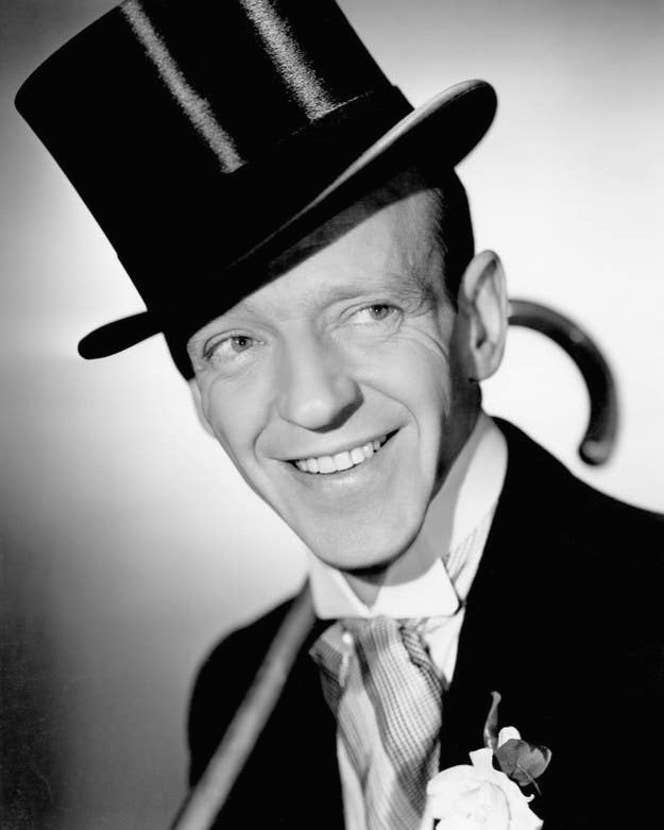 Fred Astaire photographed by A. L. Whitey Schafer in 1946.
Fred Astaire: Introduction
Fred Astaire’s elegance was not ease. It was the visible result of rehearsal so exacting that strain disappeared from the finished performance. His body seemed to hear music before the orchestra played it. A small change of weight, a turn of the wrist or a delayed tap could reveal character as clearly as dialogue.
He also changed how Hollywood filmed dance. Astaire believed viewers should see the performer’s whole body and understand the geography of a routine. Long takes and restrained editing allowed movement to unfold in real time. The Library of Congress essay on *Top Hat* describes the revolutionary effect of filming dances without breaking them into deceptive fragments.
The familiar top hat and tails were only one part of a career that began in childhood vaudeville, conquered Broadway and London with his sister Adele, produced ten films with Ginger Rogers and continued through television and dramatic acting.
Childhood and the Astaire Act
Frederick Austerlitz was born in Omaha to Johanna and Frederic Austerlitz. His older sister Adele showed early performing talent, and their mother moved the children to New York for training. Fred and Adele entered vaudeville while still children.
The act developed from novelty siblings into a sophisticated musical-comedy partnership. Adele was often considered the more naturally charismatic performer; Fred became the musical organiser, choreographic problem-solver and relentless rehearser. The Library of Congress essay on their recording of “Fascinating Rhythm” traces their rise from vaudeville to Broadway and records their association with George Gershwin.
Shows including Over the Top, The Bunch and Judy, Lady, Be Good! and Funny Face made the Astaires major stars in New York and London. Working with the Gershwins placed Fred at the centre of modern American popular music before he entered film.
Adele’s Retirement and a New Career
Adele retired in 1932 to marry Lord Charles Cavendish. Her departure forced Fred to discover whether he could sustain a career without the partnership that had defined him. He returned to the stage, worked with Claire Luce and then considered Hollywood.
Legends about a studio test dismissing him as unable to act or sing while noting that he “can dance a little” have circulated in several forms. The exact wording is disputed. The important fact is that Astaire did not resemble a conventional leading man. His thin frame, receding hairline and understated singing voice became strengths once films learned to build a romantic style around them.
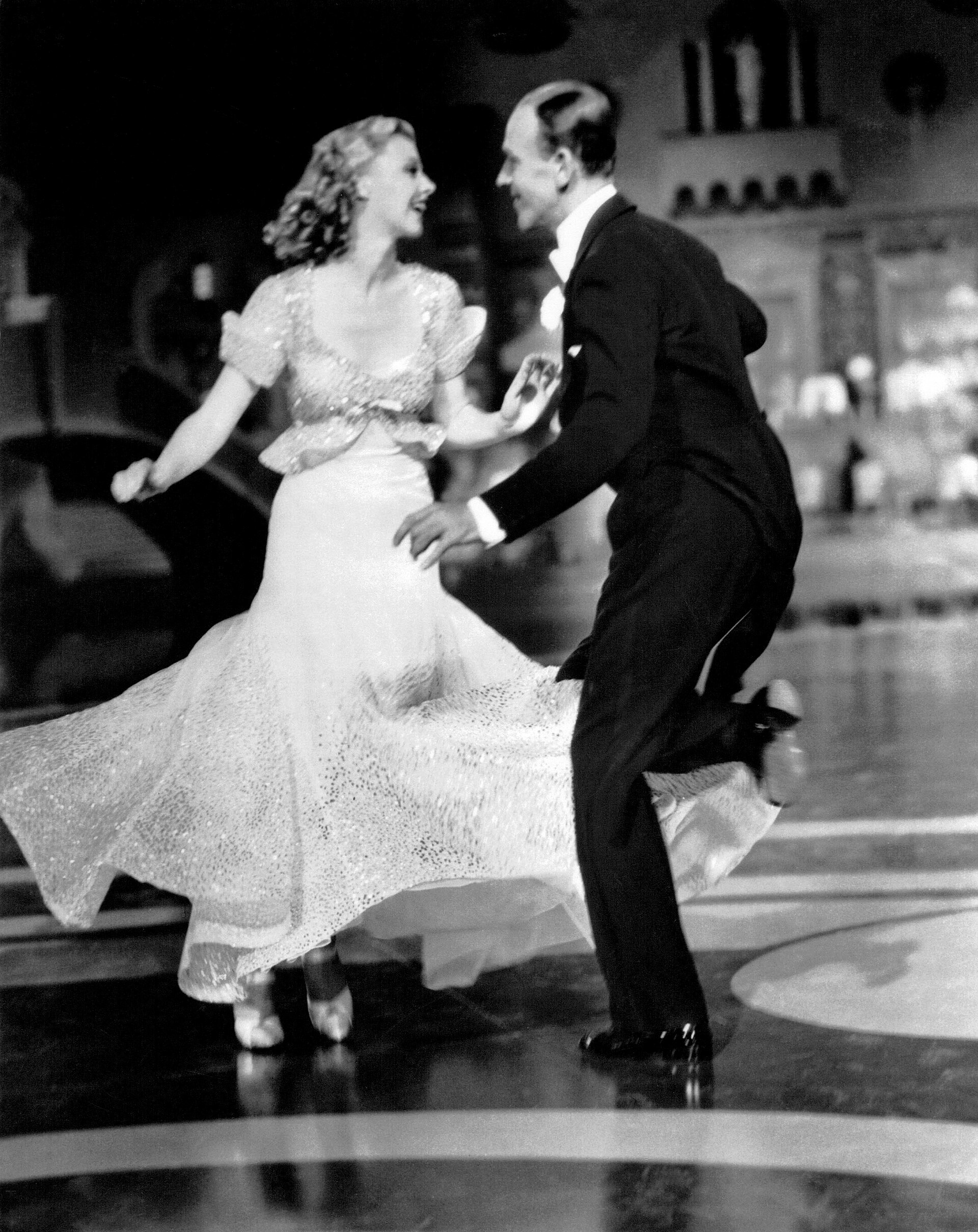 Fred Astaire and Ginger Rogers in Top Hat (1935).
Flying Down to Rio and Ginger Rogers
Astaire made a brief screen appearance in Dancing Lady and then joined Dolores del Río and Gene Raymond in Flying Down to Rio (1933). Ginger Rogers received fourth billing, but the “Carioca” number made Astaire and Rogers the film’s sensation.
They were not identical dancers. Astaire’s line could look airy and exact; Rogers brought grounded energy, wit and emotional resistance. Their partnership worked because she did not merely follow him. She made the courtship difficult enough to require dance.
RKO quickly reunited them in The Gay Divorcee, Roberta, Top Hat, Follow the Fleet, Swing Time, Shall We Dance, Carefree and The Story of Vernon and Irene Castle. A decade later they made The Barkleys of Broadway at MGM, bringing their total to ten films.
Top Hat and the Architecture of Elegance
Top Hat (1935) is the most iconic Astaire-Rogers film. Its mistaken-identity plot is deliberately light; the real narrative occurs through Irving Berlin’s songs and the progression from solo display to partnership.
The Library of Congress account of Astaire’s friendship with Berlin notes that they met during the film and formed a lifelong friendship. “Cheek to Cheek” converts an artificial Art Deco space into emotional intimacy. Rogers’s feathered gown extends movement beyond her body; Astaire’s tails give his turns a corresponding line.
The BFI’s discussion of the routine calls the film a defining example of the romance and elegance associated with the pair. Their dances are not decoration added to the plot. They are the moments when misunderstanding gives way to knowledge.
Swing Time and Dance as Emotion
Many critics consider Swing Time (1936) their finest film. Jerome Kern and Dorothy Fields supplied songs including “The Way You Look Tonight” and “A Fine Romance.” The climactic “Never Gonna Dance” routine moves from intimacy to separation as Astaire and Rogers ascend a curved staircase.
The film also contains “Bojangles of Harlem,” a number that pays tribute to Bill Robinson while using blackface imagery. Admiration for Astaire’s technique must include recognition of that racist performance tradition. Historical context explains why the number was produced; it does not remove the harm of the imagery.
Astaire’s legacy is strongest when approached critically. Great artistry can exist inside conventions that modern viewers should question.
Working Beyond Ginger Rogers
Astaire resisted being permanently defined by one team, perhaps because his first career had already been inseparable from Adele. After the RKO series, he partnered dancers and actors with different strengths.
Eleanor Powell matched him in tap precision in Broadway Melody of 1940. Rita Hayworth brought warmth and sensuality to You’ll Never Get Rich and You Were Never Lovelier. Judy Garland’s vocal and comic command made Easter Parade a major success. Vera-Ellen offered brilliant speed in The Belle of New York. Cyd Charisse created a more adult, sculptural eroticism in The Band Wagon and Silk Stockings. Audrey Hepburn’s contrasting modern style shaped Funny Face.
Astaire adapted without erasing his partners. He designed routines around what each performer could express, though accounts of rehearsal also describe his perfectionism and pressure. The polish belonged to collaboration, not to a solo genius working in isolation.
 Fred Astaire in a 1953 publicity image for The Band Wagon.
Retirement, Return and MGM
Astaire announced his retirement after Blue Skies in 1946 and opened a chain of dance studios. He soon returned when Gene Kelly was injured and MGM needed a replacement for Easter Parade.
The comeback led to another remarkable period. In Royal Wedding he danced with a hat rack and performed on the walls and ceiling of a rotating room. The effect is mechanical rather than digital, but the emotional logic matters more than the trick: love has altered gravity.
The Band Wagon (1953) confronts the fear of obsolescence. Astaire plays an ageing musical star whose career needs renewal, and the film answers anxiety with the democratic claim that “that’s entertainment.” The “Dancing in the Dark” duet with Charisse is minimal and romantic; the “Girl Hunt Ballet” transforms film noir into choreographic fantasy.
How Astaire Filmed Dance
Astaire did not direct every number alone. Choreographers and collaborators including Hermes Pan were essential. Yet he consistently defended several principles:
Show the whole body: Footwork loses meaning when the camera isolates fragments.
Respect continuity: Editing should clarify a dance, not manufacture ability.
Let the camera serve movement: Tracking and crane shots can follow a routine without competing with it.
Integrate song and story: A number should change a relationship or reveal character.
Rehearse before shooting: Preparation protects spontaneity because performers no longer need to think about mechanics.
These ideas seem classical, but they remain a challenge to any musical that uses rapid cutting to hide choreography.
Singing, Music and Personal Style
Astaire described himself modestly as a singer, yet major composers valued him because he understood rhythm and lyrics. He introduced or popularised songs by Irving Berlin, George and Ira Gershwin, Cole Porter, Jerome Kern and Dorothy Fields.
His voice was light and conversational. Rather than overpower a melody, he phrased it. The apparent limitation made songs sound personally addressed. The same principle governed his clothes. Tailoring, soft shoes and flexible jackets allowed the body to move, turning fashion into part of the choreography.
Private Life
Astaire married socialite and former racer Phyllis Potter in 1933. They had two children, and Astaire also helped raise her son from a previous marriage. Phyllis died in 1954, a loss that devastated him. In 1980 he married Robyn Smith, a successful jockey.
He guarded his privacy and disliked public analysis of his work. Away from performance he pursued horse racing, golf, music and family life. His reserve helped preserve the image of effortless professionalism, but it can also make biographies overdependent on colleagues’ anecdotes.
Television and Dramatic Acting
Astaire used television to experiment with dance outside feature-film production. Specials including An Evening with Fred Astaire won Emmy Awards and paired him memorably with Barrie Chase.
He also took non-musical roles. His performance in The Towering Inferno earned an Academy Award nomination for Supporting Actor. Later work in television drama showed that the timing audiences associated with dance could support quiet character acting.
Awards, Death and Legacy
Astaire received an Honorary Academy Award in 1950, presented by Ginger Rogers, and the AFI Life Achievement Award in 1981. The AFI tribute credits him with transforming the movie musical into an art form and emphasises his work as dancer, singer, musician, actor and choreographer.
He died from pneumonia on June 22, 1987, aged eighty-eight. His influence reaches beyond tap or ballroom technique. He demonstrated that the camera could preserve dance without diminishing it and that masculinity on screen could be precise, playful, musical and responsive to a partner.
Selected Fred Astaire Filmography
Flying Down to Rio (1933): The film that revealed the Astaire-Rogers partnership.
The Gay Divorcee (1934): Their first starring vehicle.
Top Hat (1935): The purest expression of Art Deco elegance and Irving Berlin romance.
Swing Time (1936): Often considered their finest integration of dance and emotion.
Shall We Dance (1937): Gershwin songs and experiments including a roller-skating duet.
Broadway Melody of 1940 (1940): Astaire meets Eleanor Powell in “Begin the Beguine.”
Easter Parade (1948): A major comeback opposite Judy Garland.
Royal Wedding (1951): Technically inventive routines built around cinematic space.
The Band Wagon (1953): A sophisticated reflection on ageing, art and entertainment.
Funny Face (1957): Fashion, Paris and a cross-generational partnership with Audrey Hepburn.
Fred Astaire: Frequently Asked Questions
Was Fred Astaire considered a better dancer than Gene Kelly?
They represented different styles. Astaire emphasised line, musical phrasing and ballroom-inflected elegance; Kelly brought athletic weight and a more explicitly American everyday energy.
How many films did Fred Astaire make with Ginger Rogers?
They made ten films together: nine at RKO during the 1930s and The Barkleys of Broadway at MGM in 1949.
Did Fred Astaire do his own choreography?
He was deeply involved in creating routines, but collaboration was essential, especially with choreographer Hermes Pan and his many dance partners.
What is the best Fred Astaire film for beginners?
Start with Top Hat, then watch Swing Time and The Band Wagon.
Did Fred Astaire win a competitive Oscar?
He received an Honorary Academy Award and one competitive acting nomination, for The Towering Inferno, but did not win a competitive Oscar.