Judy Garland: Personal Info
Birth name: Frances Ethel Gumm
Born: June 10, 1922, Grand Rapids, Minnesota, United States
Died: June 22, 1969, London, England
Occupation: Actor, singer, dancer and concert performer
Years active: 1924–1969
Children: Liza Minnelli, Lorna Luft and Joey Luft
Known for: The Wizard of Oz, Meet Me in St. Louis, A Star Is Born and Judy at Carnegie Hall
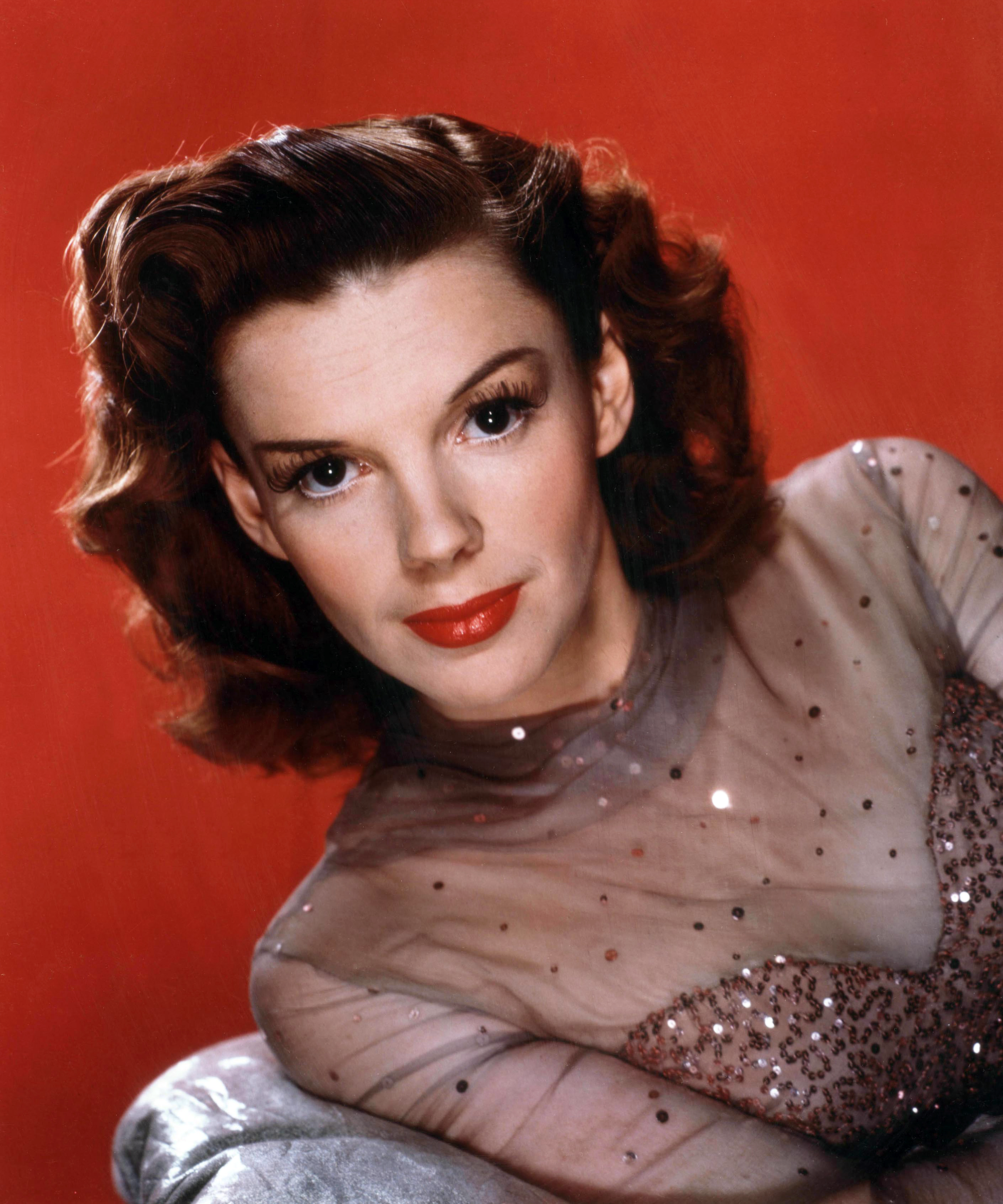 Judy Garland in an MGM publicity portrait made for The Harvey Girls.
Judy Garland: Introduction
Judy Garland could make a song feel discovered in the moment. Even when the melody was familiar and the arrangement elaborate, her phrasing created the impression that emotion had become too urgent for ordinary speech. That gift made her one of MGM’s greatest musical stars, sustained a concert career after the studio dismissed her and turned “Over the Rainbow” into something larger than a film song.
Her biography is also a warning about the human cost of the studio system. Garland began performing as a small child, signed with MGM at thirteen and worked under executives who scrutinised her body, controlled her schedule and relied on medication to keep young performers working and sleeping. Later addiction, illness, financial instability and missed performances cannot be understood responsibly without that history, though neither can every adult choice be reduced to it.
The BFI’s guide to Garland’s work emphasises both the troubling treatment she experienced and the breadth of her talent as singer, comedian and dramatic actor. A complete Judy Garland biography must keep triumph and tragedy in the same frame without allowing tragedy to consume the art.
Childhood and the Gumm Sisters
Frances Gumm was born into a family that ran a cinema in Grand Rapids, Minnesota. She appeared onstage before she was three and soon performed with her older sisters Mary Jane and Dorothy Virginia as the Gumm Sisters. The family moved to California, where the act worked in vaudeville and short films.
The childhood story is often presented as destiny: a tiny performer discovers an enormous voice and inevitably becomes a star. In reality it was labour. Garland learned timing, projection and audience contact before she had the maturity to choose a profession. Her mother, Ethel, managed the act aggressively. The pattern of adult demands and childhood compliance preceded MGM.
The sisters eventually became the Garland Sisters, and Frances adopted the first name Judy. By 1935 she had attracted the attention of MGM. The studio recognised the voice but was uncertain how to cast a teenager who did not fit its preferred glamour types.
MGM, Mickey Rooney and the Girl Next Door
At MGM Garland was repeatedly paired with Mickey Rooney in energetic musicals about young people saving a show. Thoroughbreds Don’t Cry, Love Finds Andy Hardy, Babes in Arms, Strike Up the Band, Babes on Broadway and Girl Crazy made them one of the studio’s most successful youthful teams.
The films showcased stamina and spontaneity, but the work was tightly controlled. Garland’s appearance was compared unfavourably with conventionally glamorous stars. Costumes, dental caps and body-shaping garments reinforced the message that her natural body was a problem to be managed.
Studio schedules also depended on pills. Stimulants could keep performers working; sedatives could force sleep. Garland’s later dependence did not begin as a glamorous adult indulgence but within an employment system that normalised pharmaceutical control. Claims about exact doses and individual incidents vary, so the most reliable conclusion is institutional: MGM benefited from practices that endangered a minor.
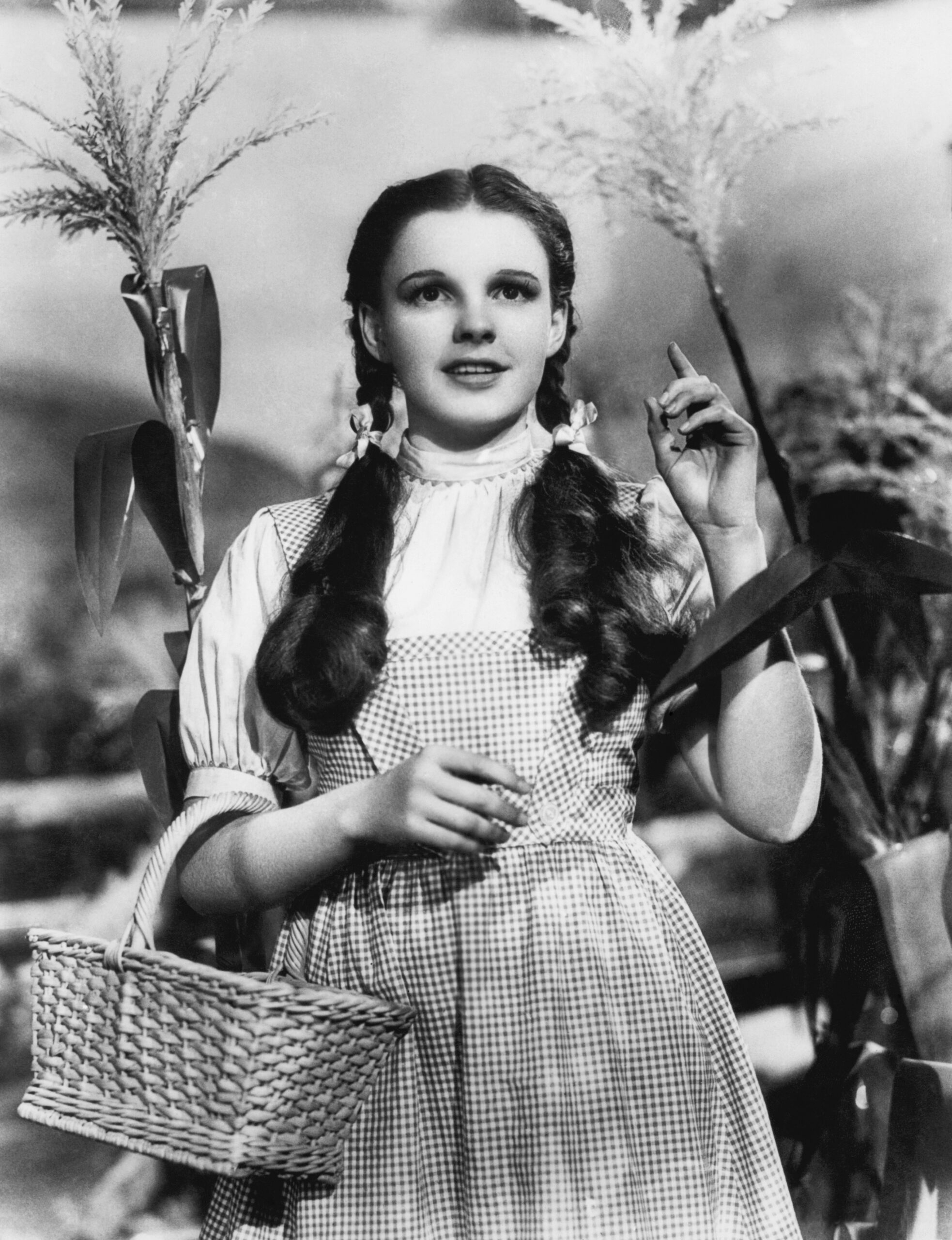 Judy Garland as Dorothy Gale in The Wizard of Oz (1939).
The Wizard of Oz
Garland was sixteen when production began on The Wizard of Oz. As Dorothy Gale, she moves from sepia-toned Kansas into Technicolor fantasy and discovers that courage, intelligence and love already exist within the companions who believe they lack them.
The Library of Congress exhibition on the film records that Garland received a special juvenile Academy Award and identifies Dorothy as her best-known role. The Library’s National Recording Registry essay on “Over the Rainbow” notes that she was sixteen when filming began.
The performance works because Garland never treats longing as childish. “Over the Rainbow” is sung by a farm girl, but the voice carries an adult knowledge of disappointment. Dorothy’s bravery is equally important. She is not transported home by passivity; she confronts danger, organises companions and learns that authority may be fraudulent.
The production was physically demanding. The hot Technicolor lighting, elaborate costumes and rigid schedule are documented parts of its history. Later folklore has added sensational stories, some true, some distorted and some false. The responsible focus remains on documented working conditions and Garland’s achievement within them.
Becoming an Adult Star
Garland’s transition from juvenile performer to adult leading lady was gradual. For Me and My Gal gave her a more mature wartime story opposite Gene Kelly. Presenting Lily Mars and Girl Crazy demonstrated growing confidence, but Meet Me in St. Louis was the decisive transformation.
Under Vincente Minnelli, whom she later married, Garland played Esther Smith as a young woman whose romantic hopes exist within a richly observed family. Songs arise from character rather than interrupting it. “The Boy Next Door” expresses anticipation, while “Have Yourself a Merry Little Christmas” holds sadness and reassurance in unstable balance.
The film’s beauty should not obscure Garland’s continuing insecurity, but it shows what happened when production design, direction and performance supported rather than disguised her. The Harvey Girls, The Pirate, Easter Parade and In the Good Old Summertime followed. She could be funny, romantic and rhythmically precise, not merely vulnerable.
Marriages, Motherhood and Pressure
Garland married five times: to David Rose, Vincente Minnelli, Sidney Luft, Mark Herron and Mickey Deans. Her marriage to Minnelli produced Liza Minnelli; her marriage to Luft produced Lorna and Joey Luft. Family life, work and illness repeatedly overlapped.
Minnelli directed some of Garland’s finest films, but the marriage ended in divorce. Luft later managed major parts of her career and produced A Star Is Born. Their relationship combined professional revival, family life, conflict and financial strain.
Accounts of Garland’s private life can become voyeuristic. The important pattern is that she sought stability while working in professions built on travel, rehearsal, financial risk and public judgment. Addiction and mental-health crises affected people around her, including her children. Compassion does not require pretending there was no damage.
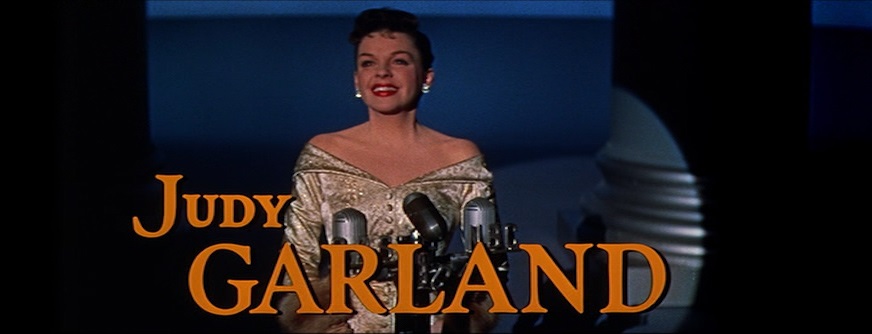 Judy Garland as Esther Blodgett and Vicki Lester in A Star Is Born (1954).
Leaving MGM
By the late 1940s, Garland’s health and reliability had deteriorated under continuous pressure. Suspensions and production difficulties accumulated. After being removed from Annie Get Your Gun and Royal Wedding, she left MGM in 1950.
At twenty-eight, she had spent most of her life inside a system that now presented her as unemployable. The end of the contract could have ended her career. Instead she turned to live performance, where the immediate exchange with an audience became a new source of power.
Concert Reinvention and A Star Is Born
Garland’s stage appearances in London and New York demonstrated that she remained a major attraction. Concert performance allowed her to reshape film songs as autobiography. Tempos, gestures and vocal roughness could acknowledge the years that had passed.
Her film comeback, George Cukor’s A Star Is Born (1954), gave her the adult role her MGM career had promised. She plays Esther Blodgett, transformed by the studio into Vicki Lester, while James Mason plays Norman Maine, the declining star who helps her rise.
The BFI record for the film identifies Cukor, Luft and the principal cast. Garland’s performance unites comedy, musical command and dramatic pain. The long “Born in a Trunk” sequence turns career history into performance, while the final scenes reject easy separation between professional success and private loss.
Garland received an Academy Award nomination but lost to Grace Kelly. Warner Bros. cut the film after its premiere, damaging its structure. Later restoration recovered still images and soundtrack material, allowing audiences to approach Cukor’s intended scale more closely.
Judy at Carnegie Hall
On April 23, 1961, Garland performed at Carnegie Hall in a concert that became a defining live album. The audience’s response was not simple nostalgia. Garland reoccupied her repertoire as an adult artist whose voice carried survival, humour and risk.
The Library of Congress account by Lorna Luft notes that Judy at Carnegie Hall entered the National Recording Registry in 2003. The album won major Grammy Awards, including Album of the Year, and remains one of the clearest records of Garland’s ability to command a room without cinematic protection.
Television and Final Years
Garland made acclaimed dramatic appearances, including an Oscar-nominated supporting role in Judgment at Nuremberg. The Judy Garland Show brought her to weekly television in 1963–64 and preserved performances with guests including Barbra Streisand and Lena Horne. The programme earned admiration but struggled in ratings competition and was cancelled.
Her final years included concerts of uneven quality, financial crises and continuing health problems. She died in London on June 22, 1969, from an accidental overdose of barbiturates. She was forty-seven.
The age is shocking, but it should not become the meaning of the life. Garland worked for more than four decades, transformed herself after institutional rejection and left major achievements in film, recording, television and concert performance.
Voice, Acting Style and Cultural Legacy
Garland’s voice changed across her career. The youthful instrument was bright and astonishingly secure. The later voice carried wear, but also interpretive freedom. She could delay a phrase, attack a consonant or shift from humour to desolation without losing the song’s architecture.
Her emotional openness has made her especially important to LGBTQ+ audiences, though simplistic claims that one event or song created that bond should be avoided. Identification grew through themes of difference, endurance, chosen community, theatrical self-invention and the contrast between public triumph and private pain.
The Wizard of Oz remains central. The Library of Congress describes the film’s enormous cultural reach through television broadcasts and later adaptations. Yet Garland’s legacy also demands Meet Me in St. Louis, A Star Is Born and Judy at Carnegie Hall. Dorothy is the beginning of the popular memory, not its limit.
Selected Judy Garland Filmography
The Wizard of Oz (1939): Dorothy Gale and the performance that made “Over the Rainbow” inseparable from Garland.
Babes in Arms (1939): A key Mickey Rooney partnership and Best Actress nomination.
For Me and My Gal (1942): A more mature musical role opposite Gene Kelly.
Meet Me in St. Louis (1944): Garland’s fullest MGM integration of song, character and family drama.
The Clock (1945): A rare non-musical romance directed by Vincente Minnelli.
The Harvey Girls (1946): A large-scale MGM musical built around female community.
Easter Parade (1948): Garland opposite Fred Astaire in one of her biggest commercial successes.
A Star Is Born (1954): Her great adult film performance and first competitive Oscar nomination.
Judgment at Nuremberg (1961): A restrained dramatic performance and supporting nomination.
I Could Go On Singing (1963): Her final film role and a work unavoidably shadowed by autobiography.
Judy Garland: Frequently Asked Questions
What was Judy Garland’s real name?
She was born Frances Ethel Gumm.
How old was Judy Garland in The Wizard of Oz?
She was sixteen during principal photography and seventeen when the film was released.
Did Judy Garland win an Oscar?
She received a special juvenile Academy Award for her 1939 work. She was later nominated competitively for A Star Is Born and Judgment at Nuremberg.
What was Judy Garland’s greatest comeback?
Both A Star Is Born and her 1961 Carnegie Hall concert are major comebacks in different media.
How did Judy Garland die?
She died in London in 1969 from an accidental barbiturate overdose.