Barbara Stanwyck could play a con artist in one film, a nightclub singer in the next and then appear as one of film noir’s most memorable murderers. More importantly, she made each of those women feel completely believable. So how did a girl born Ruby Stevens become one of Hollywood’s most versatile stars?
In this biography, we will follow Stanwyck from an unsettled Brooklyn childhood and her early years as a dancer through to Stella Dallas, The Lady Eve, Ball of Fire and Double Indemnity. We will also look at the decisions that kept her working when other stars found themselves trapped by a single image, as well as the films we would recommend watching first if you are discovering her work today.
It is tempting to describe Stanwyck simply as a “strong woman”, but that doesn’t tell us very much. Plenty of actors have played forceful characters. Stanwyck’s particular gift was showing us what strength cost. Her women could be funny, frightened, selfish, loyal, calculating or badly hurt, sometimes within the same scene. She also listened on screen. Watch her when another actor is talking and you can often see the next decision forming before she says anything.
That precision helped her work across comedy, melodrama, crime, westerns and television for almost sixty years. It also explains why no single Barbara Stanwyck film gives us the complete picture. We need to see her falling in love, plotting a murder, embarrassing her daughter, riding at the head of forty armed men and running a California ranch before the full range becomes clear.
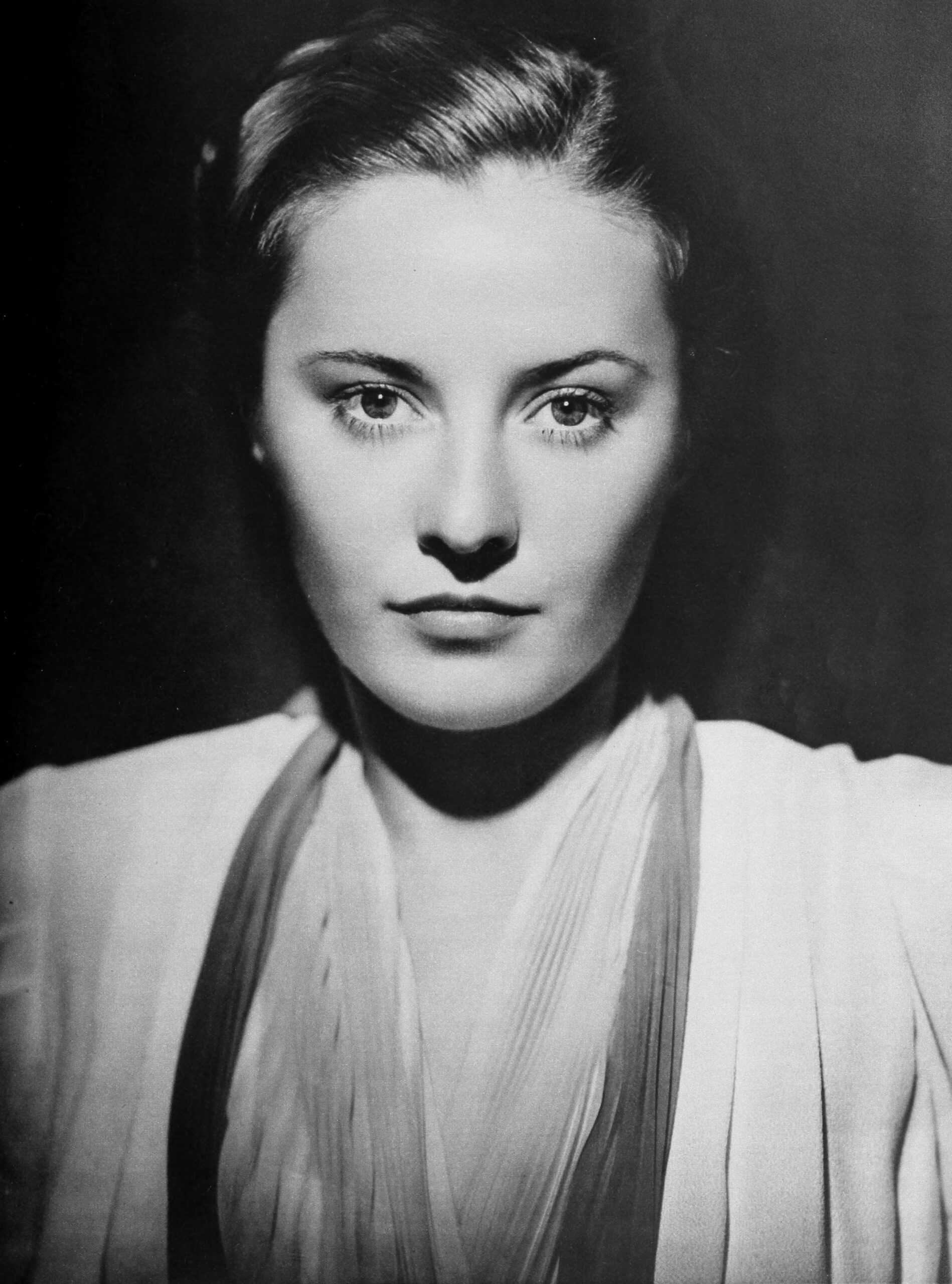 Barbara Stanwyck in a George Hurrell portrait published by Photoplay in June 1938.
Barbara Stanwyck at a glance
- Birth name: Ruby Catherine Stevens
- Born: 16 July 1907 in Brooklyn, New York
- Died: 20 January 1990 in Santa Monica, California
- Occupations: Actor, dancer and television performer
- Years active: 1920s to 1986
- Best-known films: Baby Face, Stella Dallas, The Lady Eve, Ball of Fire, Double Indemnity and Sorry, Wrong Number
- Best-known television work: The Barbara Stanwyck Show, The Big Valley and The Thorn Birds
- Major honours: Four competitive Academy Award nominations, an Honorary Academy Award, the AFI Life Achievement Award and three Emmy Awards
Ruby Stevens grew up quickly
Ruby Catherine Stevens was born in Brooklyn as the youngest of five children. Her childhood changed abruptly when her mother, Catherine, died after being knocked from a moving streetcar. Ruby was four. Her father, Byron Stevens, later left the family, and much of the responsibility for the younger children fell to their older sister Mildred.
Ruby consequently moved between relatives and foster homes. We should be careful not to turn every later performance into a direct replay of that childhood. Acting is a craft, and Stanwyck spent years learning it. Even so, the lack of security matters because work became central to her life unusually early. She left school as a young teenager and took jobs wrapping parcels, filing and working for a telephone company while she looked for a way into show business.
Dancing provided that route. She worked in nightclubs and revues, then appeared on Broadway under her birth name in Keep Kool in 1924. The Internet Broadway Database records the progression clearly: Ruby Stevens in the ensemble of Keep Kool, Barbara Stanwyck in The Noose and then the leading role of Bonny in Burlesque. The change of name came as her acting opportunities improved, although familiar stories about exactly how it was chosen are less firmly documented than the name itself.
Stanwyck was not an overnight success. By the time Broadway noticed her, she had already learned how to hold an audience in rooms where nobody was obliged to pay attention. Nightclub work encouraged speed, concentration and an instinct for when a gesture had registered. Those qualities would prove useful once the camera began moving close enough to catch them.
 Barbara Stanwyck in 1927, the year Burlesque established her as a Broadway leading actor.
Broadway gave her more than a glamorous name
Producer and playwright Willard Mack cast Stanwyck as a cabaret dancer in The Noose in 1926. The part was comparatively small at first, but it grew as she attracted attention. Burlesque followed in 1927, pairing her with Hal Skelly in a backstage drama about a dancer married to an unreliable comic. The role asked for toughness, humour and emotional exposure, the same combination that would later define much of her film work.
Contemporary publicity often treated the transformation from Ruby Stevens to Barbara Stanwyck as a Cinderella story. The reality was harder and more useful. She had worked her way through chorus lines, touring companies and supporting parts before anyone placed her name above a title. She understood the difference between attracting attention and keeping it.
During this period she met the vaudeville star Frank Fay. They married in 1928, when Fay was better known nationally than his wife. Sound films were creating a demand for performers who could speak naturally and remember large amounts of dialogue, so Hollywood appeared to offer both of them a future. The marriage and the move west would change her life, though not in the way either probably expected.
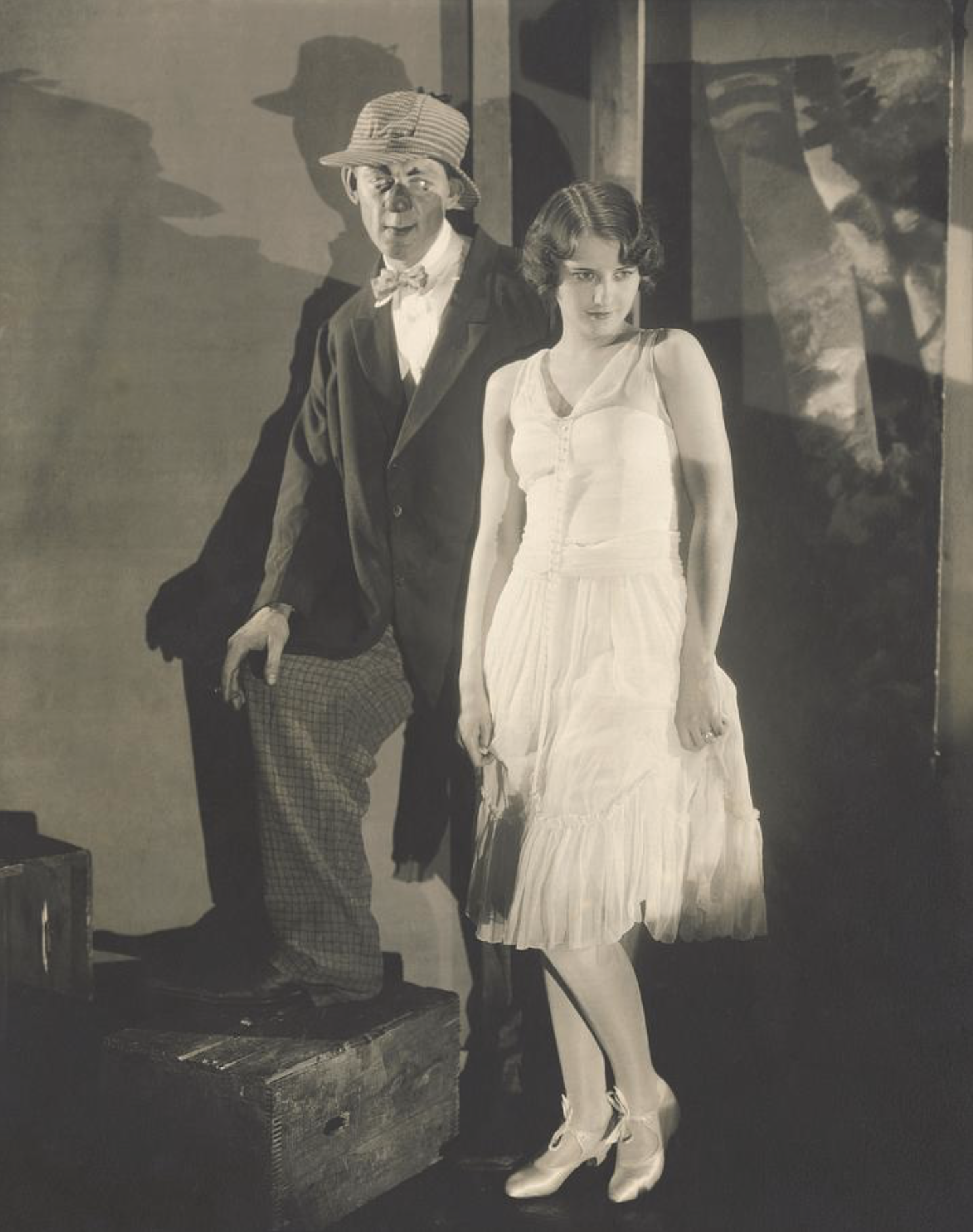 Hal Skelly and Barbara Stanwyck in the Broadway production Burlesque, photographed by Edward Steichen in 1927.
Hollywood did not recognise her immediately
Stanwyck’s first screen appearances were uncertain. Broadway Nights gave her little to do, while The Locked Door and Mexicali Rose did not establish the direct, emotionally alert actor audiences would soon recognise. Theatrical skill did not automatically translate to early sound cinema. Cameras were less mobile, microphones restricted movement and some directors encouraged a slow, declamatory style that made experienced stage performers look stiff.
Frank Capra changed the direction of her career with Ladies of Leisure in 1930. Capra later told the story as if he alone had discovered an untrained natural, which flatters the director and overlooks Stanwyck’s Broadway experience. What he did understand was how the camera could use her. Instead of asking for grand effects, he let a close-up record the moment Kay Arnold’s defensive confidence begins to fail.
The film established a working relationship that continued through The Miracle Woman, Forbidden, The Bitter Tea of General Yen, Meet John Doe and, indirectly, several of the themes that recur across Capra’s work. Stanwyck’s characters often stand outside respectable society and see its hypocrisies more clearly than the people born inside it. She could make Capra’s sentiment convincing because she never seemed sentimental about the world around it.
We also have to acknowledge where some of these films remain uncomfortable. The Bitter Tea of General Yen challenged the period’s ban on interracial romance, but it did so through yellowface casting and an exoticised version of China. Stanwyck’s performance is controlled and curious, yet the production belongs to a system that denied Asian actors the leading role. A modern biography should not pretend that artistic interest removes that history.
Pre-Code Hollywood allowed her to be dangerous
Stanwyck found some of her most modern roles before stricter enforcement of the Production Code in 1934. These films could discuss sex, work, crime and economic desperation with a bluntness that disappeared once the studios accepted tighter censorship.
In Night Nurse (1931), she plays Lora Hart, a trainee nurse who uncovers a plan to starve two children for their inheritance. The film is lurid, fast and sometimes outrageous, but Lora’s practical competence keeps it moving. Clark Gable appears as a brutal chauffeur before becoming a romantic leading man, while Joan Blondell gives Stanwyck a colleague who feels like a genuine working friend rather than a decorative companion.
Ladies They Talk About places her inside a women’s prison, and Baby Face (1933) goes further. Lily Powers grows up in her father’s speakeasy, where men have treated access to her as part of the business. After leaving home, she uses sex and her understanding of male vanity to climb through a bank, one office floor at a time. The famous upward tracking shots make the strategy visible without showing what happens behind each closed door.
The film’s censored release version weakened its argument by changing key dialogue and pushing Lily towards a more conventional moral judgement. The Library of Congress later discovered and restored an uncensored version, making the film available in a form much closer to its original intention. Its National Film Registry essay explains why the film became such an important example of pre-Code cinema.
What makes Stanwyck’s work in Baby Face interesting is not that Lily is secretly good or straightforwardly wicked. She studies each man and adjusts. She can be amused, cold, impatient or briefly vulnerable, but she never asks the audience to misunderstand what she is doing. Theresa Harris, as Lily’s friend Chico, also provides a loyalty the white men around them consistently fail to match. The film gives Harris too little space, but their scenes complicate any simple account of Lily as a lone social climber.
Freelancing gave Stanwyck an unusual career
Many major stars of the 1930s worked under long studio contracts. A contract could provide good roles, publicity and protection, but it could also fix an actor’s image and force them into whatever films the studio needed to complete. Stanwyck spent much of her peak career freelancing between producers and studios.
That arrangement brought risk. There was no permanent department planning her next five pictures or protecting her from a failure. It also gave her access to directors as different as King Vidor, Cecil B. DeMille, Preston Sturges, Howard Hawks and Billy Wilder. In the space of a few years she could move from a rural melodrama to a western, a political fable and a screwball comedy without having to persuade one studio that its image of Barbara Stanwyck was wrong.
The drawback was that she worked constantly. Stanwyck became known for learning lines, arriving prepared and understanding how a set operated. Those habits were partly professional pride and partly economic sense. A freelancer who delayed production could quickly acquire the wrong reputation.
Stella Dallas made embarrassment heartbreaking
Stella Dallas (1937) brought Stanwyck her first Academy Award nomination. Stella begins as an ambitious working-class woman who marries above her social position. She loves her daughter Laurel, but her clothes, voice and behaviour increasingly embarrass the young woman as Laurel moves into wealthier circles.
This could have become a cruel exercise in asking the audience to laugh at a woman for dressing badly. Stanwyck makes it more complicated. Stella knows when people are laughing, sometimes before Laurel does. She enjoys colour, noise and company, but she also understands that polite society has decided those pleasures reveal something shameful about her. The performance lets us see her vulgarity and the class judgement surrounding it at the same time.
The final sequence, in which Stella watches Laurel’s wedding from outside in the rain, remains famous because Stanwyck refuses to simplify the emotion. Stella is excluded, proud, devastated and satisfied that her plan has worked. The smile is not a neat happy ending. It is the expression of someone accepting the price of a decision she made deliberately.
Anne Shirley received a supporting Oscar nomination for playing Laurel, and the film works because mother and daughter are allowed to love one another while causing real pain. The AFI Catalog record confirms the film’s production history and Stanwyck’s first nomination, but the record cannot convey what she does in the close-ups. For that, you have to watch her.
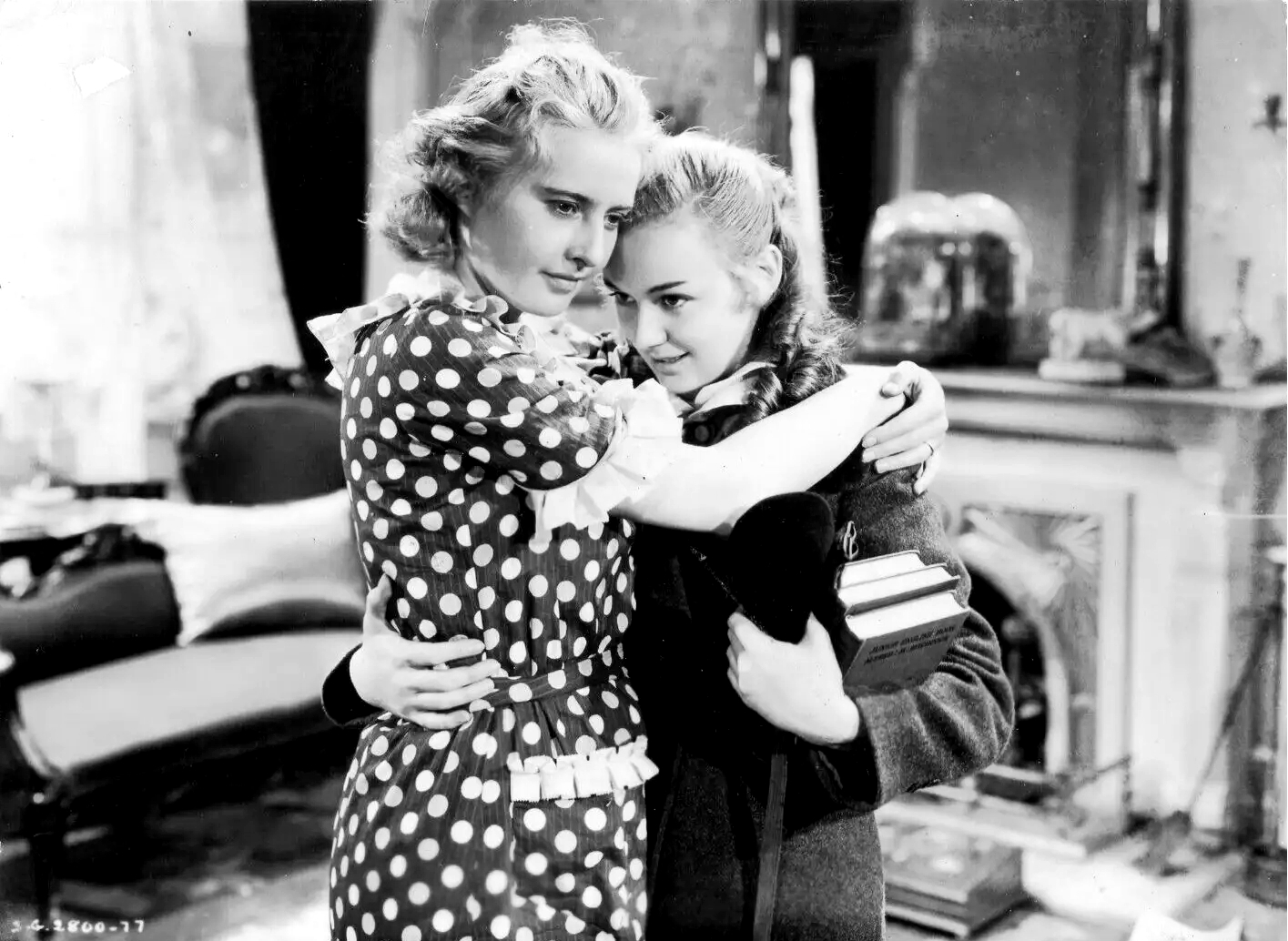 Barbara Stanwyck as Stella and Anne Shirley as Laurel in Stella Dallas (1937).
A western, a boxer and four remarkable films in 1941
Stanwyck’s late-1930s work shows how useful her independence had become. In Cecil B. DeMille’s Union Pacific (1939), she plays Mollie Monahan, a railway worker caught between competing men and competing versions of national progress. The film is a spectacle, but Stanwyck gives its movement a human centre. She looks at home around mud, machinery and crowds rather than appearing as a glamorous visitor waiting for a clean close-up.
In Golden Boy the same year, she worked opposite William Holden, then a young actor struggling to hold his place in the film. Later accounts credit Stanwyck with encouraging him and resisting efforts to replace him. Holden never forgot it. The story has sometimes been polished into a perfect Hollywood legend, but the professional support itself is well attested and fits the loyalty many colleagues later described.
Then came 1941. Stanwyck appeared in Meet John Doe, The Lady Eve, You Belong to Me and Ball of Fire. Four substantial starring roles in one year would be impressive even if they asked for similar work. These did not.
Meet John Doe returns her to Capra as reporter Ann Mitchell, who invents a suicidal common man for a newspaper campaign and then watches the lie become a political movement. Stanwyck has to carry the speed of a newsroom comedy before allowing guilt to change Ann’s relationship with Gary Cooper’s John Willoughby.
In Preston Sturges’s The Lady Eve, she plays card sharp Jean Harrington and Jean’s invented British alter ego, Lady Eve Sidwich. Henry Fonda’s Charles Pike repeatedly falls for the same woman because Stanwyck changes timing, accent and intention more than appearance. The film lets her seduce, humiliate and genuinely love him without making any one emotion cancel the others.
Ball of Fire, directed by Howard Hawks, pairs her with Gary Cooper again. Sugarpuss O’Shea hides among professors compiling an encyclopaedia and teaches them the slang their books have missed. Stanwyck handles rapid dialogue, nightclub performance and romantic comedy, earning her second Oscar nomination. If you only know her from Double Indemnity, these 1941 films reveal how much warmth and comic patience the noir image leaves out.
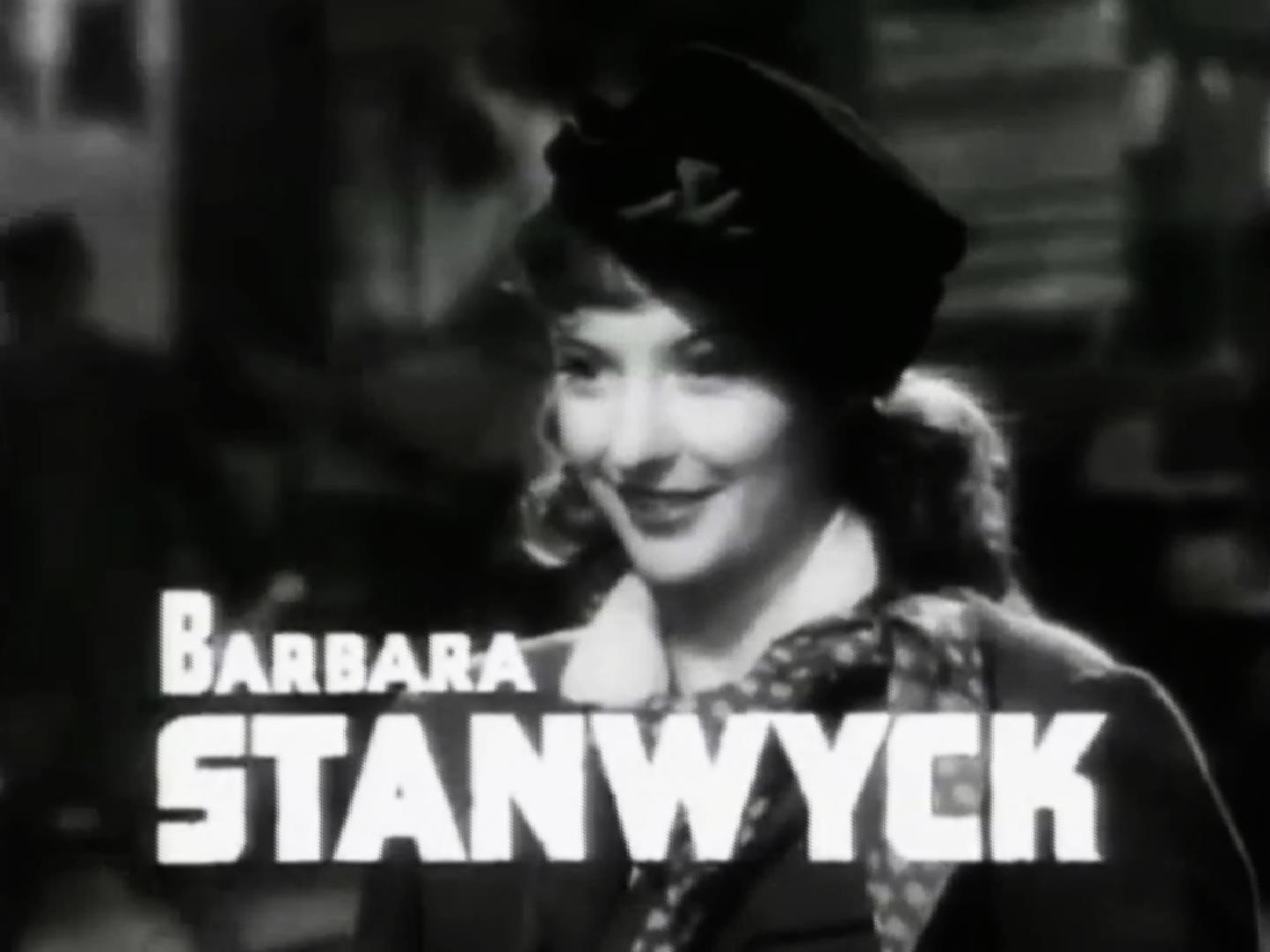 Barbara Stanwyck in a cast-title frame from the Union Pacific trailer (1939).
Robert Taylor and the problem with Hollywood privacy
Stanwyck married MGM star Robert Taylor in 1939. Their relationship attracted enormous publicity because Taylor’s studio had a commercial interest in the image of a handsome young leading man settling into marriage. Separating private feeling from studio management is consequently difficult.
They divorced in 1951, and Stanwyck never remarried. Later comments suggest that Taylor remained important to her, but we should resist turning a long, private relationship into a simple tale of one great lost love. Both careers placed pressure on the marriage, and most of what happened inside it was not recorded for us.
Her earlier marriage to Frank Fay requires even more care. Major biographies describe Fay’s heavy drinking and abusive behaviour, while accounts of particular incidents vary. Stanwyck and Fay had adopted a son, Dion, and the mother-son relationship eventually became estranged. There is enough evidence to say that the family history was painful. There is not enough to assign every responsibility confidently from a distance.
This is one area where gossip has often overtaken biography. The honest approach is to acknowledge the marriages and estrangement because they mattered to her life, then avoid inventing motives or private conversations that no reliable witness recorded.
Double Indemnity changed the way audiences saw her
Billy Wilder’s Double Indemnity (1944) arrived when Stanwyck was already one of Hollywood’s highest-paid and most respected actors. Playing Phyllis Dietrichson still involved a risk. Phyllis persuades insurance salesman Walter Neff to help murder her husband, and the role offered none of the conventional excuses often used to protect a female star’s image.
Wilder later recalled challenging Stanwyck to decide whether she was an actor or a mouse when she hesitated over playing a killer. The anecdote has become part of Hollywood folklore, so it is safer to treat it as Wilder’s remembered version of the conversation rather than a transcript. Whatever was said, Stanwyck accepted.
The performance is colder than Lily Powers in Baby Face. Lily visibly studies the men around her because she is learning how to survive. Phyllis has already completed the lesson. She waits for Walter to reveal what he wants, then lets him believe the criminal idea is becoming his. Fred MacMurray’s performance is essential here. His familiar decency makes Walter’s vanity and appetite more unsettling than they would be in the hands of an obvious screen villain.
The blonde wig has been mocked for decades, but it also makes Phyllis look slightly constructed, as if the suburban wife Walter sees has been assembled for his benefit. Stanwyck’s stillness does the rest. She can listen without giving Walter reassurance, then alter the balance of a scene with one flat sentence.
Edward G. Robinson, playing claims manager Barton Keyes, gives the film its other important relationship. Walter’s betrayal of Keyes finally carries more emotional weight than his desire for Phyllis. This is why the film remains richer than a simple story about a dangerous woman ruining a foolish man. Walter chooses, lies and kills. Phyllis exploits him, but she does not remove his responsibility.
The Production Code office initially objected to James M. Cain’s story, and the AFI Catalog history records the concerns surrounding adultery, murder and the possibility that criminals might escape justice. Wilder and Raymond Chandler shaped the adaptation within those limits. The result gave Stanwyck her third Oscar nomination and became central to the later definition of film noir.
 Barbara Stanwyck in a colour portrait published in Photoplay-Movie Mirror in July 1943.
Noir brought out different kinds of fear
Stanwyck did not repeat Phyllis every time she entered a crime film. In The Strange Love of Martha Ivers (1946), Martha’s authority rests on money, history and a crime committed when she was young. The character is powerful in public but tied to a husband and a past she cannot control.
Sorry, Wrong Number (1948) reverses the physical confidence associated with many Stanwyck roles. Leona Stevenson is confined to bed and dependent on a telephone after accidentally overhearing plans for a murder. As she tries to identify the intended victim, irritation gives way to panic. The role began as a radio drama, and the film sometimes retains the pressure of a single extended performance. Stanwyck’s fourth Oscar nomination recognised how carefully she builds that panic rather than starting at maximum intensity.
These films also remind us that her characters were not always meant to be likeable. Leona is demanding and used to controlling the people around her. Martha has caused serious harm. Stanwyck trusted an audience to remain interested without receiving constant instructions to approve.
The 1950s did not make her disappear
Hollywood offered fewer substantial leading roles to women as they moved beyond the age studios considered romantically marketable. Stanwyck kept working, but the films changed. Some were routine thrillers or westerns. Others used her authority in ways that would have been impossible earlier.
Anthony Mann’s The Furies (1950) places her opposite Walter Huston in a struggle between a daughter and a ranch-owning father who recognise too much of themselves in one another. Fritz Lang’s Clash by Night (1952) gives her a weary woman returning to a fishing town and making choices that hurt people who trust her. In Titanic (1953), she plays a mother whose family conflict is interrupted by catastrophe, bringing emotional concentration to a film built partly around spectacle.
Douglas Sirk’s All I Desire (1953) is especially revealing. Stanwyck plays Naomi Murdoch, a former actress who left her family after a scandal and returns to watch her daughter perform. The film understands that homecoming cannot restore the years she missed. Stanwyck doesn’t ask us to forget Naomi’s failures, but she makes the hope of another chance feel serious rather than convenient.
Samuel Fuller’s Forty Guns (1957) turns her into Jessica Drummond, a landowner who rides at the head of forty men. The opening image announces her power before the story attempts to restrict it. Fuller uses wide CinemaScope frames and sudden violence, while Stanwyck plays Jessica as a practical ruler rather than a novelty. She was nearly fifty when it was released, and the film treats age as part of her authority.
Television gave her another leading career
When film roles narrowed, Stanwyck did not treat television as a humiliating retreat. She approached it as work. The Barbara Stanwyck Show was an anthology series rather than a conventional sitcom, allowing her to play different characters and occasionally act as host. It lasted one season, but won her an Emmy.
Her most durable television role came with The Big Valley in 1965. Victoria Barkley is the widowed head of a wealthy California ranching family. The series could have placed her at the edge of the action while younger men ran the ranch. Instead, Victoria argues, investigates, rides and makes decisions. Stanwyck’s age was not hidden; it was the reason the family authority made sense.
She won another Emmy for the series, then a third for The Thorn Birds in 1983. Her performance as Mary Carson is severe, possessive and fully aware of the power wealth provides. Later appearances in Dynasty and The Colbys introduced her to another television generation, although she made no secret of finding some of the material unsatisfying.
The consistency across these decades is preparation. Colleagues repeatedly remembered an actor who knew her lines, understood lenses and expected the set to run professionally. That reputation can sound rather dry until we consider what it made possible. Directors could move quickly because Stanwyck had already done the thinking.
 Barbara Stanwyck, Michael Burns and Colleen Dewhurst in The Big Valley episode A Day of Terror (1967).
Politics and public image
Stanwyck’s political views were conservative, and she was associated with the Motion Picture Alliance for the Preservation of American Ideals. The organisation opposed alleged Communist influence in Hollywood during the period that led into the blacklist. Her then husband Robert Taylor later appeared as a friendly witness before the House Un-American Activities Committee.
This history should be included without making Stanwyck responsible for every statement or action associated with other members. It also should not be softened into a vague reference to patriotism. The blacklist damaged careers and lives. Membership of an organisation active in that climate forms part of the public record, even when evidence about an individual member’s precise involvement is incomplete.
Her screen image was less politically fixed. She could embody working-class anger, corporate ambition, family sacrifice or property-owning authority depending on the film. That flexibility is one reason attempts to use the characters as a simple guide to her private beliefs quickly break down.
Recognition arrived late, but it did arrive
Stanwyck received four competitive Academy Award nominations and never won. The Academy eventually presented her with an Honorary Award at the 1982 ceremony for what its official record called her unique contribution to screen acting. She used part of her speech to remember William Holden, who had recently died, returning the honour to a professional friendship that had begun on Golden Boy.
The American Film Institute followed with its Life Achievement Award in 1987. Television had already given her three Emmys, so these later honours did not rescue a forgotten performer. They corrected the strange absence of a competitive Oscar from one of the strongest acting records in American film.
Stanwyck’s health declined after decades of smoking. She died in Santa Monica on 20 January 1990, aged eighty-two. Contemporary reports and later reference works identify congestive heart failure and chronic obstructive pulmonary disease among the causes. Her ashes were scattered in California.
Which Barbara Stanwyck films should you watch first?
If you are new to Stanwyck, we would not recommend beginning with a complete chronological run. Choose films that make the contrasts visible.
- The Lady Eve (1941): Start here for comedy. Stanwyck controls the pace without making Henry Fonda disappear, and Jean Harrington’s genuine feeling never stops her from enjoying the con.
- Double Indemnity (1944): Watch this next for film noir. Pay attention to how little she moves while Walter Neff talks himself into disaster.
- Stella Dallas (1937): This is the clearest demonstration of her emotional range and her refusal to make sacrifice look tidy.
- Baby Face (1933): Choose the restored version if possible. It shows why pre-Code Hollywood gave her opportunities censorship soon removed.
- Ball of Fire (1941): Sugarpuss O’Shea proves that rapid dialogue and romantic warmth were as important to Stanwyck as toughness.
- Forty Guns (1957): Finish with a later western that lets age, command and physical presence become part of the performance.
After those six, try Remember the Night, The Furies, All I Desire and Sorry, Wrong Number. They fill in the spaces between the famous images.
If you enjoy comparing how major actresses negotiated the studio era, our biographies of Bette Davis and Katharine Hepburn provide two very different routes through the same industry.
Why Barbara Stanwyck still matters
Stanwyck’s importance does not depend on pretending every film was excellent. She made weak pictures, accepted repetitive assignments and occasionally worked inside material whose racial or political assumptions now need direct criticism. What matters is how frequently she found a precise human behaviour inside the machinery around her.
She also refused the easiest version of glamour. Costumes and lighting could make her beautiful, but beauty was rarely the whole point of a scene. She wanted to know what the woman was trying to obtain, what she feared losing and how much of that information she would allow another character to see.
That approach travels well across time. Modern viewers may not share every convention of Stella Dallas or Meet John Doe, but they can recognise someone trying to maintain dignity while circumstances make it difficult. They can also recognise the intelligence of Jean Harrington, the calculation of Phyllis Dietrichson and the authority of Victoria Barkley.
So where should we place Barbara Stanwyck among the great Hollywood stars? Rankings are less useful than the evidence. Few actors moved so convincingly between screwball comedy, melodrama, noir, westerns and television, and fewer still remained fully present when the industry stopped treating them as young. Watch the six films above and the argument largely makes itself.
Questions readers often ask
What was Barbara Stanwyck’s real name?
She was born Ruby Catherine Stevens. She began using Barbara Stanwyck professionally during her stage career in the 1920s.
Did Barbara Stanwyck win an Oscar?
She never won a competitive Academy Award, despite four Best Actress nominations for Stella Dallas, Ball of Fire, Double Indemnity and Sorry, Wrong Number. She later received an Honorary Academy Award.
Was Barbara Stanwyck married to Robert Taylor?
Yes. They married in 1939 and divorced in 1951. She had previously been married to Frank Fay and did not marry again.
What was Barbara Stanwyck’s final acting role?
Her final screen work came in the television series The Colbys in 1986. By that stage her career had extended from Broadway and the arrival of sound films into prime-time television.