Ava Gardner became famous as the woman a camera could not resist. MGM photographed her as though beauty explained everything, the press turned her marriages into an ongoing serial, and later profiles often made her sound like a glorious force of nature who happened to appear in films. It is a compelling legend, but it can leave the actor herself standing somewhere outside her own story.
In this biography, we will bring the films back to the centre. We will follow Gardner from a North Carolina farming community to MGM, look at the years of training behind her supposedly effortless screen presence and examine the performances that changed her career. We will also discuss Frank Sinatra, because their relationship genuinely mattered to both of them, but we will not allow a famous marriage to swallow a fifty-year career.
The most interesting Ava Gardner was rarely the passive beauty that publicity described. On screen she could be sardonic, angry, amused and unexpectedly practical. Away from the studio she built a life in Spain and London, kept close ties to North Carolina and became increasingly selective about whom she worked with. The legend is part of the story. The woman making choices inside and around it is the part we need to recover.
 Ava Gardner in 1947, the year after The Killers gave her a screen identity stronger than MGM’s early glamour publicity.
Ava Gardner at a glance
- Full name: Ava Lavinia Gardner
- Born: 24 December 1922 in Grabtown, North Carolina
- Died: 25 January 1990 in London, England
- Occupation: Actor
- Years active: 1941 to 1986
- Best-known films: The Killers, Show Boat, Mogambo, The Barefoot Contessa, Bhowani Junction, On the Beach and The Night of the Iguana
- Major recognition: Academy Award nomination for Mogambo and Golden Globe nomination for The Night of the Iguana
- Marriages: Mickey Rooney, Artie Shaw and Frank Sinatra
- Places most associated with her life: North Carolina, Hollywood, Madrid and London
North Carolina came before Hollywood
Ava was the youngest of seven children born to Jonas and Mary Elizabeth “Mollie” Gardner. The family lived in Grabtown, a rural community near Smithfield, where tobacco and cotton farming shaped the household. This was not the romantic country childhood that studio publicity later found useful. The family’s security could disappear quickly.
When a fire destroyed their barn and cotton gin, the Gardners moved to the nearby Brogden community. Jonas worked as a school caretaker while Mollie ran a teacherage, a boarding house for women teaching locally. The Depression eventually forced that establishment to close, and the family moved again, first to Virginia and then back to North Carolina. Ava learned early that a home could depend on work continuing and that women might have to hold a family together when circumstances changed.
Her father died in 1938. Ava completed high school and briefly studied secretarial work at Atlantic Christian College, now Barton College. Nothing about that route pointed inevitably towards film stardom. That matters because Hollywood discovery stories can make success look like destiny. Gardner did not grow up rehearsing for MGM. She arrived with a pronounced regional accent, very little performing experience and no idea how a film set worked.
She did, however, retain a connection to home throughout her life. North Carolina was not simply the humble first chapter that had to be escaped before the glamorous story could begin. She returned to see family and friends, and after her death she was buried in Smithfield. The distance between Grabtown and Hollywood became part of her identity, but she never allowed the first place to be erased by the second.
A photograph opened the door, but it did not create the career
During a visit to her sister Beatrice in New York, Ava was photographed by Beatrice’s husband, Larry Tarr. One of the portraits displayed in Tarr’s studio attracted attention connected with MGM. A screen test followed, and the studio signed Gardner in 1941 when she was eighteen.
The story has often been polished into a perfect Hollywood anecdote: the executives supposedly could not understand her accent and did not think she could act, but decided that she was too beautiful to lose. Different versions supply different remarks, so we should be careful with the dialogue. The essential facts are more revealing anyway. MGM saw unusual photographic potential in an inexperienced young woman and believed its training system could shape everything else.
Her sister travelled west with her because Mollie would not let Ava go alone. Once Gardner entered the studio system, speech lessons, singing lessons, movement, makeup and camera tests became part of the job. Publicity later presented the result as natural glamour. In reality, every “effortless” close-up depended on technical instruction, lighting, costume, rehearsal and Gardner’s growing understanding of what the camera would register.
For roughly five years she appeared in small roles, many of them uncredited. She learned where to stand, how little movement a close-up required and how to repeat behaviour for separate camera setups. These are basic skills, but they are not automatic. The slow apprenticeship also explains why her eventual breakthrough feels so assured. By the time The Killers gave her a role worth watching, Gardner was new to stardom rather than new to filmmaking.
 Bruce Bailey’s 1949 Movieland cover presents the polished star image that followed years of speech, movement and camera training at MGM.
Mickey Rooney, Artie Shaw and a private life made public
Gardner married Mickey Rooney in January 1942, only months after arriving in Hollywood. She was nineteen and Rooney was one of MGM’s most valuable stars. Their marriage therefore became studio news immediately. The publicity made Ava visible before her films had given audiences much reason to know her.
The marriage ended the following year. Later recollections describe Rooney’s infidelity, but our purpose is not to reconstruct every argument. The larger point is that Gardner entered adult life and the studio system at the same time. MGM could present the wedding as a charming romance while the young woman inside it was still learning how little privacy a star’s wife received.
She married bandleader Artie Shaw in 1945. Gardner later remembered feeling intellectually inadequate beside him and trying to meet standards that diminished her confidence. Again, memoir tells us how she understood the experience from a later vantage point; it is not a recording of every private exchange. The marriage lasted less than a year.
These two relationships are often used as a brisk prelude to Sinatra, as though the first marriages matter only because they prepared the way for the famous one. They deserve a different reading. Each placed Gardner beside an established male celebrity at a time when her own professional identity was unfinished. By the end of the 1940s, that balance had changed. Ava Gardner was no longer merely the beautiful young wife in someone else’s publicity story. She had become a star in her own right.
The Killers revealed what MGM had missed
MGM loaned Gardner to Universal for Robert Siodmak’s The Killers in 1946. The film begins with the murder of Burt Lancaster’s Ole “the Swede” Anderson and then moves backwards through the people and betrayals that led him there. Gardner plays Kitty Collins, the woman around whom much of that fatal history turns.
Kitty could easily become a collection of noir gestures: a song, a gown, a dangerous look and a betrayal. Gardner makes her more unsettling because she does not advertise every calculation. When Kitty enters, the film understands the effect of her beauty, but Gardner also gives the character watchfulness. She listens, measures the men around her and changes the emotional temperature without seeming to push.
The low voice mattered. So did the stillness that MGM had initially treated as a problem to be corrected. In The Killers, reserve becomes dramatic information. Kitty allows other people to underestimate how actively she is arranging her survival. Even when the character’s choices are ruthless, Gardner does not reduce her to a mechanical femme fatale.
The film made both Gardner and Lancaster major names. More importantly, it gave audiences a screen image MGM’s own productions had failed to find. The studio had been trying to refine an attractive contract player. Siodmak used the very distance in her manner to create uncertainty. Once you have seen Kitty Collins, it becomes difficult to accept the idea that Gardner’s career was built on looks alone.
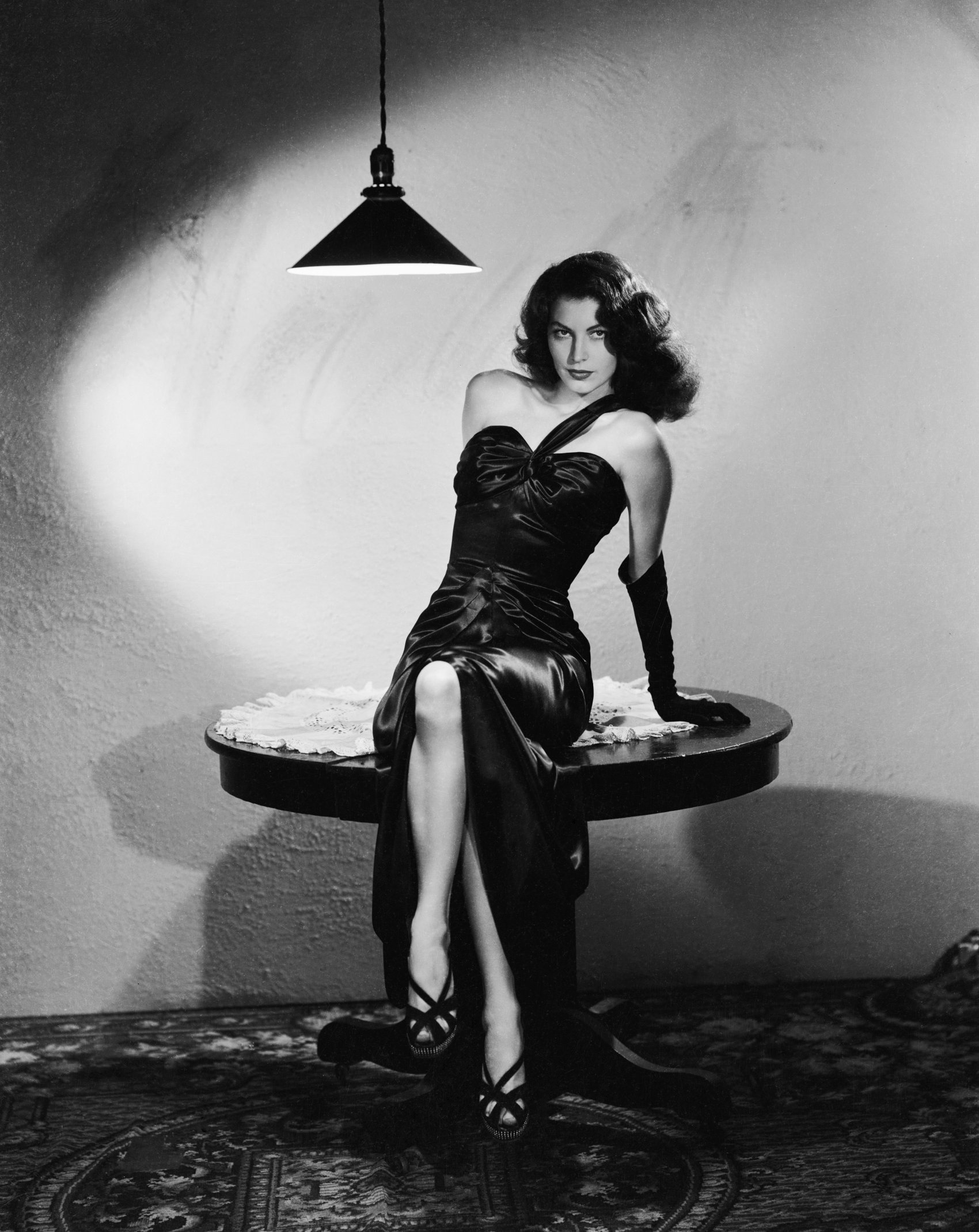 Gardner as Kitty Collins in The Killers, where stillness and watchfulness transformed the studio beauty into one of film noir’s defining presences.
MGM stardom brought opportunities and limitations
After The Killers, Gardner moved into leading roles in The Hucksters, Singapore, One Touch of Venus and The Bribe. The films vary greatly, and not all of them gave her characters as interesting as Kitty. Stardom did not automatically mean that the studio understood her range.
MGM’s image makers favoured gowns, exotic settings and the suggestion that desire followed her wherever she went. Gardner could fulfil that function, but she was often better when a part allowed humour or resentment to disturb the glamour. She had a quick, slightly sceptical smile and a gift for suggesting that a woman already understood the bargain being proposed to her.
Albert Lewin’s Pandora and the Flying Dutchman in 1951 turned her beauty into myth. As Pandora Reynolds, she is surrounded by men willing to destroy themselves for her, yet Gardner gives the character sadness rather than simple vanity. Pandora keeps testing devotion because ordinary satisfaction seems unavailable to her. The film’s dreamlike colour photography celebrates Gardner’s appearance, but her performance asks what it costs to become the surface onto which everyone else projects longing.
That same tension runs through much of her career. Hollywood paid her to embody desire and then judged the women she played for knowing that they were desired. Gardner’s best work does not escape that structure; it exposes the fatigue, wit and anger inside it.
Show Boat let her play loss, then replaced her singing
In MGM’s 1951 version of Show Boat, Gardner played Julie LaVerne, the performer whose life is destroyed when her mixed-race ancestry is exposed under the segregation laws governing the story’s setting. It is a supporting role, but Julie’s expulsion gives the musical one of its deepest wounds.
Gardner recorded her songs. The finished film, however, used singer Annette Warren’s voice for most of them. Studio dubbing was common, and Warren’s work should not be treated as an embarrassment. Yet the decision tells us something about MGM’s confidence in Gardner. The studio was willing to place her at the emotional centre of Julie’s scenes while still replacing a major part of the performance she had prepared.
What remains on screen is powerful. Gardner does not play Julie as a glamorous victim waiting for our sympathy. She makes the woman tired, guarded and conscious of how quickly a community can turn. When Julie reappears later, decline is conveyed without a showy transformation. Her dignity has been damaged, not conveniently removed so that the audience can admire suffering.
We should also watch Show Boat with its racial politics clearly in view. The musical asks audiences to condemn Julie’s treatment, but it still emerged from an entertainment tradition that restricted Black performers and often centred white experience. Gardner’s performance can move us without requiring us to ignore the larger history around the role.
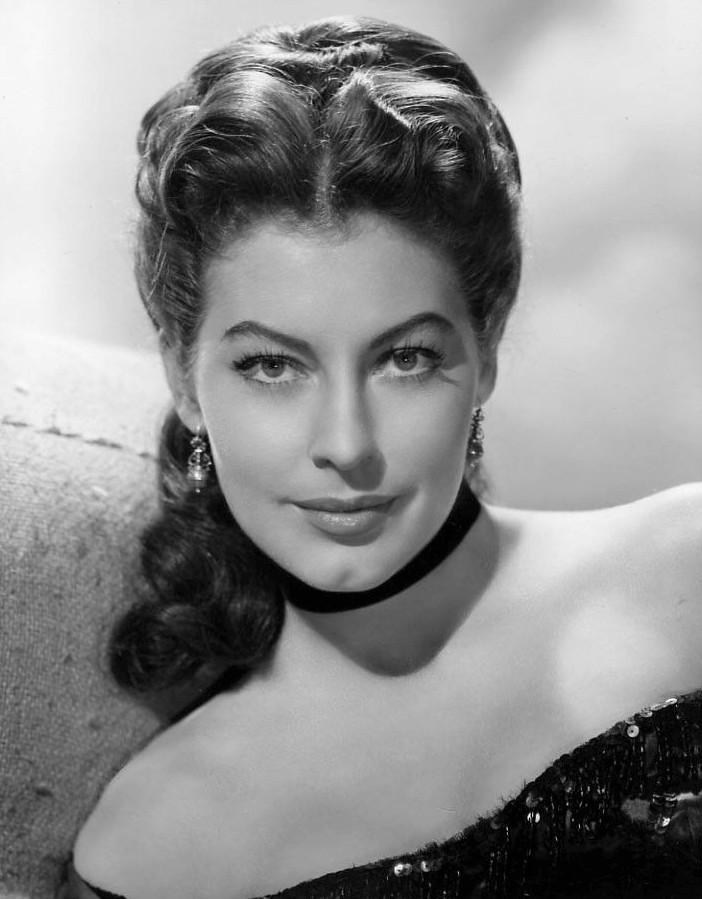 Gardner as Julie LaVerne in Show Boat. She recorded the songs, although Annette Warren’s voice was used for most of the released musical performance.
Mogambo brought humour, vulnerability and an Oscar nomination
John Ford’s Mogambo reunited Clark Gable’s basic romantic situation from Red Dust with a new African setting. Gardner plays Eloise “Honey Bear” Kelly, a worldly entertainer who becomes involved with Gable’s big-game hunter while Grace Kelly’s married Linda Nordley is drawn to him as well.
The premise can sound like overheated star machinery, and the film’s presentation of Africa belongs firmly to a colonial period. Local people, landscapes and wildlife are often organised as spectacle for Western romantic drama. We do not have to pretend that framework is neutral in order to value what Gardner does within it.
Eloise is one of her most complete performances because comedy and hurt keep correcting one another. She can throw away a line, enjoy the ridiculousness of a situation and then reveal that the joke has been protecting something. Gardner never begs the audience to feel sorry for Eloise. She lets us notice the precise instant when confidence has to be rebuilt.
Opposite Clark Gable and Grace Kelly, Gardner has the least socially respectable character but the greatest emotional freedom. Eloise sees more than the others and can admit what she wants. The Academy nominated Gardner for best actress, the only Oscar nomination of her career. Awards do not settle artistic value, but in this instance the nomination recognised the qualities MGM had too often overlooked: timing, warmth, anger and self-knowledge.
 Grace Kelly, Clark Gable and Ava Gardner among the cast of Mogambo. Gardner’s Eloise combines comedy, self-protection and emotional directness.
Frank Sinatra was a relationship, not an explanation for everything
Gardner and Frank Sinatra had met before their romance began, but they became involved in 1949 while he was still married to Nancy Sinatra. The relationship provoked hostile press coverage and public fascination. After his divorce was final, Ava and Frank married on 7 November 1951.
Their marriage coincided with opposite movements in their careers. Gardner was reaching the height of her Hollywood power. Sinatra’s recording and film career had faltered, and the public scandal intensified the pressure around him. Later storytelling sometimes turns Ava into the woman who single-handedly rescued Frank by obtaining his role in From Here to Eternity. She certainly supported and advocated for him. The casting, however, involved producer Buddy Adler, studio executives, director Fred Zinnemann and other pressures. A complicated professional decision should not be reduced to one romantic intervention.
The marriage itself has inspired decades of dramatic anecdotes. Some come from memoirs and people who knew them; others have grown through repetition. What can be said safely is that the relationship was passionate, volatile and difficult to protect from work, jealousy and publicity. Separation did not immediately end the attachment. Their divorce became final in 1957, and they continued to care about one another afterwards.
If we make Sinatra the answer to every question about Gardner, we repeat the imbalance that shaped much of the original coverage. He did not create her intensity, explain her moves abroad or turn her into an actor. Nor should his career be reduced to their marriage. They were two famous people whose connection mattered enormously and whose fame made ordinary privacy almost impossible.
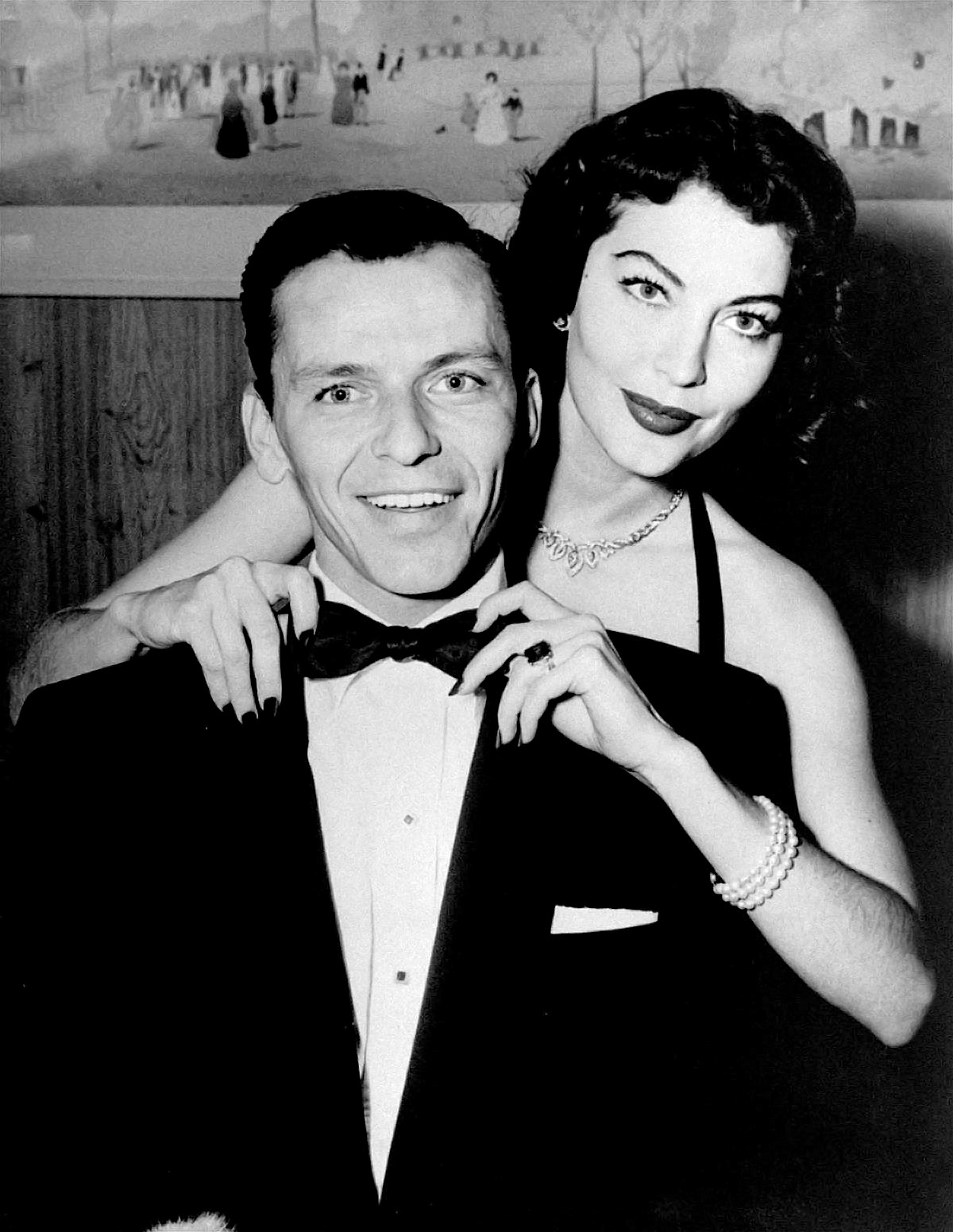 Frank Sinatra and Ava Gardner in London in December 1951, one month after their marriage made two already public careers almost inseparable in the press.
The Barefoot Contessa turned stardom into a trap
Joseph L. Mankiewicz’s The Barefoot Contessa follows Maria Vargas, a Spanish dancer discovered by a Hollywood team and remade as an international star. Gardner’s own discovery story makes comparison unavoidable, but Maria is not a disguised documentary version of Ava.
The film is more useful when we treat it as an argument about possession. Directors, publicists, producers and wealthy men all believe they understand Maria because they can describe what she means to an audience. Her bare feet become a marketable sign of authenticity. The men admire the “real” woman while constantly arranging the conditions in which she is permitted to appear.
Gardner makes Maria proud, impatient and increasingly isolated. The performance works against the narration surrounding her. Other characters explain Maria, but her face often tells us that their explanations are incomplete. When she chooses a marriage that promises dignity, the new arrangement proves no less controlling than the film industry she has left.
The film’s melodrama can be emphatic, and its ideas about sexuality and tragedy belong to its period. Even so, it gave Gardner a role in which star image and personal resistance could exist together. The title’s woman “behind the legend” is not a secret innocent waiting to be discovered. She is someone who understands that every powerful man wants a different version of her and that none is willing to accept the whole person.
 Gardner as Maria Vargas in The Barefoot Contessa, a film that turns discovery, glamour and male possession into the machinery of tragedy.
Spain offered distance from MGM and a different kind of life
Gardner began spending more time in Spain during the 1950s and settled there for an extended period. The move is often described through nightlife, bullfighting and romances because those details fit the free-spirited image. They were part of her experience, but the decision also had a professional meaning.
Living in Madrid placed distance between Gardner and MGM’s daily supervision. European locations were becoming increasingly important to international film production, and she no longer had to organise her entire life around the studio lot. Spain offered friendship, excitement and a culture she genuinely loved. It also allowed her to be famous under conditions she had chosen more deliberately.
We should not turn expatriate life into another fantasy of escape. Gardner remained a public figure. Her friendships with bullfighters and her social life generated coverage, and Franco’s Spain was not an apolitical playground. Still, the move shows agency. She was not waiting in Hollywood for the next role that matched an old image.
The period included Bhowani Junction, in which she played an Anglo-Indian woman divided by identity and political transition. The film approaches the end of British rule through a framework shaped by Western studio filmmaking, and Gardner’s casting now raises obvious questions. Her performance nevertheless takes the character’s conflict seriously. As with Mogambo, modern viewers can recognise the limitations of the production while examining the work being done inside them.
Hemingway films gave her an expatriate world
Gardner appeared in three prominent films connected with Ernest Hemingway: The Killers, The Snows of Kilimanjaro and The Sun Also Rises. Hemingway admired her, and the association suited an image built around beauty, danger, drink, travel and emotional damage. It could also become another ready-made legend.
In The Snows of Kilimanjaro, Gardner plays Cynthia, a memory of lost passion haunting Gregory Peck’s writer. In The Sun Also Rises, she is Lady Brett Ashley, surrounded by men whose desire becomes a contest. Neither adaptation captures every complexity of Hemingway’s prose, but Gardner understands women who use social confidence to manage private disappointment.
Her Lady Brett is not simply a destructive beauty. Gardner shows the exhaustion of being watched and wanted, as well as the selfishness that can emerge when attention becomes a permanent environment. The part asks us to believe that several men will reorganise their lives around one woman. Gardner makes that plausible while also suggesting why Brett cannot turn admiration into peace.
The Hemingway connection therefore matters less as evidence that Ava lived like one of his characters than as a useful screen territory. His stories repeatedly place damaged people in hotels, bars and foreign landscapes where movement cannot solve what they carry. Gardner had the presence to make that restlessness visible without explaining it in speeches.
On the Beach removed glamour from the end of the world
Stanley Kramer’s On the Beach in 1959 imagines Australians waiting for deadly radiation after a nuclear war has destroyed life elsewhere. Gardner plays Moira Davidson opposite Gregory Peck’s American submarine commander, Dwight Towers. The situation could have encouraged grand romantic despair. Gardner makes Moira’s response more recognisably human.
Moira drinks too much and begins the film performing carelessness. As hope narrows, that performance becomes harder to maintain. Gardner does not suddenly transform the character into a symbol of noble sacrifice. She lets affection, fear and practical tenderness accumulate. The result is one of her least decorative major roles, even though the production still relies on her star presence.
The film’s anti-nuclear warning is direct, and some viewers find Kramer’s approach too solemn. Gardner helps because she does not play the message. She plays a woman discovering that time has become finite and that another person’s emotional obligations will not disappear simply because the world is ending.
On the Beach also reminds us how international her career had become. Hollywood financing, an American director, a mixed cast and Australian locations created a production far removed from the controlled MGM apprenticeship of the early 1940s. Gardner’s life abroad was not separate from the work. It positioned her naturally within films whose characters had already crossed national boundaries.
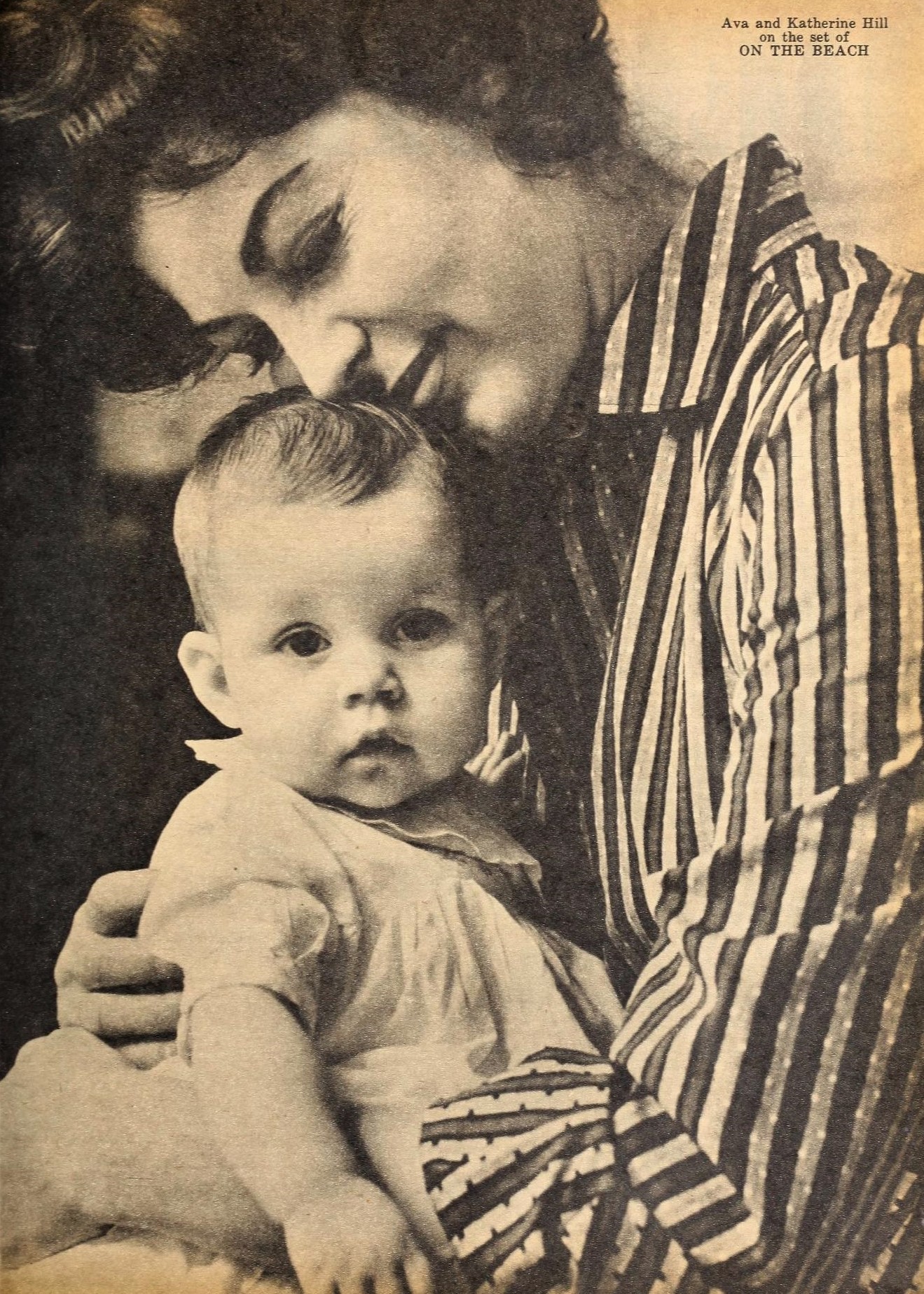 Gardner with Katherine Hill during the Australian production of On the Beach, where her performance replaces decorative glamour with fear and practical tenderness.
The Night of the Iguana gave her mature authority
John Huston’s The Night of the Iguana in 1964 gave Gardner one of the best roles of her career. She plays Maxine Faulk, the recently widowed owner of a Mexican hotel, where Richard Burton’s disgraced clergyman and tour guide Shannon arrives with a group of travellers. Deborah Kerr plays Hannah Jelkes, whose calm perception offers another way of responding to Shannon’s crisis.
Maxine can appear loud, sexual and indestructible. Gardner makes those qualities enjoyable without allowing them to become the whole woman. Grief sits underneath the jokes. Desire is direct, but it does not prevent Maxine from seeing the self-dramatisation of the people around her.
This is where Gardner’s experience becomes the performance rather than something makeup is asked to conceal. The low voice has roughened, the laughter can turn defensive and the body no longer has to be displayed as an untouched ideal. She shares the film with Burton and Kerr rather than functioning as the object between them.
The role also reveals how good Gardner could be at conversational rhythm. Maxine listens, interrupts, teases and changes tactics. Nothing feels like a solemn announcement that the character has depth. We discover it while she is trying to run a business, manage Shannon and live inside her own loneliness. Gardner received a Golden Globe nomination and won best actress at the San Sebastián International Film Festival. More importantly, the performance gives us the clearest answer to anyone who still doubts that there was a formidable actor behind the glamour.
Later roles replaced perfection with experience
Gardner’s later career was uneven, but it did not simply stop after The Night of the Iguana. In Seven Days in May, released the same year, she gave personal history and bruised intelligence to a supporting role inside a political thriller. She later appeared in The Bible: In the Beginning…, Mayerling, The Life and Times of Judge Roy Bean, Earthquake, The Cassandra Crossing and The Sentinel.
Some projects used her as a prestigious connection to an older Hollywood. Others allowed the glamour to become stranger. Roddy McDowall’s The Ballad of Tam Lin gave her a modern, threatening variation on fairy-tale power. Television work in the 1980s included A.D., Knots Landing and The Long Hot Summer.
By this point Gardner had moved from Spain to London, where she lived for the rest of her life. The later performances are not all essential viewing, but they challenge the idea that her screen value depended on remaining frozen in a 1950s portrait. Age brought dryness, authority and sometimes a willingness to make the old image unsettling.
The industry offered fewer rich leading roles to women as they aged, particularly women whose stardom had been sold through beauty. Gardner was selective, but selectivity operated inside that unequal market. We can acknowledge both her choices and the restrictions without turning her into either a helpless victim or a completely independent operator.
London, illness and the final years
Gardner settled in London in 1968 and made the city her home. Friends, privacy and a less studio-centred life mattered more than maintaining a Hollywood performance of permanent availability. She continued to travel and work, but the London apartment became the stable base that much of her earlier life had lacked.
Years of smoking affected her health. She suffered a stroke in 1986 that impaired mobility, and Sinatra helped with arrangements for medical care in the United States. That act does not require us to romanticise their marriage; it shows that the connection endured in a practical form long after the divorce.
Gardner worked with journalist Peter Evans on recollections but stopped the project before publication. Material from their conversations later appeared as Ava Gardner: The Secret Conversations. The authorised Ava: My Story was published after her death. Both sources are useful, but neither should be treated as an unfiltered private voice. Memoir is shaped by memory, editing, audience and the conditions under which stories are told.
She died of pneumonia at her London home on 25 January 1990, aged sixty-seven. Her body was returned to North Carolina and buried in the Gardner family plot at Sunset Memorial Park in Smithfield. The journey closed geographically where it had begun, although the life between those points had become international in a way no MGM discovery notice could have predicted.
 Grayson Hall, Deborah Kerr and Ava Gardner in The Night of the Iguana. As Maxine Faulk, Gardner makes humour, grief and mature authority part of the same conversation.
How Ava Gardner acted
Gardner was sometimes described as instinctive, which can sound complimentary while quietly denying craft. Her acting does not resemble a performer displaying transformation through accents, gestures or visible effort. She often worked by withholding.
Watch the eyes when another character is speaking. Gardner could suggest that she had understood the bargain before the sentence finished. Her stillness was rarely empty. It could invite desire in The Killers, protect embarrassment in Mogambo or measure another person’s crisis in The Night of the Iguana. The husky voice added weight, but rhythm mattered as much as sound. She knew when to let a line fall flat and when laughter should expose rather than hide discomfort.
She was particularly good at playing women who had already been turned into stories by men. Kitty Collins, Maria Vargas, Lady Brett and Maxine Faulk are very different people, but each lives in an atmosphere of interpretation. Gardner’s resistance is not always heroic. Some of these women deceive, wound or retreat. What connects them is the sense that the camera cannot completely settle who they are.
Directors who understood this gave her space. Siodmak used ambiguity, Ford used humour, Mankiewicz used the conflict between narration and presence, Kramer used emotional exhaustion and Huston used mature conversational authority. The development across those films is the career. Beauty may have opened the door, but screen intelligence kept changing what the image could mean.
Where to begin with Ava Gardner’s films
We would not begin with the biggest spectacle or watch everything in release order. This route makes the changes in her screen presence easier to see.
- The Killers (1946): Begin with the breakthrough. Gardner learns how little Kitty Collins needs to reveal in order to control the film’s memory.
- Show Boat (1951): Watch the dramatic scenes closely and remember that the released singing voice is largely Annette Warren’s. Julie shows Gardner working with loss rather than mystery.
- Pandora and the Flying Dutchman (1951): This is the star image turned into romantic myth, with sadness already disturbing the perfection.
- Mogambo (1953): The humour is essential. Eloise Kelly demonstrates how Gardner could combine toughness, embarrassment and emotional openness.
- The Barefoot Contessa (1954): Use this to examine how a woman can be explained by every man around her and still remain outside their possession.
- On the Beach (1959): The apocalyptic setting strips away decorative glamour and reveals her gift for practical tenderness.
- The Night of the Iguana (1964): Finish the main route here, where experience, comedy, grief and authority meet in Maxine Faulk.
After those seven, try Bhowani Junction, The Sun Also Rises, Seven Days in May and The Ballad of Tam Lin. The weaker films can still be revealing, but the route above shows why the career cannot be reduced to famous photographs or famous husbands.
The films, Frank Sinatra and the woman behind the legend
Ava Gardner did not escape the legend surrounding her, and it would be dishonest to pretend that she wanted no part of it. Glamour gave her money, movement and extraordinary opportunities. She enjoyed attention at times, understood the power of appearance and could be as vivid socially as the stories suggest.
The problem begins when legend becomes the only explanation. The photograph did not perform Kitty Collins. Sinatra did not create Eloise Kelly’s comic timing. Spain was not merely the backdrop for gossip, and London was not a retreat from a life that had ended. Gardner worked, learned, chose, misjudged, left and began again.
If you know only the photographs, watch Mogambo and notice how often she is funny. If you know only the Sinatra story, watch On the Beach and see how quietly she makes another person’s grief matter. Then watch The Night of the Iguana, where nobody needs to discover the woman behind the image because Gardner has placed her directly in front of us.
That is the reason the biography should end with the work. Ava Gardner was a Hollywood legend, but the films show a person doing more than submitting to the camera’s admiration. She learned how to look back.
Questions readers often ask
How was Ava Gardner discovered?
Her brother-in-law Larry Tarr photographed her during a visit to New York. A portrait displayed at his studio led to contact with MGM, a test and a studio contract in 1941. The exact dialogue attached to the discovery story varies, but Gardner was eighteen and had almost no acting experience when she went to Hollywood.
Was Ava Gardner considered a good actor?
Early publicity often concentrated on her beauty, and some uneven studio vehicles reinforced that view. Her performances in The Killers, Show Boat, Mogambo, On the Beach and The Night of the Iguana demonstrate growing control, humour and emotional range. Mogambo earned her an Academy Award nomination.
Did Ava Gardner get Frank Sinatra the role in From Here to Eternity?
Gardner supported Sinatra and advocated for him during a difficult period in his career. However, casting the film involved producer Buddy Adler, director Fred Zinnemann, Columbia management and other participants. Saying that she single-handedly secured the role simplifies a more complicated decision.
How many times was Ava Gardner married?
She married three times: actor Mickey Rooney in 1942, bandleader Artie Shaw in 1945 and Frank Sinatra in 1951. All three marriages ended in divorce. Her relationship with Sinatra remained emotionally significant after their divorce became final in 1957.
Did Ava Gardner sing in Show Boat?
Gardner recorded Julie LaVerne’s songs, but the released film used Annette Warren’s singing voice for most of the musical material. Gardner’s own version of “Can’t Help Lovin’ Dat Man” has circulated separately, allowing listeners to compare what she recorded with the studio’s final decision.
Why did Ava Gardner live in Spain and London?
Spain offered distance from MGM, a culture and social life she loved, and a base closer to international productions. She moved to London in 1968 and remained there for the rest of her life. Both moves reflected personal preference as well as changes in her career.
What was Ava Gardner’s final major film performance?
There is no single uncontested answer because she continued working in film and television. The Night of the Iguana is generally regarded as her last great leading performance, while later roles in Seven Days in May, The Ballad of Tam Lin and other productions show different aspects of her mature screen presence.
Where is Ava Gardner buried?
She is buried in the Gardner family plot at Sunset Memorial Park in Smithfield, North Carolina. The Ava Gardner Museum in Smithfield preserves material connected with her childhood, career and later life.