Boris Karloff : Personal Info
Birth name : William Henry Pratt
Born : 23 November 1887, Camberwell, London
Died : 2 February 1969, Midhurst, West Sussex
Nationality : British
Occupations : Actor, narrator
Years active : 1911–1969
Known for : Frankenstein, The Mummy, Bride of Frankenstein, The Black Cat, The Body Snatcher, How the Grinch Stole Christmas!
Boris Karloff : Introduction
Boris Karloff became a horror icon without treating monsters as jokes. His Frankenstein creature is frightening because of his strength, but unforgettable because Karloff gives him curiosity, loneliness and confused responses to pain. Heavy make-up concealed the actor’s face without defeating his performance.
Off screen, William Henry Pratt was known for courtesy, professionalism and concern about working conditions. The contrast between the “monster” and the quiet English actor became part of his appeal, but it also points to his real achievement: he could make an audience search for humanity inside a frightening shape.
 Boris Karloff in a studio portrait by Jack Freulich.
Boris Karloff : Leaving England
Karloff was born into a large, socially established family. Several relatives entered government or diplomatic service, and he was expected to follow. Acting drew him elsewhere.
The official Karloff family biography records an early appearance as the Demon King in a childhood production of Cinderella. In 1909 he left Britain for Canada with little professional experience and worked manual jobs while seeking theatrical employment.
Touring companies gave him years of repertory practice across Canada and the United States. He adopted the name Boris Karloff, although later explanations of its origin conflict. The important fact is that the exotic name was already part of his professional identity long before Hollywood fame.
Boris Karloff : Years as a Character Actor
Karloff reached silent cinema through small roles and endured a long period of anonymity. He played servants, villains, Indigenous characters and vaguely “foreign” figures under the racial typecasting of the period. Some parts are uncomfortable reminders of how studios used appearance and accent.
The arrival of sound helped. His voice was measured and distinctive, while The Criminal Code gave him a stronger stage and screen role. By 1931 he had accumulated extensive experience without becoming a star.
That changed when director James Whale cast him as the creature in Frankenstein. Karloff was not even named in the opening credits; the monster was listed with a question mark.
Boris Karloff : Frankenstein
Make-up artist Jack Pierce created the square head, heavy eyelids and neck electrodes that fixed the popular image of Frankenstein’s monster. The physical burden was severe. Karloff reported for hours of make-up, wore heavy boots and endured exceptionally long working days.
The SAG-AFTRA history records a 25-hour Frankenstein shoot among the labour abuses that shaped early organising. Yet the performance does not depend on hardship alone. Karloff uses his hands, uncertain balance and changes of focus to show a being learning the world without protection.
The scene with the child Maria is central. Their shared game begins with trust and ends in accidental death because the creature cannot understand consequence. The horror comes from innocence meeting power.
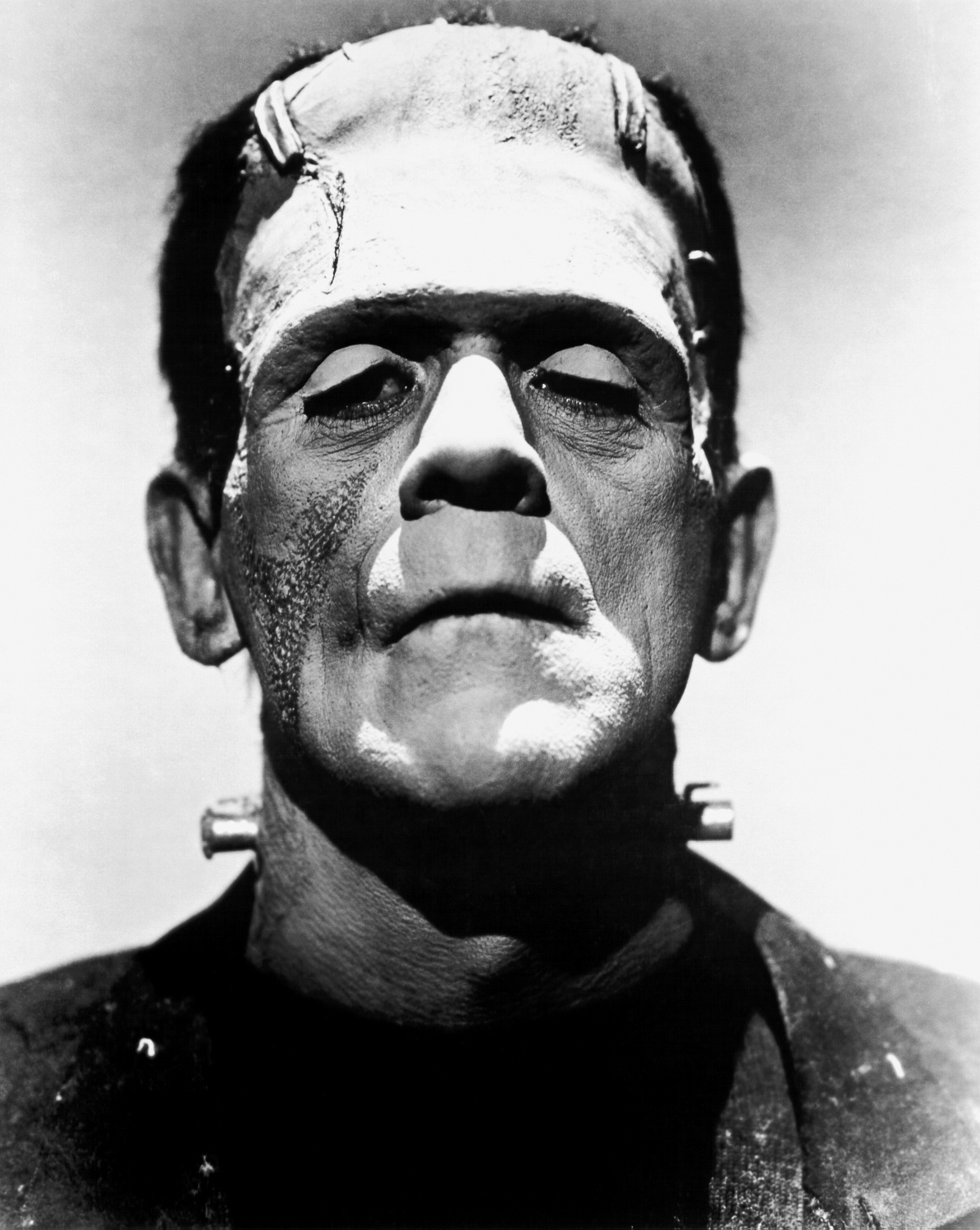 Boris Karloff as Frankenstein’s monster in a Bride of Frankenstein publicity portrait.
Boris Karloff : The Mummy and Bride of Frankenstein
The Mummy (1932) let Karloff play both a wrapped ancient body and the controlled Ardath Bey. Stillness replaces the creature’s stumbling movement. The film’s Egyptian fantasy is shaped by colonial exoticism, but Karloff’s quiet concentration gives it unusual melancholy.
Bride of Frankenstein (1935) expanded the monster’s emotional life. He learns words, experiences companionship with a blind hermit and understands rejection more clearly. Karloff reportedly disliked giving the creature speech, yet he makes the limited vocabulary moving.
James Whale balances horror with black comedy, while Elsa Lanchester’s Bride rejects the mate created for her. The monster’s final decision becomes an act of agency rather than simple destruction.
Boris Karloff and Bela Lugosi
Karloff and Bela Lugosi were frequently presented as rivals, particularly after Karloff gained the Frankenstein role that Lugosi had been associated with during development. The studio benefited from competition, but accounts from their families reject the idea of a permanent personal feud.
They appeared together in The Black Cat, The Raven, The Invisible Ray, Black Friday and The Body Snatcher. Their contrast was productive: Lugosi’s theatrical intensity met Karloff’s quieter menace.
The Body Snatcher gave Karloff one of his finest human villains. His cabman Gray is conversational, observant and morally dominant because he understands the respectable doctor’s hypocrisy.
Boris Karloff : Actors’ Rights, Stage and Television
Karloff became an early member and organiser of the Screen Actors Guild. His experience of unpaid make-up time and exhausting conditions made labour protection more than an abstract cause.
He also returned successfully to the stage. In Arsenic and Old Lace, he originated the murderous Jonathan Brewster, whose resemblance to Boris Karloff was a running joke. Contractual restrictions kept him out of the film version, where Raymond Massey played the role.
Television and narration introduced him to new audiences. He hosted Thriller and supplied both narration and the Grinch’s voice in the 1966 animated How the Grinch Stole Christmas!. His recording connected a horror voice with a children’s classic without losing warmth.
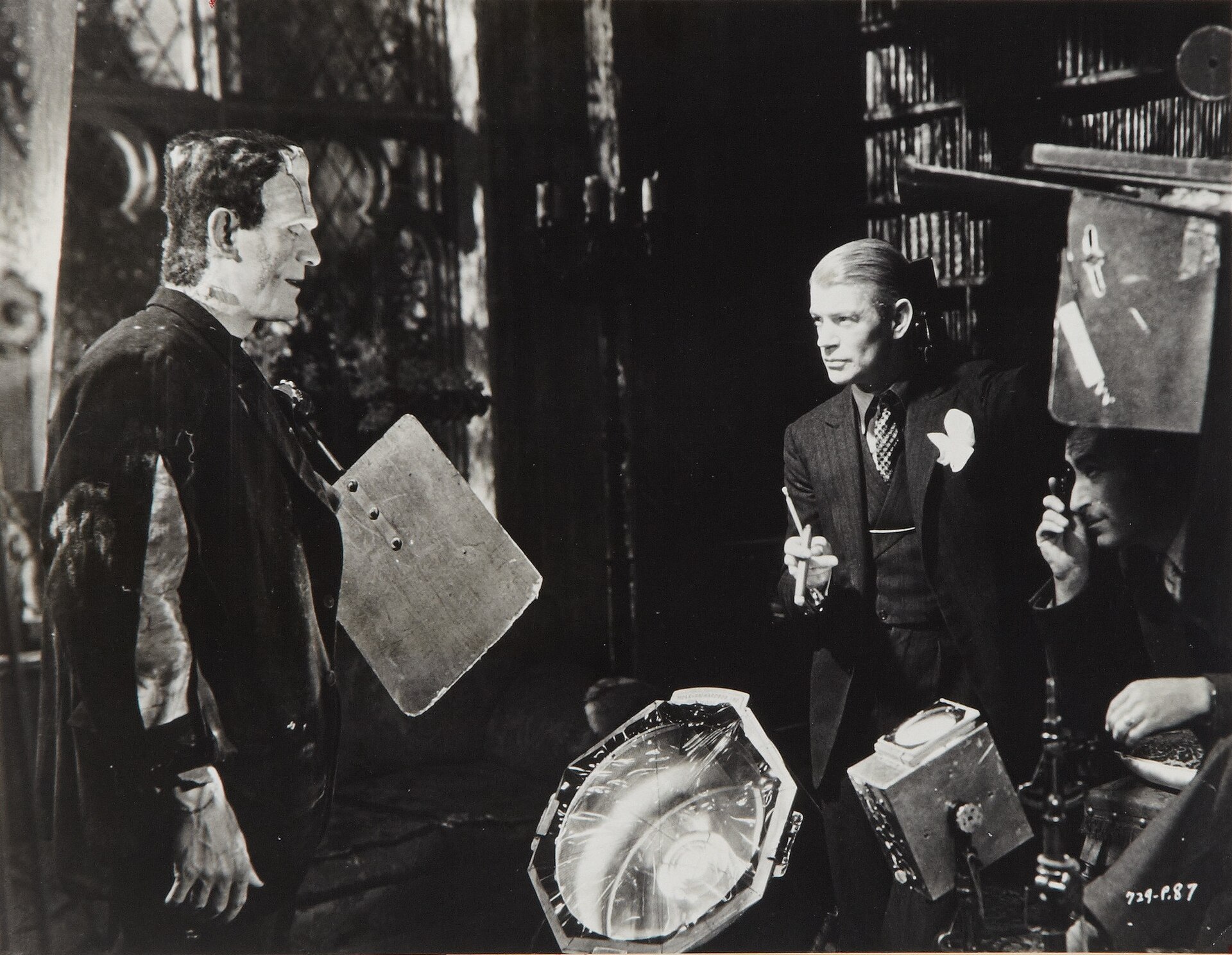 Boris Karloff with director James Whale and cinematographer John J. Mescall during Bride of Frankenstein.
Boris Karloff : Family, Health and Final Work
Karloff married six times and had one child, Sara Karloff. She was born during production of Son of Frankenstein, his final feature appearance as the monster.
Years of heavy smoking contributed to respiratory illness. He continued acting while using oxygen between takes, appearing in Roger Corman’s The Raven and Peter Bogdanovich’s Targets. In Targets, Karloff plays an ageing horror star confronting violence that screen monsters cannot explain. The role became a fitting late reflection on his image.
He died in England in 1969, aged 81.
Boris Karloff : Legacy
Karloff made sympathy part of screen horror. Later Frankenstein performances may increase aggression or spectacle, but many still begin with the pathos he established.
His career also resists confinement. Stage comedy, radio, television, children’s narration and Val Lewton’s psychological horror all benefited from the same tools: voice, patience and an ability to suggest thought before movement.
The face in the make-up remains famous. The greater achievement is that viewers remember a character underneath it.
Selected Boris Karloff Filmography
1931 – Frankenstein : Star-making performance as the creature
1932 – The Mummy : Imhotep and Ardath Bey
1934 – The Black Cat : First major pairing with Bela Lugosi
1935 – Bride of Frankenstein : The monster gains speech and self-knowledge
1939 – Son of Frankenstein : Final feature portrayal of the monster
1945 – The Body Snatcher : Val Lewton’s morally intelligent horror
1963 – The Raven : Comic late-career horror
1968 – Targets : Ageing star faces modern violence
Boris Karloff : Frequently Asked Questions
What was Boris Karloff’s real name?
He was born William Henry Pratt in South London.
How many times did Karloff play Frankenstein’s monster?
He played the creature in three feature films: Frankenstein, Bride of Frankenstein and Son of Frankenstein.
Was Boris Karloff a founder of the Screen Actors Guild?
He was one of its earliest organising members and held membership number nine.
Related Articles
20 Black-and-White Movies That Are Easy for Beginners to Enjoy
Karloff family’s official history, supported by the BFI film survey and SAG-AFTRA labour history