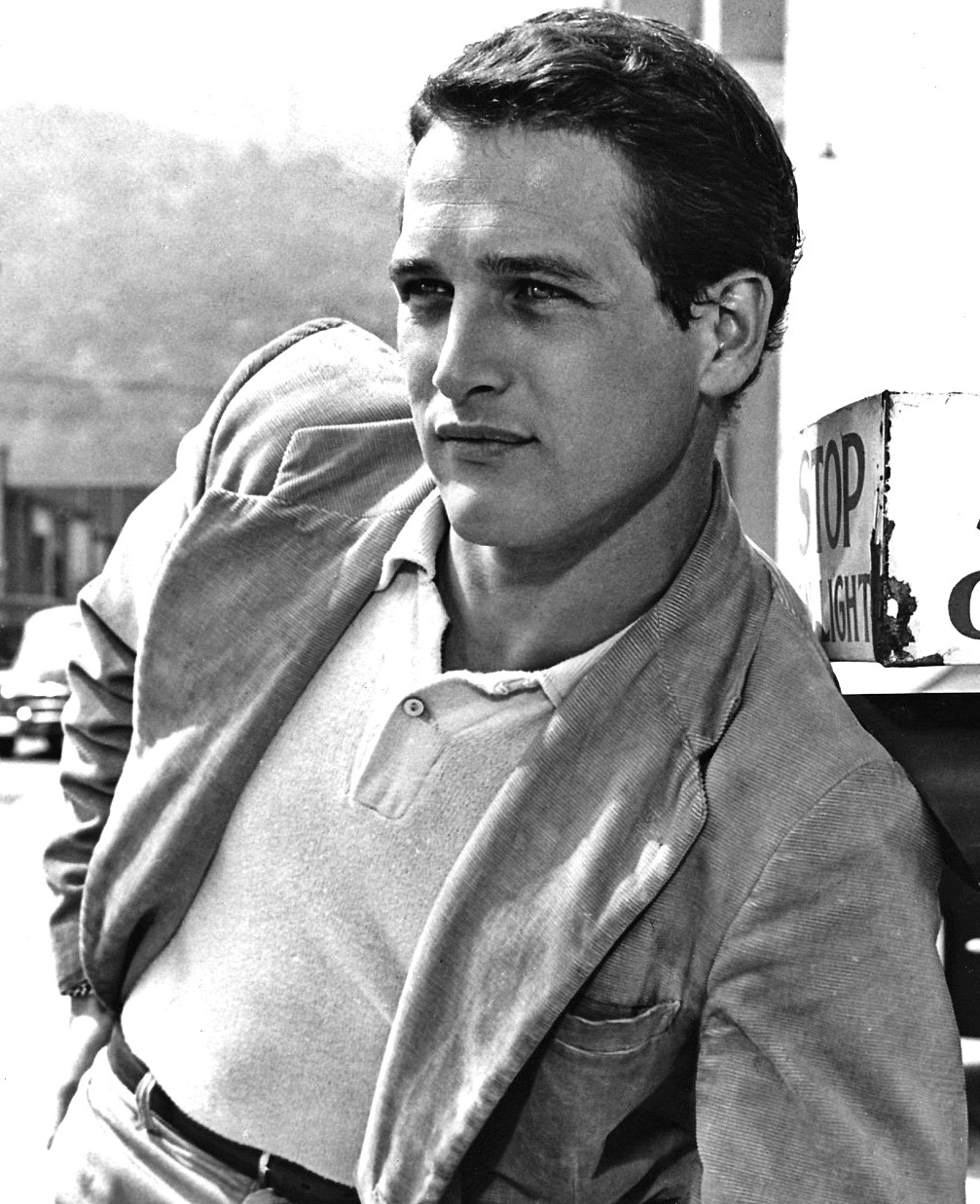
 Paul Newman in a 1954 studio publicity photograph.
Paul Newman : Personal Info
Full name : Paul Leonard Newman
Born : January 26, 1925, Shaker Heights, Ohio
Died : September 26, 2008, Westport, Connecticut
Nationality : American
Occupations : Actor, director, producer, racing driver, entrepreneur, philanthropist
Years active : 1949-2008
Known for : Somebody Up There Likes Me, Cat on a Hot Tin Roof, The Hustler, Hud, Cool Hand Luke, Butch Cassidy and the Sundance Kid, The Sting, The Verdict, The Color of Money, Nobody’s Fool
Major honors : Academy Award for Best Actor; Honorary Academy Award; Jean Hersholt Humanitarian Award; nine acting nominations; Kennedy Center Honor
Paul Newman : Introduction
Paul Newman possessed the kind of beauty that could have narrowed a career into decoration. Instead, he repeatedly played men whose charm concealed failure, selfishness, grief or moral uncertainty. Fast Eddie Felson, Hud Bannon, Luke Jackson, Butch Cassidy and Frank Galvin are compelling because Newman allows the audience to enjoy charisma while questioning what it excuses.
His career extended beyond acting into direction, motor racing, political engagement and philanthropy. Newman’s Own began as a food business with an unusual promise to give its profits to charitable causes. The Newman’s Own Foundation history records more than $600 million given by Paul Newman and the organisation, while the Hole in the Wall Gang Camp created free experiences for children with serious illnesses.
The public image combined blue-eyed stardom with self-deprecation. Newman often distrusted the mythology around his looks and questioned his own talent more sharply than the performances justify. That scepticism may have protected him from complacency. He kept searching for men whose surfaces cracked under pressure.
Paul Newman : Ohio Childhood and Wartime Service
Paul Leonard Newman grew up in Shaker Heights, Ohio. His father, Arthur, ran a sporting-goods business; his mother, Theresa, encouraged theatre. The family’s comfort did not produce a clear vocation. Newman acted in school productions but entered the Second World War before a professional path could form.
He served in the United States Navy as a radioman and rear gunner in the Pacific. Colour blindness prevented him from becoming a pilot, a frustration that did not end his later fascination with speed and mechanical discipline. Wartime service exposed him to mortality before public success and remained part of his generational identity.
After the war, Newman attended Kenyon College and became more serious about theatre. He spent time at the Yale School of Drama and studied at the Actors Studio in New York. The combination of formal training, Method-era exploration and practical stage work gave him more preparation than the “accidental star” story sometimes suggests.
Paul Newman : Broadway, Television and a Difficult Film Debut
Newman appeared on Broadway in Picnic, where he met Joanne Woodward. Television anthology dramas provided further experience at a time when live and filmed broadcasts demanded quick adaptation. Hollywood then offered The Silver Chalice (1954), a biblical epic Newman later regarded with lasting embarrassment.
The failure became useful mythology because it made later success look like self-correction. Somebody Up There Likes Me, in which Newman played boxer Rocky Graziano, supplied the force the debut had lacked. The performance combined physical preparation, streetwise volatility and vulnerability.
The death of James Dean changed the landscape for young male stars, and Newman was sometimes treated as a replacement within a narrow category of Method-influenced masculinity. The comparison helped publicity but obscured differences. Newman’s coolness was more guarded, his irony more pronounced and his development longer.
Paul Newman : Cat on a Hot Tin Roof and Early Stardom
Cat on a Hot Tin Roof (1958) gave Newman his first Academy Award nomination. As Brick Pollitt, he plays an injured former athlete retreating into alcohol and refusing to name the grief, desire and disgust shaping his marriage. Production Code restrictions reduced the explicit homosexual themes of Tennessee Williams’s play, yet Newman communicates repression through avoidance.
Elizabeth Taylor’s Maggie supplies heat and verbal pursuit; Newman’s Brick tries to create absence. The contrast turns his physical beauty into a problem. Everyone sees the attractive body while the character attempts to withdraw from it.
The Long, Hot Summer, released the same year, paired Newman with Joanne Woodward and helped turn their relationship into one of Hollywood’s most durable public partnerships. They married in 1958 after Newman’s divorce from his first wife, Jackie Witte. The new marriage brought artistic collaboration and family life, but its beginning also involved pain for the first family and should not be polished into effortless romance.
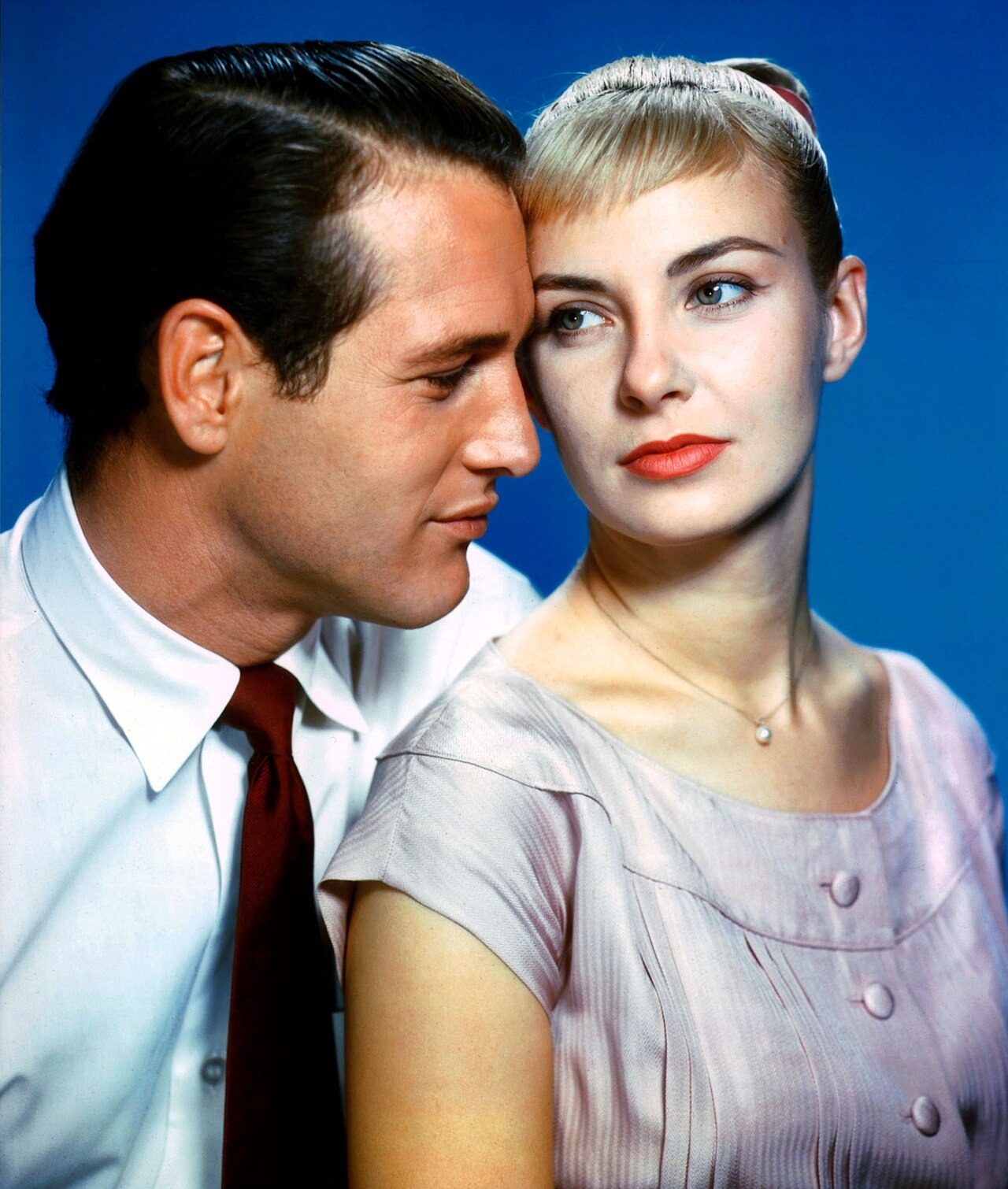 Paul Newman and Joanne Woodward in a publicity portrait for The Long, Hot Summer (1958).
Paul Newman : The Hustler and Fast Eddie Felson
The Hustler (1961) established the Newman antihero at full strength. Fast Eddie Felson is a gifted pool player whose confidence depends on being seen to win. He is charming, cruel, self-pitying and capable of recognising moral damage only after helping cause it.
Newman learned enough pool technique to make Eddie’s concentration credible, while the film uses the game as a structure for endurance and character. Piper Laurie’s Sarah is not merely a tragic accessory; her intelligence exposes the emotional poverty of the men who treat winning as identity.
The role earned another Oscar nomination and remained important enough for Newman to revisit twenty-five years later. The distance between the young hustler and the ageing mentor in The Color of Money created one of cinema’s most productive actor-character reunions.
Paul Newman : Hud, Moral Ambiguity and the Danger of Charm
Hud (1963) pushed audience sympathy into uncomfortable territory. Hud Bannon is selfish, predatory and contemptuous of restraint, yet Newman’s looks and ease made some viewers admire what the film meant to condemn. That misreading became part of the performance’s cultural importance.
Director Martin Ritt, a significant Newman collaborator, placed Hud against his principled father and impressionable nephew. Patricia Neal’s housekeeper understands his danger more clearly than the men around him. Newman does not ask for hidden nobility; he shows how charisma can function without it.
The role complicates the idea that star charm is automatically humane. Newman understood that spectators bring desire to moral judgement. Hud remains disturbing because the actor does not solve that conflict for them.
Paul Newman : Cool Hand Luke and Anti-Establishment Stardom
Cool Hand Luke (1967) turned Newman into a defining image of resistance. Luke Jackson is imprisoned for a pointless act of vandalism and responds to authority with humour, stubbornness and repeated escape attempts. The smile becomes a communal resource for other prisoners.
Yet the film is not simply a celebration of cool. Luke’s refusal to submit becomes isolating and self-destructive, while Christian imagery gives his suffering a mythic frame. Newman allows exhaustion and fear to erode the icon without making surrender easy.
The role earned another Oscar nomination and helped establish the anti-establishment version of Newman that suited the late 1960s. His off-screen political engagement—civil-rights support, anti-war activism and liberal campaigning—gave the image additional credibility, though screen character and personal conviction should not be treated as identical.
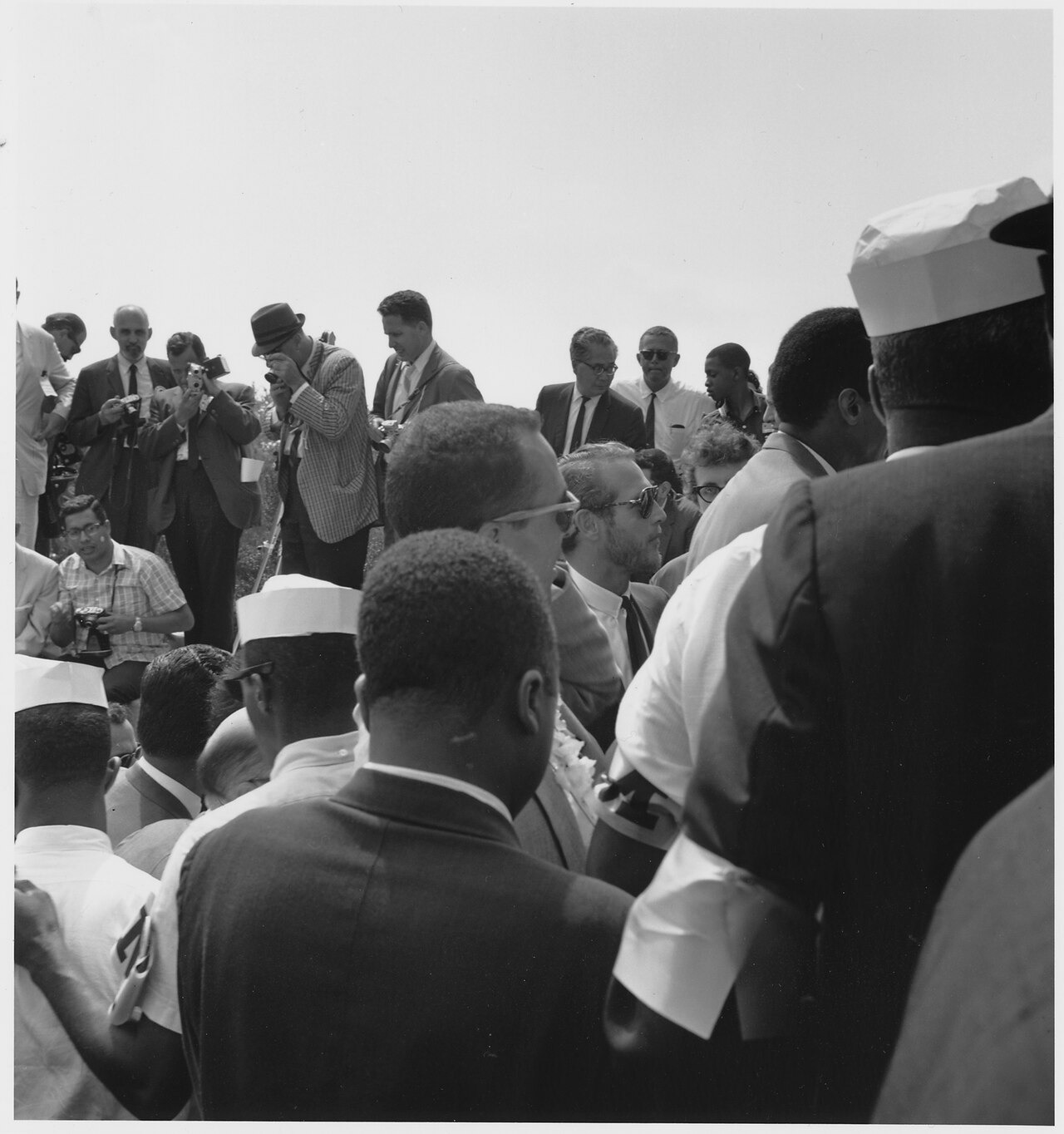 Paul Newman among attendees at the March on Washington on August 28, 1963.
Paul Newman and Robert Redford : Butch Cassidy and The Sting
Butch Cassidy and the Sundance Kid paired Newman with Robert Redford and created one of the most enduring male partnerships in popular cinema. Newman’s Butch talks, schemes and jokes; Redford’s Sundance watches, shoots and punctures optimism. Their chemistry turns a story of historical decline into buoyant companionship.
The film’s tonal shifts—from comedy to pursuit to fatalism—depend on Newman’s ability to keep charm active under pressure. Butch is a leader whose plans repeatedly fail, an ideal Newman role because competence and self-delusion remain intertwined.
The Sting reunited the actors with director George Roy Hill. Newman’s Henry Gondorff is older, wearier and more technically controlled than Butch. The pleasure comes from watching performance inside performance: a movie star playing a con man playing a drunken gambler in order to control both target and audience.
Paul Newman : Directing Joanne Woodward
Newman directed several films, often with Joanne Woodward in the leading role. Rachel, Rachel (1968) brought a Best Picture nomination and provided Woodward with one of her richest performances as a schoolteacher confronting loneliness and restricted possibility.
The Effect of Gamma Rays on Man-in-the-Moon Marigolds and The Shadow Box continued the collaboration. Newman’s direction was actor-centred and less interested in advertising his own presence than in creating space for difficult emotional work.
The films matter to the marriage’s artistic history. Public fascination often framed Newman and Woodward as an ideal couple, but collaboration shows something more specific: respect for Woodward’s range and a willingness to use his industry position in support of material centred on women.
Paul Newman : Racing and the Discipline of Speed
Training for the film Winning introduced Newman to motor racing in a serious way. What began as preparation became a long competitive career. He raced professionally, won national championships in Sports Car Club of America competition and finished second overall at the 1979 24 Hours of Le Mans as part of a team.
Racing was not a celebrity hobby staged for cameras. Newman pursued it with preparation, risk and a preference for being judged within the sport’s standards. The helmet also offered a partial escape from recognisability: performance depended on lap time rather than face.
He later co-owned successful racing teams. The combination of acting and racing reveals a consistent attraction to technique under pressure. Both require repetition, timing, awareness of partners and the ability to remain responsive when conditions change.
Paul Newman : The Verdict and Mature Performance
After uneven commercial projects in the 1970s, The Verdict (1982) gave Newman one of his greatest roles. Frank Galvin is an alcoholic lawyer who survives by attending funerals and soliciting clients. A medical-malpractice case becomes a chance for professional and moral recovery.
Sidney Lumet strips away the easy Newman smile. The performance is quiet, ashamed and physically diminished. Galvin’s decision to take the case to trial does not erase his past; it creates the possibility of one honest action.
The BFI’s essential-films survey places The Verdict among the clearest examples of Newman allowing charisma to age rather than pretending it had not. The Oscar nomination extended an awards history already spanning decades.
Paul Newman : The Color of Money and Academy Recognition
Martin Scorsese’s The Color of Money (1986) returned Newman to Fast Eddie Felson. Eddie now sells liquor and manages younger talent, initially trying to turn Tom Cruise’s Vincent into a profitable version of the player he once was. The relationship restores his appetite for competition.
Newman won the Academy Award for Best Actor. The Academy’s ceremony account notes that it was his first competitive win after six previous losses. An Honorary Award had been presented the year before, creating the pleasing impression that official lifetime recognition was immediately followed by renewed creative proof.
Later performances in Nobody’s Fool and Road to Perdition showed how productively Newman used age, disappointment and quiet authority. His final feature-film acting role, as a conflicted crime patriarch in Road to Perdition, allowed tenderness and violence to inhabit the same weakened voice.
Paul Newman : Family, Loss and Privacy
Newman had three children with Jackie Witte and three with Joanne Woodward. His son Scott died in 1978 from an accidental drug and alcohol overdose. Newman established the Scott Newman Center, which supported drug-abuse prevention and education.
The loss entered public knowledge but should not be turned into a simple explanation for later philanthropy. Newman’s giving developed through multiple commitments, including civil rights, political activism and a growing belief that unusual good fortune created obligation.
Newman and Woodward guarded family privacy while living much of their life in Connecticut rather than at the centre of Hollywood social display. The longevity of the marriage encouraged idealisation. Their own accounts acknowledged strain as well as devotion, making endurance more credible than perfection.
Paul Newman : Newman’s Own and Philanthropy
In 1982 Newman and writer A. E. Hotchner began selling salad dressing. The business grew into Newman’s Own, built around the commitment to donate profits to charitable purposes. The company history and Foundation timeline document the expansion from a comic label idea into a major philanthropic enterprise.
Newman founded the Hole in the Wall Gang Camp in Connecticut in 1988 for children with serious illnesses. The original camp inspired an international network of related programmes. The model treated joy and adventure as part of care rather than optional extras.
He created Newman’s Own Foundation in 2005 to continue the giving mission. The organisation’s current figures should always be dated because totals increase; as of the accessed official history, Paul Newman and the organisation had given more than $600 million to good causes.
Paul Newman : Death and Legacy
Newman died of lung cancer at his Connecticut home in 2008. Joanne Woodward survived him, though later public appearances became limited as her health declined. Tributes joined the actor, racer and philanthropist, three identities that had sometimes allowed him relief from one another.
His film legacy rests on the moral complexity of charm. Newman could attract an audience to selfish, damaged or defeated men without requiring easy absolution. Beauty opened the door, but technique and judgement sustained a career across five decades of changing masculinity.
The charitable legacy is equally substantial because it created institutions rather than isolated gestures. Newman used the exploitable value of his own face—on screen and on a bottle label—to redirect attention and money. He hoped to be remembered for more than blue eyes, and the record gives audiences good reason to comply.
Selected Paul Newman Filmography
1956 – Somebody Up There Likes Me : Breakthrough as boxer Rocky Graziano
1958 – Cat on a Hot Tin Roof : First Oscar-nominated performance
1958 – The Long, Hot Summer : Major collaboration with Joanne Woodward
1961 – The Hustler : Defining role as Fast Eddie Felson
1963 – Hud : Charismatic moral antihero
1967 – Cool Hand Luke : Anti-establishment prison drama
1968 – Rachel, Rachel : Directed Woodward; Best Picture nominee
1969 – Butch Cassidy and the Sundance Kid : First pairing with Robert Redford
1973 – The Sting : Oscar-winning con-artist classic
1977 – Slap Shot : Cult sports comedy
1981 – Absence of Malice : Oscar-nominated drama
1982 – The Verdict : Late-career dramatic peak
1986 – The Color of Money : Academy Award-winning performance
1994 – Nobody’s Fool : Final leading-role Oscar nomination
2002 – Road to Perdition : Final live-action film role
Paul Newman : Frequently Asked Questions
How many Oscars did Paul Newman win?
He won one competitive acting Oscar for The Color of Money, received an Honorary Academy Award and later the Jean Hersholt Humanitarian Award.
Was Paul Newman really a racing driver?
Yes. He competed seriously for decades, won national titles and finished second overall at the 1979 24 Hours of Le Mans as part of a racing team.
How long were Paul Newman and Joanne Woodward married?
They married in 1958 and remained married until Newman’s death in 2008, a marriage of fifty years.
How much has Newman’s Own donated?
The official Foundation history states that Paul Newman and Newman’s Own have given more than $600 million to good causes. Because the total continues to change, it should be presented with a date or “more than” wording.
What is the best Paul Newman film to watch first?
The Hustler is the strongest introduction to his dramatic range. Cool Hand Luke captures the iconic rebel, while The Verdict shows his mature, least glamorous work.
Related Articles
20 Classic Hollywood Actors Everyone Should Know
20 Movie Stars Who Defined Old Hollywood Glamour
Top 20 Best Black-and-White Movies for New Classic Film Fans
10 Best Oscar-Winning Performances by Classic Movie Stars