William Powell sounded as though he had already considered the problem and found it slightly entertaining. The voice was polished, the clothes fitted and the eyebrows could turn a detective’s conclusion into a private joke. Hollywood used that ease for lawyers, husbands, butlers, businessmen and Nick Charles, yet the ease had been built through years of stage work and silent-film villains.
In this biography, we will follow Powell from Pittsburgh and New York theatre to Philo Vance, The Thin Man, My Man Godfrey, Libeled Lady and Life with Father. We will also discuss Carole Lombard, Jean Harlow and the long marriage to Diana Lewis without allowing three relationships to replace a forty-year career.
Powell’s sophistication was never simply wealth displayed correctly. He was funniest when the elegant man found himself inside disorder and decided to remain courteous while enjoying it. Nick Charles did not solve crimes because he was above everyone. He solved them while knowing that respectability was often the best disguise in the room.
 Publicity image of the American actor William Powell. Image credit: George Hurrell for Metro-Goldwyn-Mayer / public domain.
William Powell at a glance
- Full name: William Horatio Powell
- Born: 29 July 1892 in Pittsburgh, Pennsylvania
- Died: 5 March 1984 in Palm Springs, California
- Occupation: Actor
- Years active: 1911 to 1955
- Best-known films: The Canary Murder Case, The Thin Man, The Great Ziegfeld, My Man Godfrey, Libeled Lady, The Senator Was Indiscreet and Life with Father
- Frequent co-star: Myrna Loy, with whom he made fourteen films
- Major recognition: Three Academy Award nominations for best actor
- Marriages: Eileen Wilson, Carole Lombard and Diana Lewis
Stage training came before the silk dressing gowns
Powell was born in Pittsburgh and grew up largely in Kansas City, Missouri. His father worked as an accountant. William showed an early interest in performance and left for New York after high school to study at the American Academy of Dramatic Arts.
The decision required persistence and family support at a time when acting offered little security. Powell completed the course and spent years in stock companies, touring productions and Broadway work. Theatre trained the voice that sound film would later make famous.
He learned how to carry exposition, change pace and remain audible without making speech sound like shouting. Those skills were practical before they were elegant. A touring actor performed different material for changing audiences and learned how quickly a scene revealed weak timing.
Powell entered films in the early 1920s. His appearance in Sherlock Holmes with John Barrymore placed him inside a major production, but silent Hollywood did not immediately see a romantic lead. The narrow face, dark hair and controlled manner suited villains and suspicious men.
The later urbane image grew from those parts. Powell understood what a villain looked like when he concealed information and how authority behaved when it wanted to appear civil. Nick Charles would use the same knowledge for detection.
 William Powell walking to Jean Harlow’s funeral service, Los Angeles. Image credit: Los Angeles Daily News via Wikimedia Commons.
Silent villains taught him how charm can hide motive
Powell appeared in films including When Knighthood Was in Flower, Romola, Beau Geste and The Last Command. He often played aristocrats, officers or men whose polish indicated danger.
Without a recorded voice, he relied on posture, gaze and the timing of entrances. The moustache and evening clothes that later signalled sophistication could initially signal deceit. This continuity helps explain why his comedy rarely became innocent. Powell’s charming men know that charm is a technique because he had already played characters who used it strategically.
The move between studios was normal in a developing industry. Powell worked with directors and stars across production cultures before Paramount gave him a role that sound would make central.
Philo Vance, the cultivated detective created by S. S. Van Dine, required intelligence expressed through speech. The Canary Murder Case began as a silent production and was adapted for sound. Powell’s voice transformed the opportunity.
The Vance films made him a star. They also established the detective as a social observer rather than a purely physical pursuer. He could question wealthy suspects in their own language and let a small change of tone reveal that courtesy had become accusation.
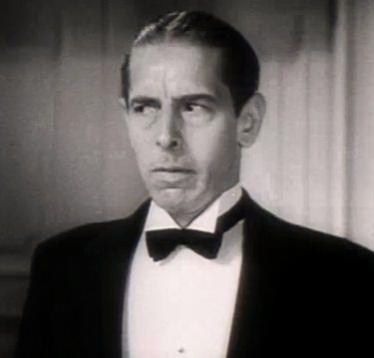 Arthur Hohl in The Kennel Murder Case – trailer (cropped screenshot). Image credit: trailer screenshot (Warner Bros.) / The Kennel Murder Case trailer / public domain.
Sound gave the face its missing instrument
Powell’s speaking voice was resonant, controlled and capable of moving from formality to mockery without losing clarity. Early talkies often slowed scenes while audiences and technicians adjusted to dialogue. Powell could make speech create movement.
He played Vance in several films and moved through Warner Bros. and Paramount material including The Kennel Murder Case, often considered one of the strongest screen mysteries of the period. The stories could be mechanically complicated, but Powell kept the detective human through amusement.
His screen authority did not depend on youth. Powell was already approaching forty when sound made him a major star. That age gave the romantic image experience. He did not look surprised that desire or dishonesty existed.
The detective roles prepared The Thin Man, but Nick Charles would change the formula. Vance often stands apart from the suspects. Nick is married, drinks with them and appears to have retired from the need to prove superiority.
Before that change, Powell’s personal life was also becoming public. His first marriage to actor Eileen Wilson produced a son, William David Powell, and ended in divorce. He married Carole Lombard in 1931, joining two careers at different stages.
Philo Vance made detection sound like civilised conversation
The Vance mysteries deserve attention as more than rehearsal for Nick Charles. They arrived while filmmakers were still learning how to make long explanations move. Powell turned the solution of a crime into a social event.
He adjusted the voice according to the listener. With police colleagues, Vance could be amused and mildly superior. With a suspect, the same courtesy became pressure. Powell rarely needed to announce that a clue mattered; the slight reduction of warmth told us.
The films are tied to early sound pacing, and some plots become mechanically complicated. Powell keeps Vance from becoming a diagram. We sense his pleasure in intelligence and his awareness that wealthy rooms contain no moral protection.
This was an important change from his silent villains. Education, dress and verbal confidence no longer proved that the character was corrupt. They became tools a hero could use without losing the intriguing possibility of danger.
Vance is cooler than Nick Charles. He stands outside the suspect group and protects professional distance. Nick would later allow marriage, alcohol and friendship to interrupt that pose. The difference shows Powell developing a screen identity rather than stumbling into one complete.
Carole Lombard remained a friend after the marriage ended
Powell and Lombard married when he was an established sound star and she was still moving towards the screwball comedies that would define her. The sixteen-year age difference and different temperaments became part of publicity.
They divorced in 1933 after little more than two years. Both later spoke warmly of the other, and they remained friends. The cordial relationship should not be used to claim the marriage was unimportant or that divorce had no emotional cost. It shows that an ending does not require permanent hostility.
Powell supported Lombard for the role of Irene Bullock in My Man Godfrey. The casting allowed former spouses to play a couple, but the film’s power does not come from audiences watching private reconciliation. It comes from two comedians who understood how completely their rhythms differed.
Lombard’s death in 1942 affected Powell, as it affected many friends and colleagues. Her later marriage to Clark Gable and Powell’s relationship with Jean Harlow often encourage biographers to arrange Hollywood romance as a closed circle. The people involved lived separate lives that occasionally met in work and friendship.
 Lobby card for the American drama film Man of the World (1931). Image credit: Paramount Pictures / public domain.
The Thin Man turned a detective into one half of a marriage
MGM cast Powell as Nick Charles in The Thin Man (1934), adapted from Dashiell Hammett. Nick is a former private detective married to wealthy Nora, played by Myrna Loy. He wants to enjoy retirement, alcohol and his wife’s company, but a missing inventor and murder draw him back.
The mystery is efficiently handled. The revolution is the marriage. Nick and Nora tease one another without the hostility that film comedy often used to represent married life. Nora wants access to Nick’s former world and treats danger as interesting before it becomes frightening.
Powell’s performance removes self-importance from detection. Nick can gather suspects for a final explanation and still appear to be hosting a party. He notices class performance because he moves comfortably among servants, criminals and wealthy families without assuming any group owns respectability.
Loy’s reactions prevent him from controlling the emotional meaning alone. When Nick dodges, Nora sees the dodge. When he performs bravery, she knows whether fear preceded it. Their equality is comic rather than declared.
The film was made quickly and became a major success. Powell received an Academy Award nomination, and five sequels followed. Asta the dog, cocktails and Christmas setting helped create a world audiences wanted to revisit even when later mysteries were weaker.
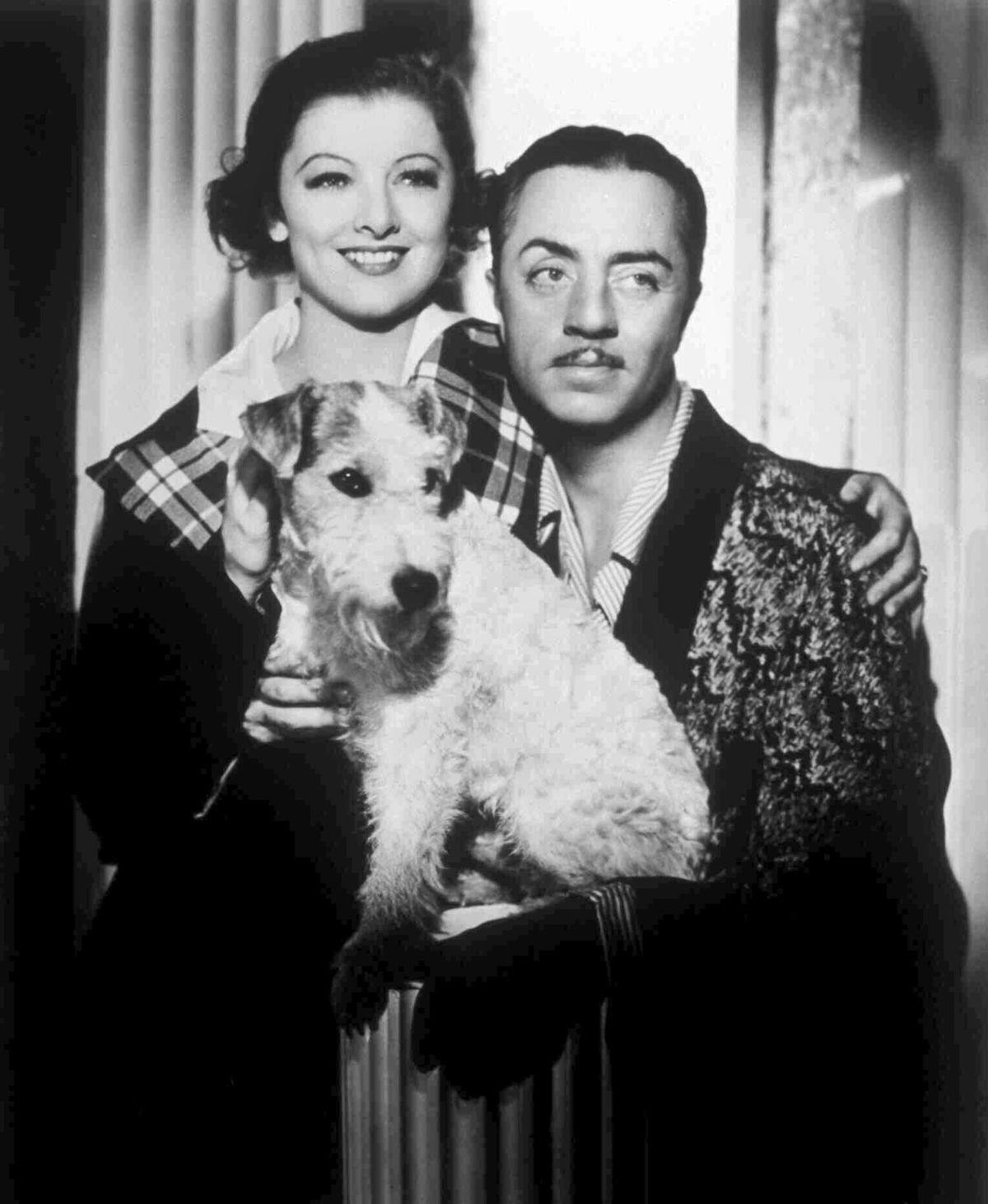 Promotional photograph for the film The Thin Man starring Myrna Loy and William Powell, with Skippy as Asta. Image credit: Metro-Goldwyn-Mayer / Photoplay, April 1936 (page 50) / public domain.
Fourteen films with Myrna Loy created a partnership larger than one series
Powell and Loy made fourteen films together, including Manhattan Melodrama, The Great Ziegfeld, Libeled Lady, Double Wedding and the Thin Man sequels. The number encouraged audiences to imagine a private marriage that never existed.
Their chemistry came from professional trust. Powell used voice and gesture to expand a scene. Loy could respond with a small change that returned the balance. Neither performer seemed to wait for a turn.
In The Great Ziegfeld, he played the showman and she entered as Billie Burke, giving personal steadiness to a career built on spectacle. In Double Wedding, the roles pushed towards broader romantic conflict. The same partnership could therefore represent marriage, courtship, irritation or long familiarity.
The films also show how studio repetition can be both limiting and artistically productive. MGM kept pairing them because audiences paid. Powell and Loy used repetition to refine a language of reaction no single script had to explain again.
Later interviews treated the partnership with affection, but neither actor claimed that effortless chemistry happened without work. It survived because each protected the other’s timing.
Manhattan Melodrama and The Great Ziegfeld widened the partnership
Manhattan Melodrama placed Powell and Loy with Clark Gable in a crime drama before The Thin Man established the comic marriage. Powell plays a district attorney whose childhood friend has become a gambler and gangster. Loy’s Eleanor loves both men at different moments, making the legal conflict personal.
Powell keeps the prosecutor’s authority from becoming self-satisfaction. Friendship makes judgement costly. Gable carries the visible danger, while Powell carries the knowledge that doing the right thing may destroy the person who remembers his earliest life.
In The Great Ziegfeld, Powell played the theatrical producer Florenz Ziegfeld inside a large musical biography. The film turns Broadway excess into national mythology and simplifies the people around its central showman. His charm helps Ziegfeld spend, promise and pursue on a scale that could otherwise become exhausting.
Loy enters as Billie Burke, while Luise Rainer’s performance as Anna Held won an Oscar. The production is far removed from the intimacy of Nick and Nora, yet Powell again makes elegance appear capable of organising chaos.
These dramas remind us that fourteen films did not mean fourteen versions of the same couple. Powell and Loy could share divided loyalties, biography and spectacle. The Thin Man was their ideal form, but their trust survived outside it.
My Man Godfrey placed elegance among people who had mistaken wealth for competence
Gregory La Cava’s My Man Godfrey (1936) cast Powell as a man living at a city dump who is collected by wealthy Irene Bullock during a scavenger hunt. He becomes the family butler, concealing a privileged background and a personal collapse.
Powell’s Godfrey uses service as observation. He knows the manners the Bullocks believe distinguish them, but his competence reveals how badly they practise responsibility. The butler organises a household whose owners cannot organise themselves.
Lombard’s Irene falls in love with him through a series of dramatic announcements and invented crises. Powell does not crush the energy. He creates a steady surface that lets the audience enjoy it while recognising Godfrey’s frustration.
The Depression context gives the comedy its edge. Homeless men become objects in a society game, while wealthy characters describe themselves as harmlessly foolish. Godfrey’s final project creates employment, offering a solution more practical than sentimental charity.
Powell received his second Academy Award nomination. The role joined sophistication to social knowledge. Godfrey is elegant not because he owns a dinner jacket but because he sees how power should be used and how rarely the owners use it well.
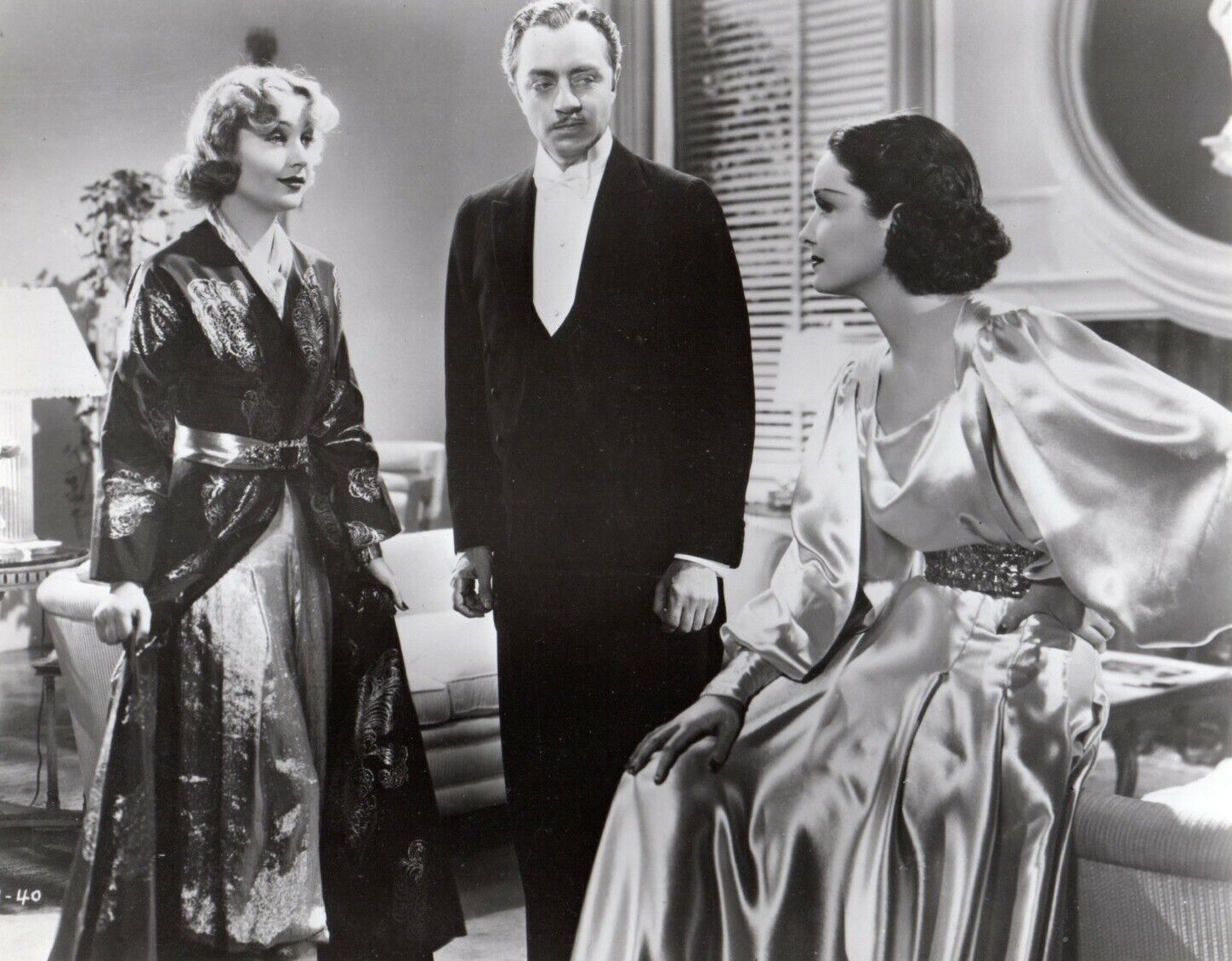 Carole Lombard, William Powell and Gail Patrick in the American screwball comedy film My Man Godfrey (1936). Image credit: Universal Pictures / public domain.
Libeled Lady made elegance compete with speed
Libeled Lady (1936) paired Powell and Loy with Spencer Tracy and Jean Harlow. Powell plays Bill Chandler, a former reporter hired to compromise Loy’s heiress so that her libel suit against a newspaper will collapse.
The plan requires Bill to marry Gladys, played by Harlow, then appear to be caught with Connie. Every legal and romantic arrangement creates another complication. Powell has to make Bill credible as a polished manipulator while allowing real attraction to damage the plan.
The fly-fishing sequence is a masterclass in performed confidence. Bill claims expertise, receives instruction and tries to preserve elegance while the physical situation exposes him. Powell’s silent-film control remains visible beneath the dialogue.
Harlow’s direct anger and Tracy’s impatient authority keep the sophistication from becoming the only comic value. Powell adjusts to each partner. With Loy, implication matters. With Harlow, avoidance fails more loudly.
The ensemble shows why Powell could remain central without dominating. He built a character capable of receiving comic pressure from three directions and returning it in different forms.
Double Wedding and Love Crazy made dignity available for demolition
Powell’s appearance promised control, so later comedies gained energy by removing it. In Double Wedding he plays an unconventional theatre director whose pursuit of Loy’s organised character becomes a contest between bohemian performance and practical resistance.
I Love You Again gives him a timid businessman who, after a blow to the head, remembers that he was previously a confident swindler. The premise depends on a period idea of amnesia rather than medical reality, but it supplies a superb acting mechanism. Powell shifts posture, pace and appetite while the face remains the same.
In Love Crazy, marital misunderstanding leads to an attempt to prove mental incompetence and an escape in disguise. Modern viewers may reasonably question the farce’s use of psychiatric institutions. Powell’s technical pleasure lies in how quickly social confidence turns into physical panic.
He was willing to let costume attack the star image. Disguise did more than hide a character from the others. It invited the audience to enjoy the distance between William Powell, icon of sophistication, and a man whose plan had become visibly ridiculous.
The dignity could be reassembled through one straightened collar or measured line. That recovery is part of the joke. We know control is a performance because we have just watched it fail.
 L. to R.: Myrna Loy, William Powell, Jean Harlow & Spencer Tracy in Libeled Lady – trailer (cropped screenshot). Image credit: film trailer screenshot (MGM) / public domain.
Jean Harlow’s death and Powell’s own illness interrupted the peak
Powell and Jean Harlow developed a serious relationship. They were not married, although contemporary publicity and later accounts discussed possible engagement. Powell’s reluctance to marry has been explained through different private motives that cannot be established with complete confidence.
Harlow became ill during Saratoga and died from kidney failure in June 1937. Powell was deeply affected and participated in funeral arrangements. The grief was private and public because both people belonged to MGM’s commercial world.
Soon afterwards, Powell faced his own serious health crisis. He was diagnosed with cancer and underwent surgery and treatment. He withdrew from films for an extended period. Later accounts sometimes connect the illness directly to grief, a cause that medical evidence does not support.
The interruption came at the height of his fame. MGM could protect a star’s privacy while also needing to reassure audiences and exhibitors. Powell returned cautiously, and the career never again depended on releasing several major vehicles each year.
Survival changed the context of sophistication. The familiar control now belonged to a man who had experienced public bereavement and private fear, even when a particular role did not refer to either.
Diana Lewis and a marriage outside the Nick and Nora fantasy
Powell met actor Diana Lewis and married her in 1940. She was twenty-seven years younger. The age difference attracted comment, yet the marriage lasted until Powell’s death more than four decades later.
Lewis had her own film career and later public identity. She is often introduced only as the young woman who finally gave Powell domestic happiness. That description makes her function inside his biography rather than recognising a partnership maintained over time.
The couple lived increasingly away from Hollywood publicity. Powell continued to work but no longer needed his private household to serve as an extension of Nick and Nora.
His son from the first marriage, William David Powell, worked in writing and production and died by suicide in 1968. The loss belongs in the family history but should not be used to produce a dramatic explanation of Powell’s later retirement, which had begun years earlier. Surviving relatives deserve more than being positioned as causes in a star’s narrative.
Powell and Lewis settled in Palm Springs, where distance from studio life became practical rather than symbolic.
Life with Father gave him a final great leading role
Michael Curtiz’s Life with Father (1947) cast Powell as Clarence Day, the red-haired patriarch of a New York family in the 1880s. Irene Dunne plays his wife Vinnie. The film adapts a long-running stage comedy and builds humour around a man who believes his household follows rational authority.
Powell’s Clarence is loud, certain and repeatedly defeated by the family processes operating around him. The role reverses Nick Charles. Instead of understanding social games better than everyone else, Clarence believes accounting logic should govern feeling.
Dunne never needs to confront him at equal volume. Vinnie redirects decisions until Clarence discovers that the result he opposes has already become inevitable. Powell makes bluster affectionate without requiring the family to pretend it is effective.
The performance earned his third Academy Award nomination. It also showed that elegance could survive caricature. Clarence’s beard, temper and period authority are broad, but Powell keeps thought moving underneath. The man is ridiculous because he is intelligent in the wrong direction.
 Irene Dunne and William Powell in the film Life with Father (1947) – cropped screenshot. Image credit: film screenshot (Warner Bros.) / public domain.
Three Oscar nominations describe three kinds of command
Powell was nominated for best actor for The Thin Man, My Man Godfrey and Life with Father. He did not win, but the three performances provide a useful map of the career.
Nick Charles makes command playful. He can solve the case, yet the pleasure comes from marriage and from his refusal to make expertise solemn. Godfrey hides command beneath employment, watching wealthy people mistake service for a lack of judgement.
Clarence Day makes command domestic and vulnerable. The patriarch believes he governs his household until every episode reveals how much authority belongs to routines maintained by other people.
Awards cannot measure a life in film, but these nominations recognise change rather than one repeated persona. Powell’s surface remains familiar while the social meaning changes around it.
The absence of a competitive win may contribute to his understated place in general film history. He lacks the dramatic Oscar clip used to summarise many stars. His finest work resists extraction because timing depends on someone else’s reply.
That makes the films the best record. Watch the interval between Powell’s sentence and Loy’s reaction. Much of the performance exists in the space they share.
Retirement was a decision rather than an industry disappearance
Powell continued in films including The Senator Was Indiscreet, How to Marry a Millionaire and Mister Roberts. In The Senator Was Indiscreet, directed by George S. Kaufman, he played an incompetent politician whose confidence exceeds his judgement. The film gave him a rare vehicle built almost entirely around comic vanity.
How to Marry a Millionaire placed him in a supporting romantic role opposite Lauren Bacall within a widescreen comedy designed around a younger female trio. Powell did not compete with the new generation. His ease made age attractive without pretending it had disappeared.
His final film was Mister Roberts (1955), in which he played the ship’s doctor. John Ford began the production and Mervyn LeRoy completed it after conflict and illness. Powell’s role is warm and restrained, a suitable end for an actor no longer interested in maintaining top billing.
He retired at sixty-three and kept the decision. There were offers and possible returns, but Powell preferred life with Diana Lewis, travel and the privacy that studio stardom had rarely allowed.
Retirement is sometimes described as though Hollywood forgot him. The evidence suggests choice. He had worked for more than forty years, survived cancer and no longer needed a comeback to prove that Nick Charles remained loved.
 MGM publicity still of William Powell and Myrna Loy in the film Double Wedding (1937). Image credit: Photo by Clarence Bull / Heritage auction: Double Wedding (1937) / public domain.
Death and the survival of an apparently effortless style
Powell died in Palm Springs in March 1984 at ninety-one. Diana Lewis survived him by many years. Obituaries naturally returned to The Thin Man, the voice and the word “suave”.
Suavity can sound superficial. Powell made it dramatic by revealing that manners are tools. A detective uses them to gather information, a butler to manage a family, a con man to create trust and a father to conceal how little control he possesses.
The long partnership with Myrna Loy remains one of Hollywood’s great examples of screen equality. Neither needed to diminish the other for the marriage to sparkle. Their films still feel modern when the plot pauses and the couple simply enjoys the same joke.
What made William Powell’s style look effortless?
Powell’s technique began with clarity. He knew where a character’s attention was directed, and he let the audience see the movement of thought before or just after a line. The moustache and evening clothes helped create the silhouette, but neither could supply timing.
He rarely rushed merely to prove intelligence. A pause gave another actor room and allowed the next sentence to appear chosen rather than memorised. With Myrna Loy, the pause could become shared knowledge. With Carole Lombard, it provided a firm surface against which her energy could rebound.
Physical comedy worked because dignity remained visible while the body failed. A fishing rod, disguise or domestic explosion did not turn Powell into a different performer. It exposed how much labour the character normally used to appear composed.
That balance explains why imitation often produces only smoothness. Powell’s elegance contained risk, vanity, appetite and the possibility of embarrassment. The mind enjoyed itself because the actor knew control might disappear at any moment.
His voice completed the effect. Powell could make an elaborate sentence sound as though it had occurred to him while he was speaking, but the lightness depended on exact emphasis. He rarely hammered the punchline. Instead, he let a word arrive a fraction later than expected, then trusted the listener to catch it. That trust is one reason the comedy has aged so well. The films do not keep stopping to announce that Nick, Godfrey or Clarence has said something clever.
The apparent ease was also generous to scene partners. Powell understood that a reaction could be funnier than a fresh joke and that a romantic lead became more attractive when he appeared genuinely interested in another person’s intelligence. With Loy, Lombard, Jean Arthur and Irene Dunne, he listens differently because the relationship is different. The technique remains recognisable, but it never seals him inside a private performance.
Where should you begin with William Powell’s films?
Begin with The Thin Man. Watch the mystery, but pay closer attention to the changes between Nick and Nora when no clue is being discussed. Follow it with After the Thin Man for a sequel that expands their world without losing the marriage.
Then watch My Man Godfrey. Powell’s restraint gives Carole Lombard freedom while turning competence into social criticism. Libeled Lady is the best ensemble demonstration of how he adjusted to different comic partners.
Add The Kennel Murder Case for Philo Vance and the sound-era detective before Nick made detection domestic. Finish with Life with Father, where the man who once understood every room becomes the last person to realise how his own household works.
William Powell made sophistication look effortless because he concealed preparation without concealing thought. The audience could see the mind enjoying itself. That pleasure, more than the moustache or dinner jacket, is why the style still lives.