William Holden begins Sunset Boulevard dead in a swimming pool, then spends the rest of the film explaining how a handsome Hollywood success became a bought man in someone else’s mansion. It was the role that changed his career because Joe Gillis looked like the leading man Holden had been trained to play while speaking with the disappointment of someone who no longer believed in the training.
That combination followed him through the best of his later work. Holden could be romantic, cynical, brave, selfish and unexpectedly vulnerable without making the changes look like a display of range. In this biography, we will follow him from Golden Boy and wartime service to Stalag 17, Sabrina, The Bridge on the River Kwai, The Wild Bunch and Network. We will also discuss alcoholism, marriage, relationships and conservation, because the private life influenced the work, but we will not turn every damaged character into a disguised confession.
The easy description is that Holden became more interesting as he grew older and the clean-cut face began to show strain. The better explanation is that strong directors learned how to use the tension already there. Even as a young star, he seemed to be measuring the distance between what a man was expected to do and what he could live with.
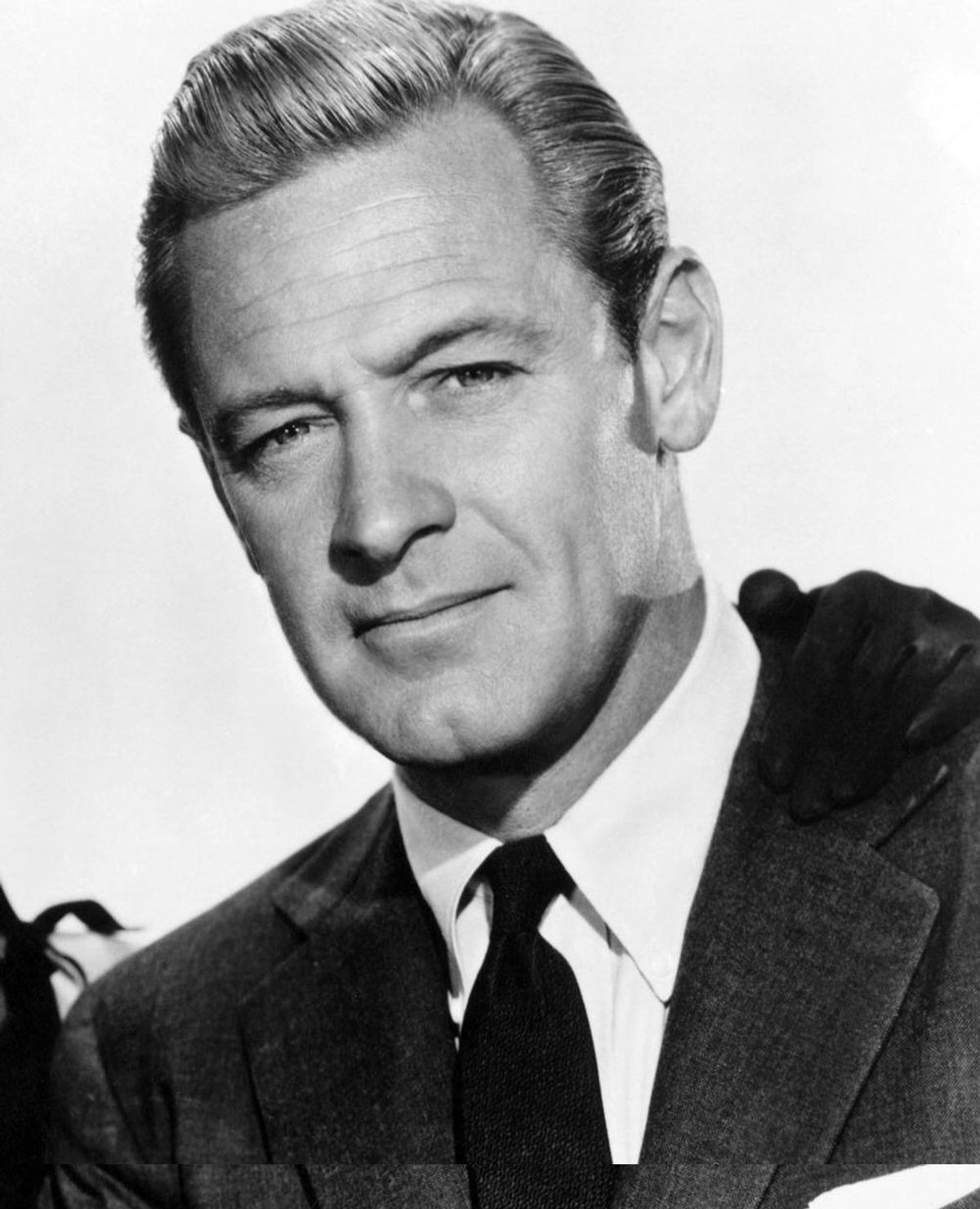 Studio publicity portrait for film Sabrina. Image credit: film studio / Dr. Macro / Public domain, via Wikimedia Commons.
William Holden at a glance
- Birth name: William Franklin Beedle Jr.
- Born: 17 April 1918 in O’Fallon, Illinois
- Died: 12 November 1981 in Santa Monica, California
- Occupation: Actor
- Years active: 1938 to 1981
- Best-known films: Golden Boy, Sunset Boulevard, Stalag 17, Sabrina, Picnic, The Bridge on the River Kwai, The Wild Bunch and Network
- Major recognition: Academy Award for best actor for Stalag 17, with further nominations for Sunset Boulevard and Network
- Marriage: Actor Brenda Marshall, from 1941 until their divorce in 1971
- Other major interest: Wildlife conservation, particularly in Kenya
California adolescence and a screen name chosen by the industry
Holden was born in Illinois to Mary Blanche and William Franklin Beedle. His father worked as an industrial chemist, and the family moved to South Pasadena, California, when William was a child. He attended South Pasadena High School and later Pasadena Junior College, where he studied chemistry.
The route into acting was not a long campaign built on theatrical ambition. A Paramount talent scout noticed him through college and local theatre work. He appeared in a minor film role, then was selected for the lead in Columbia’s Golden Boy (1939), adapted from Clifford Odets’s play.
The new actor also received a new name. William Holden was easier for a studio to market than William Beedle, although accounts differ over exactly who supplied it and why. As with many Hollywood names, the change is less important as an anecdote than as evidence. The industry was not simply discovering a person. It was packaging a usable identity.
Holden’s contract was unusually complicated because Paramount and Columbia shared an interest in him. In theory, two studios meant opportunity. In practice, it could mean being passed between companies and assigned according to commercial need. The arrangement would contribute to years in which the face remained valuable even when the material did not.
 Publicity photo of William Holden and Lee J. Cobb in film Golden Boy (1939). Image credit: Studio / Certain Cinema collections / Public domain, via Wikimedia Commons.
Barbara Stanwyck helped the Golden Boy stay in the picture
In Golden Boy, Holden played Joe Bonaparte, a talented violinist drawn towards prizefighting and the money it promises. The role demanded anger, physical credibility and a conflict between art and ambition. Holden was inexperienced, and the production did not begin smoothly.
Barbara Stanwyck, already an established star, supported him when the studio considered replacing him. Holden never forgot it. He credited her with helping save his career, and decades later, when Stanwyck received an honorary Academy Award, she read a message remembering him after his death.
The story is moving because it involves specific professional generosity rather than a vague claim that one star discovered another. Stanwyck could not create Holden’s later performances. She used her standing to give a young actor time to complete the first important one.
The film made Holden visible, but it did not immediately make him secure. He appeared in Our Town, Arizona, I Wanted Wings and a succession of roles that used sincerity, youth and physical attractiveness. Some were worthwhile. Others placed him in the large middle ground of studio production where capable performers worked constantly without finding the part that would define them.
This early Holden is lighter than the man audiences remember from Billy Wilder and Sam Peckinpah. The voice has not acquired the same dry edge, and the face has not collected experience. Even so, there is already a slight resistance to being told what the character represents. That resistance would become his greatest asset.
War service interrupted the career and altered its rhythm
Holden entered the United States Army Air Forces during the Second World War. He worked in the First Motion Picture Unit, making training films. Ronald Reagan, James Stewart and other film professionals also served in military or production capacities, although their duties and experiences differed.
Training-film work was not front-line combat, and it should not be inflated into one. It still removed Holden from commercial filmmaking and placed him within an organisation using film for instruction, morale and wartime communication. He finished his service as a first lieutenant.
When he returned to Hollywood, the career did not simply resume at the point where it had paused. Audiences had changed, younger actors had arrived and post-war films were beginning to make room for fatigue, disillusionment and social unease. Holden appeared in Blaze of Noon, Dear Ruth, Apartment for Peggy and other productions without clearly moving into the top rank.
The uncertain years were important preparation for Joe Gillis. By 1950, Holden knew what it felt like to be employed by Hollywood without being satisfied by it. That does not make Sunset Boulevard autobiographical, but it gave him a professional understanding of the difference between appearing successful and feeling trapped.
 William Holden and Donna Reed hold their gold-plated Oscars, 1954. Image credit: Photographer not credited / ebay / Public domain, via Wikimedia Commons.
Sunset Boulevard found the cynic inside the leading man
Montgomery Clift had been considered for Joe Gillis and withdrew before production. Billy Wilder then cast Holden, who was still associated with conventional leading roles. Gloria Swanson played Norma Desmond, the silent star living inside a mansion, a memory and plans for a comeback.
Joe is a screenwriter with debts, a repossessed car and no saleable script. When he enters Norma’s house, he recognises both the absurdity of her fantasy and the comfort her money can provide. Holden’s performance depends on this double awareness. Joe is not an innocent victim. He understands the bargain while telling himself that he remains detached from it.
The voice-over is crucial. Holden delivers Wilder and Charles Brackett’s lines with humour sharpened by defeat. Because the film reveals Joe’s death immediately, every joke arrives from a man who already knows where compromise led. The narration does not ask us to solve the plot. It asks us to watch how self-contempt becomes habit.
Opposite Swanson’s grand gestures, Holden stays relatively contained. Norma performs every feeling because performance is the only language in which she still possesses authority. Joe performs indifference. Their styles are not simply old Hollywood against new Hollywood. They are two methods of hiding dependence.
The film earned Holden his first Academy Award nomination. It also gave directors a new way to cast him. The clean-cut appearance no longer had to represent virtue. It could represent the professional man whose charm makes compromise easier to excuse.
 Press photo of William Holden and Gloria Swanson in Sunset Boulevard (1950 film). Image credit: Paramount Pictures press photo / Public domain, via Wikimedia Commons.
Born Yesterday and Executive Suite proved he could change temperature
Holden followed Sunset Boulevard with Born Yesterday, directed by George Cukor. Judy Holliday played Billie Dawn, the girlfriend of a corrupt businessman who hires Holden’s journalist Paul Verrall to educate her. Holliday’s comic intelligence is the film’s centre, and Holden serves it by refusing to compete.
Paul is idealistic, but Holden keeps him human through impatience and attraction. The part also shows the practical value of his understated manner. Holliday can control a scene through voice, timing and sudden shifts of thought because Holden gives her a responsive surface rather than another loud comic performance.
In Billy Wilder’s Stalag 17 (1953), the temperature drops. Holden plays J. J. Sefton, an American prisoner in a German camp who trades with guards and profits from other prisoners’ needs. When information leaks to the Germans, the barracks assumes that the least likeable man must be the traitor.
Sefton is one of Holden’s best roles because the film does not convert cynicism into hidden sweetness. He is observant, self-protective and often unpleasant. He also recognises the real betrayal before the men who claim greater loyalty. Holden lets intelligence function without charm, then makes action credible because Sefton has finally found a risk more urgent than his own comfort.
He won the Academy Award for best actor. His famously short acceptance speech has often been read as indifference, but the broadcast imposed strict time limits. The larger point is that the Oscar confirmed a new star image. Holden was most compelling when decency had to fight through disappointment rather than arrive as a natural condition.
Executive Suite (1954) used him differently again. As McDonald Walling, an engineer drawn into a corporate succession struggle, he represents productive purpose against financial manipulation. The film’s ensemble includes Barbara Stanwyck, Fredric March and Walter Pidgeon. Holden’s relative plainness becomes an argument: leadership should be based on what the company makes, not simply what its shares can be made to do.
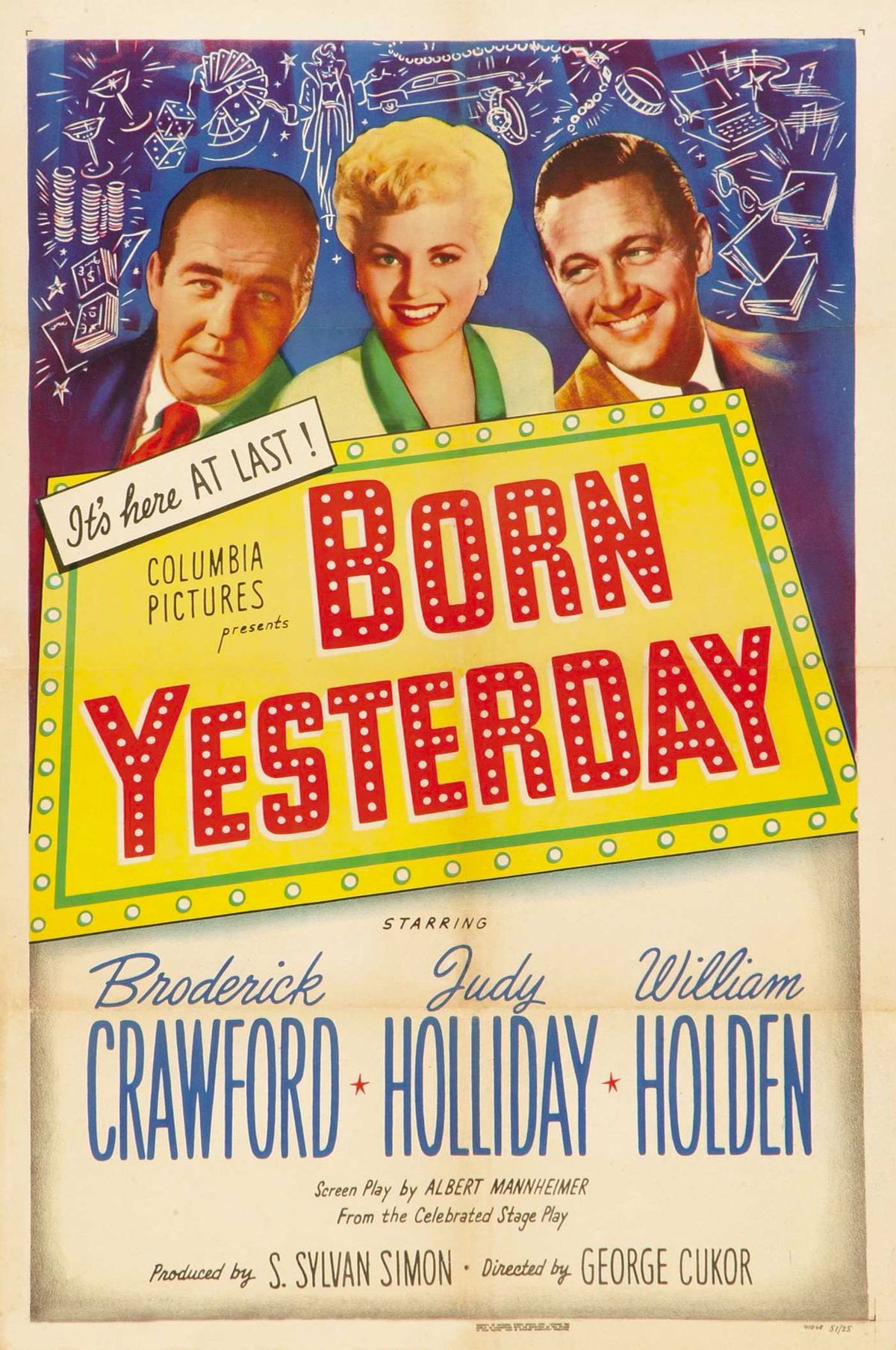 Theatrical release poster for the 1950 film Born Yesterday. Image credit: Distributed by Columbia Pictures. / Scan via Heritage Auctions / Public domain, via Wikimedia Commons.
Sabrina placed romance inside class and an uncomfortable age difference
Holden reunited with Wilder for Sabrina (1954), playing David Larrabee, the charming younger son of a wealthy family. Audrey Hepburn’s Sabrina returns from Paris transformed, and David suddenly notices the chauffeur’s daughter who had loved him from a distance. Humphrey Bogart plays Linus, the older brother who tries to separate them for business reasons and becomes emotionally involved himself.
Holden makes David attractive and unserious. The character’s attention is genuine while it lasts, which is precisely the problem. Sabrina has built a romantic idea around a man who has never needed to examine the effect of his ease on other people.
The film’s eventual pairing of Sabrina with Linus asks audiences to accept a considerable age gap. Holden was eleven years older than Hepburn; Bogart was thirty years older. The story recognises differences in class and power more clearly than it examines age. Modern viewers can enjoy Hepburn’s wit, Wilder’s construction and the performances while still noticing what the romantic arrangement expects them to ignore.
Holden and Hepburn had a relationship during production, according to later biographical accounts. The exact private conversations reported afterwards should be treated cautiously. What matters publicly is that their warmth helps the early part of the film and that the relationship took place while Holden was married. It belongs to the complicated private story, not as proof that the screen romance was simply real.
Picnic and Love Is a Many-Splendored Thing confirmed the romantic peak
Joshua Logan’s Picnic (1955) cast Holden as Hal Carter, a drifter whose arrival unsettles a Kansas town. Holden was older than the character and uneasy about appearing shirtless, but that discomfort can work for the role. Hal’s body is presented as confidence while his behaviour reveals insecurity about education, work and social status.
The dance with Kim Novak is remembered for its sensuality. Very little is said. The staging allows attraction and public observation to exist together, and Holden’s slight stiffness prevents the moment from becoming polished seduction. Hal wants to appear in control because the town is measuring him.
In Love Is a Many-Splendored Thing, he played an American correspondent involved with a widowed Eurasian doctor, played by Jennifer Jones. The casting and treatment of race reflect Hollywood’s limitations, including the use of a white actor in an Asian role. Holden’s romantic authority helped make the film popular, but popularity does not resolve the representational problem.
These successes placed him near the top of international box-office rankings. The risk was repetition. Handsome men divided between desire and responsibility could become another studio formula. Holden increasingly sought location work and films in which the leading man was not protected by romance.
 Audrey Hepburn and William Holden in Sabrina (1954). Image credit: Unknown author / WorthPoint / Public domain, via Wikimedia Commons.
The Bridge on the River Kwai made duty look dangerously attractive
David Lean’s The Bridge on the River Kwai (1957) placed Holden inside a British-led war epic. He plays Shears, an American prisoner who escapes a Japanese camp and is then pressured into returning with a commando mission. Alec Guinness’s Colonel Nicholson provides the film’s most famous obsession, insisting that British prisoners build an excellent bridge as proof of discipline.
Shears offers an alternative view of heroism. He wants to survive and has lied about his rank to gain better treatment. Holden plays the self-interest without apology. The character sees that military ideals can become another form of vanity when they ignore the human cost.
The film’s politics and historical accuracy have been debated extensively. Its Japanese characters are shaped through a Western wartime framework, and the fictional bridge should not be mistaken for a documentary account of prisoners’ experiences. Lean’s direction and the performances remain powerful partly because the film allows competing ideas of duty to destroy one another.
Holden was one of the world’s highest-paid stars, and his deal included a share of profits. The commercial reward increased his independence. It also encouraged more international productions, keeping him away from Hollywood for long periods and contributing to strain in his family life.
The final mission asks Shears to perform the courage he has spent the film dismissing. Holden does not turn the change into patriotic conversion. He acts because other people are already committed and because escape has stopped being a complete moral answer. The performance gives the epic a sceptical modern voice.
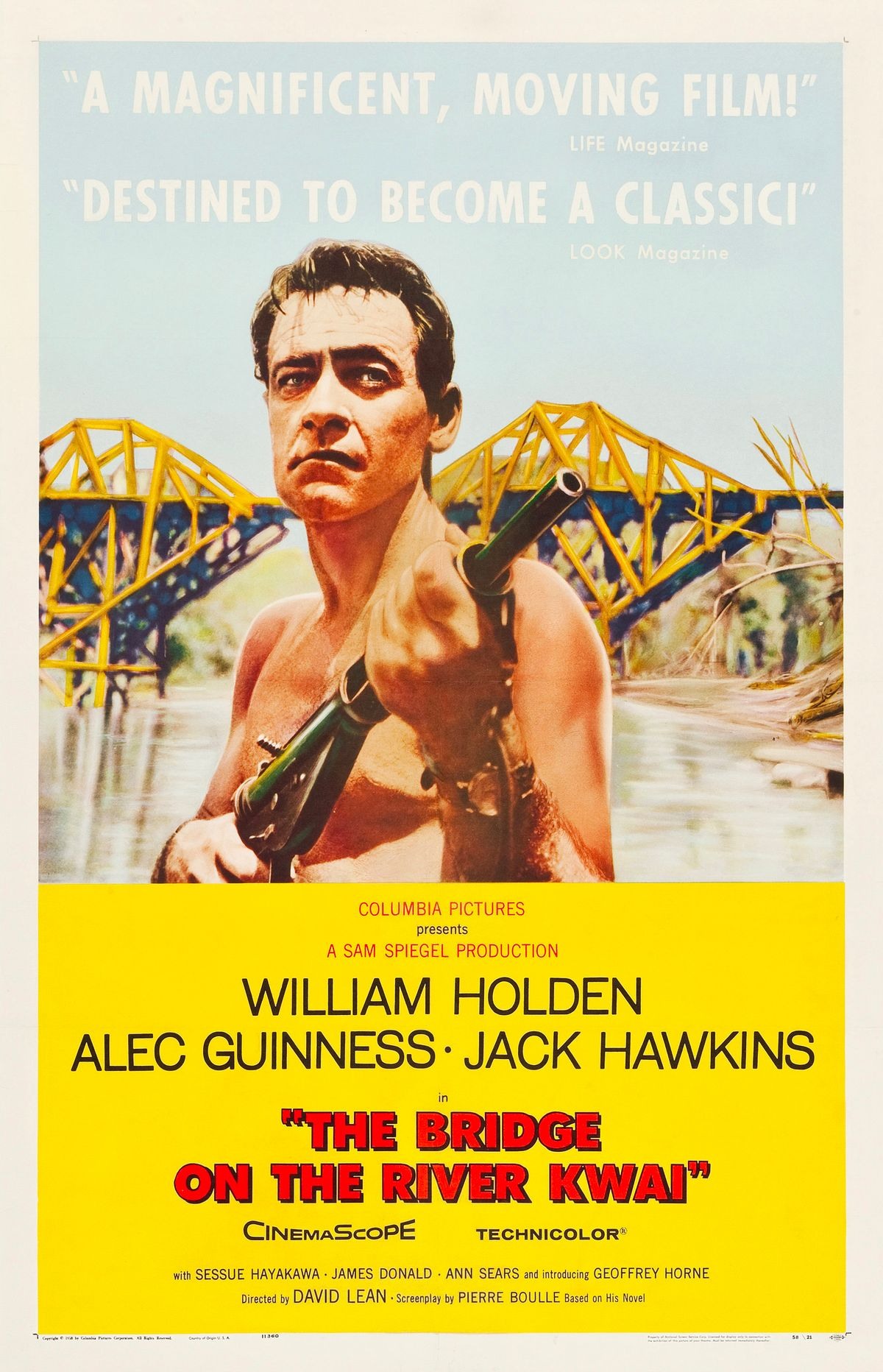 “Style B” American poster for the US theatrical release of the 1957 film The Bridge on the River Kwai. Image credit: “Copyright © 1958 Columbia Pictures Corporation.” / Scan via Heritage Auctions / Public domain.
Marriage, fatherhood and relationships outside the marriage
Holden married Brenda Marshall in 1941. He became stepfather to her daughter Virginia, and the couple had two sons, Peter and Scott. Public photographs presented a successful family, but Holden’s long absences, affairs and drinking placed severe pressure on the marriage.
Later accounts connect him romantically with several co-stars and public figures. Some relationships are better documented than others. Listing every rumour would add gossip without adding understanding. The established pattern is enough: Holden did not maintain the private steadiness that his household and public image suggested.
His marriage to Marshall ended in divorce in 1971 after years of separation. The consequences should not be described as though they belonged only to the star’s emotional development. A spouse and children experienced the instability. Biographies often use family members to explain why a famous man suffered, then give little space to what his behaviour required of them.
Holden later had a long relationship with actor Stefanie Powers. They shared travel, a home in California and a strong interest in Africa and conservation. Powers was building her own career and should not be reduced to the woman present during Holden’s final years. Their relationship connected two adult lives and continued his growing investment in wildlife protection.
Alcoholism affected the work without explaining every performance
Holden’s heavy drinking became a persistent problem. Friends, colleagues and family observed its effect on health, reliability and relationships. The industry often tolerated destructive behaviour when a star remained profitable, then converted the same behaviour into publicity once decline became visible.
It would be easy to read Joe Gillis, Sefton, Pike Bishop and Max Schumacher as stages in Holden’s private drinking. That approach is unfair to the scripts, directors and craft involved. Actors use experience, but a role is not a medical report. The worn authority of his later performances came from age, technique, physical condition and the specific demands of each film.
Alcohol nevertheless influenced the choices available to him. Insurance, schedules and reputation matter in filmmaking. Some productions were weak, and Holden sometimes accepted work for money or travel rather than artistic ambition. The career between The Bridge on the River Kwai and The Wild Bunch includes successes such as The World of Suzie Wong and The Counterfeit Traitor, alongside films that did little to deepen the image.
The honest account is neither romantic decline nor moral lecture. Holden had a serious addiction, continued to work and sometimes produced remarkable performances under worsening conditions. Achievement does not make the damage glamorous, and damage does not make the achievement accidental.
The Wild Bunch allowed the star to become an ageing outlaw
Sam Peckinpah’s The Wild Bunch (1969) gave Holden the role of Pike Bishop, leader of an outlaw gang reaching the end of its time. The western opens with a robbery, betrayal and civilians caught in violence. Its world has no clean division between law and crime, and the old codes sound increasingly inadequate beside machine guns and profit.
Holden’s face is essential. Pike still expects obedience, but movement has become painful and plans fail more quickly. Flashbacks reveal a past betrayal, while the present keeps asking whether loyalty has any meaning beyond men protecting one another’s pride.
The film’s violence was shocking on release and remains difficult. Peckinpah used multiple cameras, varied speeds and rapid editing to make death overwhelming rather than tidy. Critics disagreed over whether the beauty of the filmmaking condemned violence or made it seductive. Both responses can exist because the sequence is designed to attract and repel.
Holden does not ask us to forgive Pike. He gives the man an awareness that his best available action may arrive too late to repair anything. The final decision to return for Angel is brief. “Let’s go” becomes powerful because Holden has spent the film showing how much history stands behind two ordinary words.
The role restored his standing with younger audiences and filmmakers. He was no longer the romantic star trying to conceal age. Age had become the subject.
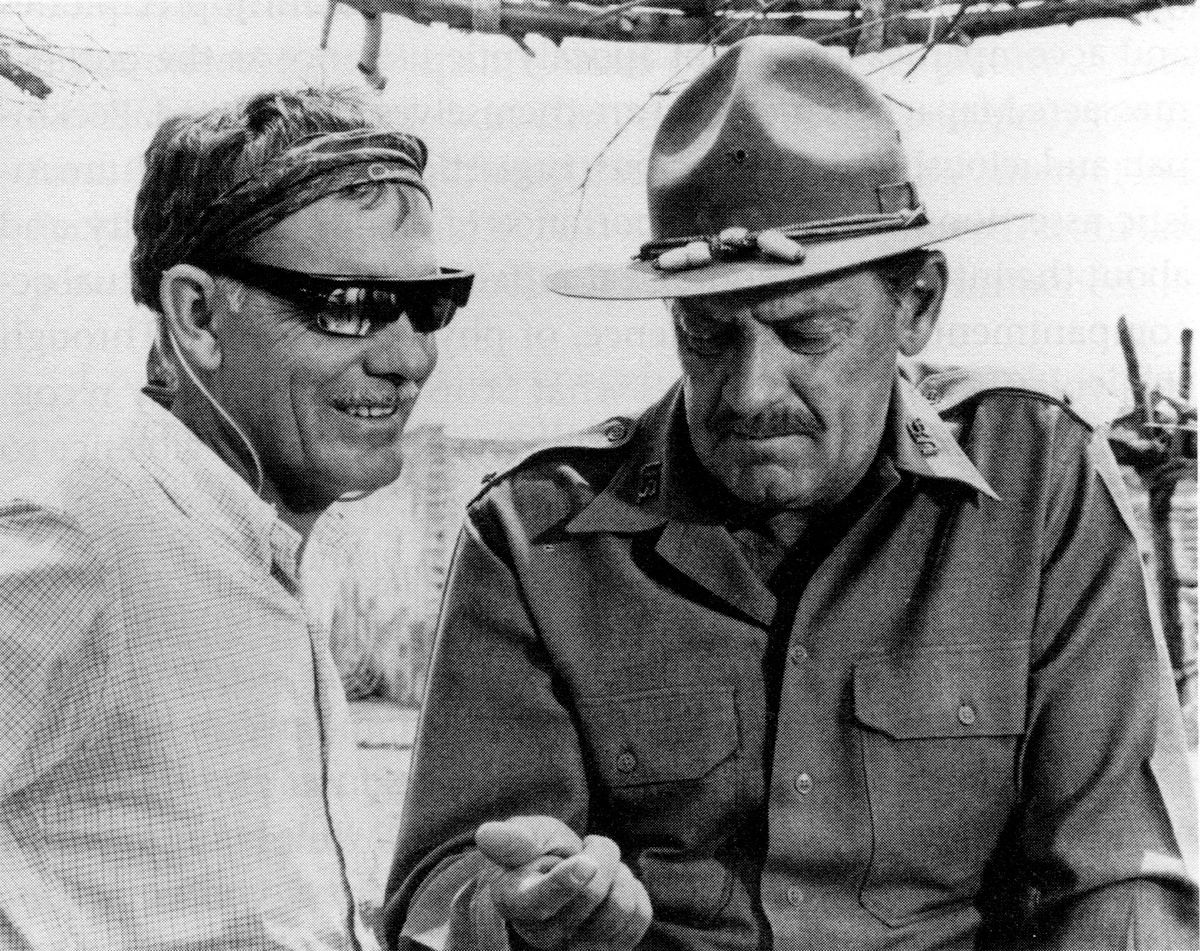 Production still for the film The Wild Bunch. Image credit: Unknown author / Sam Peckinpah’s The Wild Bunch / Public domain, via Wikimedia Commons.
Network turned professional disappointment into furious clarity
Holden’s strongest final performance came in Sidney Lumet’s Network (1976). He plays Max Schumacher, an experienced television news executive whose friend Howard Beale announces that he intends to die on air. The network responds not with care but with ratings strategy.
Paddy Chayefsky’s screenplay gives several characters large speeches. Holden’s task is different. Max provides the human scale against corporate madness, yet he is not morally clean. He begins a relationship with Diana Christensen, the younger programming executive played by Faye Dunaway, and leaves his wife Louise, played by Beatrice Straight.
Holden is especially good when Max recognises that his own language has become another performance. He believes he represents serious news, but he has also participated in the system now becoming grotesque. His affair with Diana allows him to imagine that experience can remain central inside a culture moving past him.
Straight’s confrontation strips away that self-image. Holden listens while Louise explains what his late-life romance means to the person left at home. The scene prevents Max’s disappointment from becoming a licence to injure others. When he finally tells Diana that she is television incarnate, the judgement applies partly to his own desire to turn their relationship into one last meaningful programme.
Holden received his third Academy Award nomination. The performance has aged well because he never tries to outshout the satire. He gives us a man who can describe the problem accurately and still behave selfishly inside it.
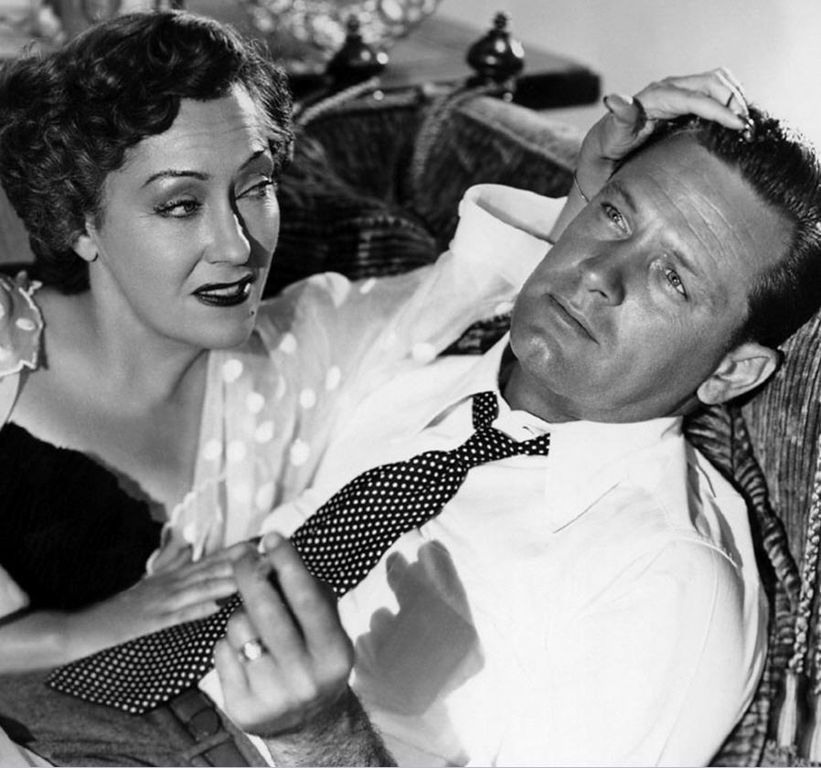 Gloria Swanson and William Holden in a Sunset Boulevard publicity portrait, representing the role that transformed Holden’s career. Image credit: Studio publicity still / Dr. Macro / Public domain, via Wikimedia Commons.
Africa and conservation became more than a star’s hobby
Holden developed a deep attachment to Kenya and co-owned the Mount Kenya Safari Club. His conservation interests led to a wildlife education centre near Nanyuki. After his death, Stefanie Powers established the William Holden Wildlife Foundation, which continues educational and conservation work.
Celebrity conservation can involve privilege, tourism and simplified ideas about land and wildlife. Those contexts should not be ignored. Holden had the money to travel and invest because of Hollywood. At the same time, the programme created practical education and employment rather than existing only as publicity.
Africa also offered distance from the film industry and the possibility of an identity not measured entirely by box office. That did not cure alcoholism or resolve family relationships. It gave Holden work he considered meaningful beyond performance, and it became a lasting part of his legacy.
His final notable films included Wilder’s Fedora, which returned to the cost of manufacturing youth and stardom, and Blake Edwards’s S.O.B., a bitter comedy about the business. Both used the fact that Holden carried Hollywood history in his face. He was no longer simply acting in stories about the industry. His presence was evidence.
His death was lonely, but it should not be turned into a final judgement
Holden died after falling and striking his head in his Santa Monica apartment. The injury caused severe bleeding, and his body was discovered several days later. Investigators concluded that he had been alone and intoxicated. He was sixty-three.
The circumstances are sad and stark. They have often been used as the inevitable ending to a story about alcohol. Addiction increased the risk and isolation, but inevitability is something biographers impose after knowing the result. Holden’s life also contained work, family, friendship, travel, conservation and periods of renewed achievement.
He requested no elaborate funeral, and his remains were cremated. Tributes focused on the unforced quality of the acting, the films with Wilder and the authority of the late performances. The contrast between public familiarity and private death added another layer to the image, but it should not replace the person with a cautionary symbol.
The Country Girl and Fedora explored men living beside a female star image
In The Country Girl (1954), Holden plays a theatre director who casts an alcoholic former star, played by Bing Crosby, and misjudges the man’s wife, played by Grace Kelly. Holden’s Bernie initially interprets the marriage through assumptions supplied by the husband.
The role is less showy than his romantic leads. Bernie watches, directs and gradually realises that professional recovery depends on emotional labour he has attributed to the wrong person. Holden’s scepticism becomes capable of revision rather than simply proving itself correct.
Billy Wilder’s Fedora (1978) returned him to a story about cinema, ageing and a star protected by an elaborate fiction. The film invites comparison with Sunset Boulevard, though Holden now plays a producer trying to recover relevance rather than a young writer selling charm.
The later film is uneven and deliberately melancholy. Holden’s weathered presence gives its argument weight. Hollywood’s dream of unchanging beauty has become an arrangement everyone can see is destructive, yet they continue financing it.
Together, the films show Holden beside women whose public images organise male decisions. He does not occupy the centre by default. His characters must learn what the women have been required to carry.
Where should you begin with William Holden’s films?
Begin with Sunset Boulevard. It introduces the dry voice, compromised charm and suspicion of Hollywood that shaped the mature career. Follow it with Stalag 17, where self-interest becomes a form of intelligence rather than a temporary flaw.
Then watch Sabrina or Picnic for the romantic star at his commercial peak. Neither film is free of problems, but together they show how Holden handled charm, class anxiety and the pressure of being looked at.
Move next to The Bridge on the River Kwai and The Wild Bunch. The first places scepticism inside an epic about duty. The second lets age and regret become physical. Finish with Network, where the actor no longer needs a gun, uniform or romantic setting to command the frame.
If you want to see the range between those landmarks, add Born Yesterday and The Country Girl. In each, Holden begins from male confidence and discovers that the woman he has judged possesses a clearer understanding of the situation. The change is valuable because it shows his scepticism could be redirected towards his own character.
William Holden’s career is compelling because the image never settled. Hollywood kept offering him versions of success, and his best characters kept noticing the price. Joe Gillis speaks from a swimming pool. Max Schumacher speaks from an industry he understands too late. Between them, Holden found a way to make the leading man question the story that had placed him in the lead.