Olivia de Havilland is remembered for one of the gentlest characters in Gone with the Wind, yet one of the most important decisions of her life was anything but gentle. When Warner Bros. tried to keep her tied to the studio by adding suspension time to the end of her contract, she took the company to court. She risked several of the best years of her career, won the case and changed the balance of power between Hollywood studios and their performers.
That legal victory is a remarkable story, but it should not push the acting to one side. In this biography, we will follow de Havilland from her childhood in Tokyo and California to the adventure films she made with Errol Flynn, then look at the mature performances that justified her fight for better material. We will also discuss her difficult relationship with her sister Joan Fontaine without pretending that decades of family history can be reduced to a neat Hollywood feud.
De Havilland’s public image was built around good manners, beauty and emotional steadiness. Those qualities were genuine parts of her screen presence, but they were not the whole of it. Her best performances are full of stubbornness, calculation and anger held just below the surface. The studio first treated her as the civilised woman waiting for the hero to return. She eventually became the woman who decided what happened next.
 Studio publicity portrait for film Gone With the Wind (1939). Image credit: Selznick International Pictures; Fred Parrish, photographer / ABC Color / Public domain, via Wikimedia Commons.
Olivia de Havilland at a glance
- Full name: Olivia Mary de Havilland
- Born: 1 July 1916 in Tokyo, Japan
- Died: 26 July 2020 in Paris, France
- Occupation: Actor
- Years active: 1935 to 1988
- Best-known films: Captain Blood, The Adventures of Robin Hood, Gone with the Wind, To Each His Own, The Snake Pit and The Heiress
- Major recognition: Two Academy Awards for best actress, for To Each His Own and The Heiress
- Family: The elder sister of actor Joan Fontaine
- Why the court case mattered: The 1944 appellate decision prevented studios from extending a seven-year personal-services contract by adding periods of suspension
Tokyo, California and the making of two actors
Olivia was born in Tokyo to British parents. Her father, Walter de Havilland, was a patent lawyer. Her mother, Lilian Ruse, had trained for the stage and later used the name Lilian Fontaine. Joan was born fifteen months after Olivia, and the sisters spent their earliest years in Japan before their parents’ marriage failed.
Lilian took the girls to California in 1919, intending the move to improve their health. They eventually settled in Saratoga, south of San Francisco. Money was not plentiful, and Lilian’s knowledge of theatre became a practical resource as well as a family interest. She taught speech and performance, coached her daughters and encouraged a precise form of self-presentation that would serve both of them in Hollywood.
The sisters’ rivalry has been repeated so often that it can sound like a studio-created comedy plot. There was real competition, resentment and long estrangement. There was also a childhood shaped by illness, parental separation and a mother with strong ideas about discipline. Joan later adopted their stepfather’s surname, Fontaine, while Olivia retained de Havilland. Each became an Academy Award winner, and every public disagreement was therefore irresistible to the press.
It is safer to avoid choosing a winner in a private family argument. The rivalry mattered, but it did not explain either career. Olivia’s route into acting began through school and community theatre. She appeared as Puck in an amateur production of A Midsummer Night’s Dream, then joined Max Reinhardt’s lavish Hollywood Bowl staging. When Reinhardt’s production became a Warner Bros. film, de Havilland played Hermia on screen.
She had planned to attend Mills College and become a teacher. Instead, the combination of Reinhardt, Warner Bros. and a seven-year contract placed her inside the studio system at nineteen. The speed of that change is worth remembering. De Havilland did not spend years working through uncredited film parts. She entered a major production almost immediately and then had to learn the difference between theatrical projection and acting for a camera while the studio was already deciding what sort of woman she should play.
 Olivia de Havilland in a portrait published by Cine Mundial in March 1943. Image credit: Cine Mundial / Photographer not credited / Cine Mundial, March 1943 / Public domain, via Wikimedia Commons.
Errol Flynn made her famous, but the films kept her in second place
Warner Bros. paired de Havilland with an equally new leading man in Captain Blood (1935). Errol Flynn played the physician forced into slavery who becomes a pirate, while de Havilland played Arabella Bishop, the governor’s niece who recognises his courage before the authorities do. The film was a success and established a partnership that Warner would return to repeatedly.
They made eight films together. The most famous include The Charge of the Light Brigade, The Adventures of Robin Hood, Four’s a Crowd, Dodge City, The Private Lives of Elizabeth and Essex and They Died with Their Boots On. Flynn supplied speed, danger and an amused refusal to behave. De Havilland gave the films emotional credibility. When she believed in the hero, the audience could believe that something more than spectacle was at stake.
In The Adventures of Robin Hood (1938), Maid Marian changes her political understanding rather than simply waiting to be rescued. At first she sees Robin as a rebel threatening the established order. De Havilland makes the change gradual. Marian watches how power is being used, recognises the suffering outside the castle and finally chooses a side. Her warmth gives the film a centre, while her composure stops the romance from becoming breathless decoration.
The partnership was valuable to the studio, but it also revealed the limit of her roles. Flynn’s characters acted. De Havilland’s characters understood, encouraged and sometimes forgave. Even when Marian took risks, the film was built around Robin’s movement. Warner had found an actor who could make goodness intelligent, then repeatedly asked her to support male adventure.
Later accounts describe strong affection between de Havilland and Flynn, and both acknowledged an attraction. The exact boundaries of the relationship cannot be established by repeating every anecdote. Their screen connection is the part we can examine directly. She did more than respond to his charm. She gave it somewhere to land, challenged its selfishness and made the romantic promises seem serious after the sword fights were over.
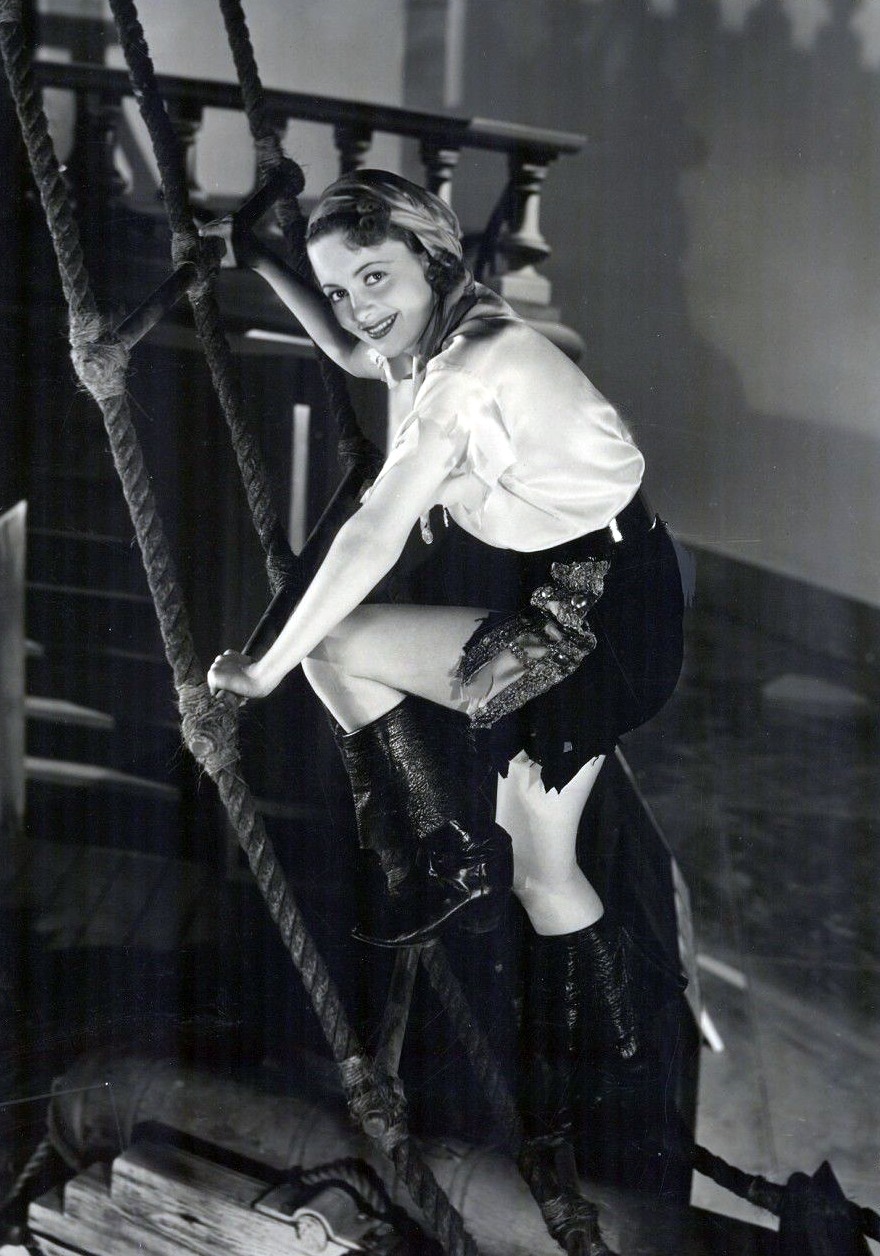 Olivia de Havilland publicity photo for Captain Blood, 1935. Image credit: Warner Bros. / eBay / Public domain, via Wikimedia Commons.
Melanie Hamilton was not weak, and de Havilland knew it
David O. Selznick wanted de Havilland to play Melanie Hamilton in Gone with the Wind (1939), but she remained under contract to Warner Bros. She appealed to Jack Warner and, according to her later account, also asked his wife Ann to help persuade him. The loan was granted, giving de Havilland a part very different from the studio adventures.
Melanie is easily misremembered as the soft alternative to Scarlett O’Hara. She is polite, loyal and physically frail, while Scarlett is impatient, competitive and determined to survive. De Havilland understood that gentleness did not mean helplessness. Melanie acts according to a moral code and rarely wastes energy advertising it. She protects Scarlett from social condemnation, faces danger during the war and offers emotional authority in a world that has lost most of its formal structures.
The performance works because de Havilland does not compete with Vivien Leigh for attention. She listens. She allows Melanie’s trust to become uncomfortable because the audience knows more about Scarlett than Melanie appears to know. At the same time, we gradually suspect that Melanie sees a great deal and chooses generosity with open eyes. De Havilland received an Academy Award nomination for supporting actress, losing to her co-star Hattie McDaniel.
Any modern discussion of the film must also acknowledge what it asks audiences to accept. Gone with the Wind romanticises the slaveholding South, uses racist stereotypes and treats the defeat of the Confederacy as the loss of a civilisation rather than the end of a system built on enslavement. De Havilland’s performance remains subtle and moving. That achievement does not make the film’s history neutral, and criticism of the film does not require us to pretend that every performance inside it is without value.
For de Havilland, Melanie proved she could create a complete character without the action framework that had defined her partnership with Flynn. The film became one of the most watched productions of the studio era. Warner Bros. nevertheless continued to offer parts she felt repeated the dutiful young woman. Fame had increased. Control had not.
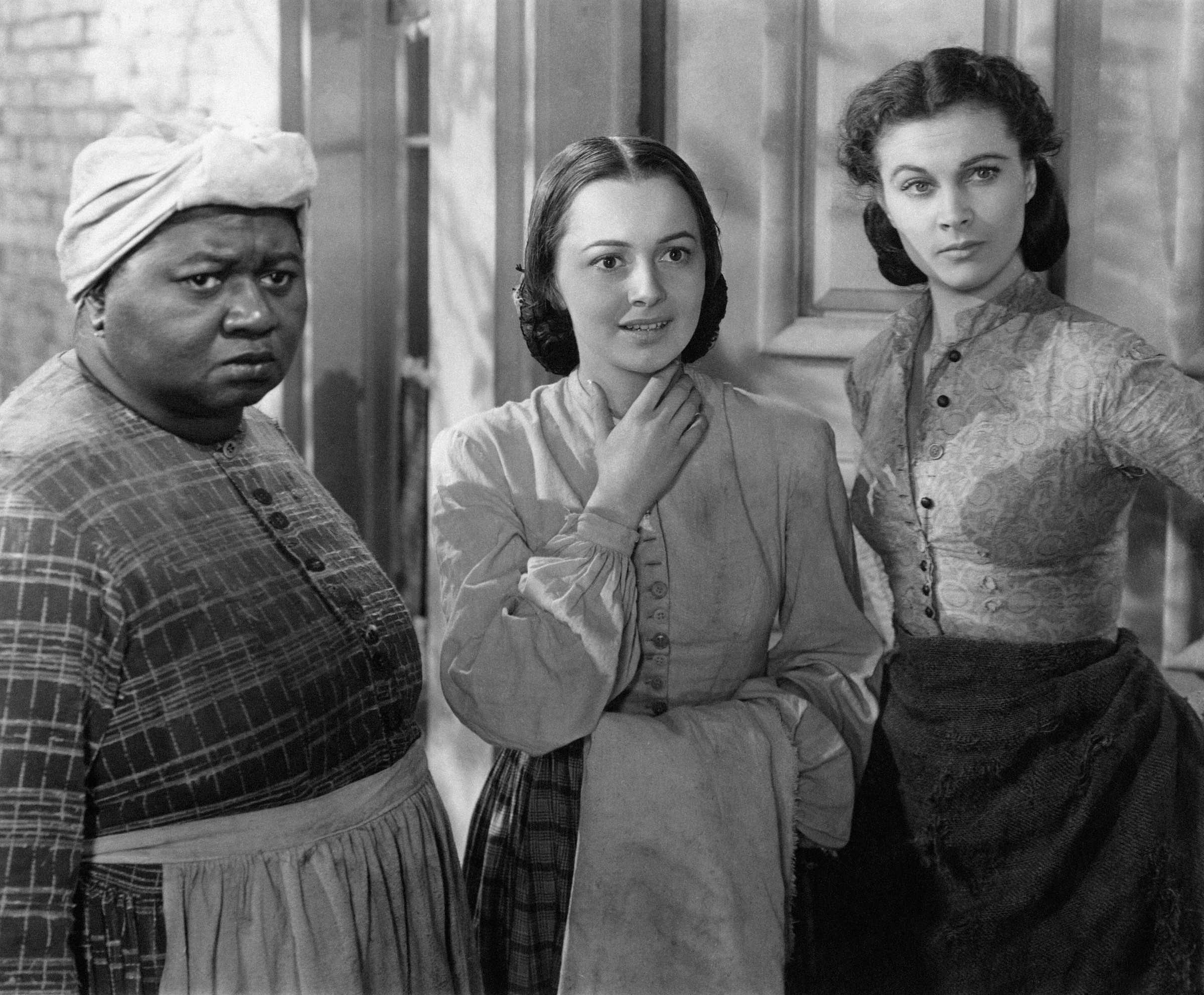 Publicity photo for Gone with the Wind, 1939. Image credit: Selznick International Pictures; Fred Parrish, photographer / eBay / Public domain, via Wikimedia Commons.
The roles she refused became as important as the roles she accepted
The studio contract gave Warner Bros. considerable authority over de Havilland’s working life. An actor could be assigned a film, loaned to another company or suspended for refusing work. Suspension meant no salary, but the studio also added the suspended period to the end of the contract. A nominal seven-year agreement could therefore continue beyond seven calendar years.
De Havilland did not reject every commercial film or demand that each role be a masterpiece. Her objection was to a pattern. Warner had learned that audiences accepted her as an honourable romantic heroine, and the studio had little reason to abandon a profitable type. From the company’s perspective, repetition was efficient. From the actor’s perspective, it could consume the years in which she had the greatest chance to build a varied career.
There were signs of what she wanted in Hold Back the Dawn (1941). She played Emmy Brown, an American schoolteacher drawn into the scheme of a Romanian-born fortune hunter who wants to marry a citizen so he can enter the United States. De Havilland makes Emmy open-hearted without making her foolish. The role earned a best-actress nomination, although the studio’s handling of the production and campaign added to her frustration.
After further disputes and suspensions, she filed suit in 1943. Warner Bros. argued that the contract covered seven years of actual service, allowing suspended time to be added. De Havilland’s lawyers argued that California law limited personal-service contracts to seven calendar years. The California Court of Appeal ruled in her favour in 1944.
The decision is often described as though one court appearance instantly freed every actor in Hollywood. The real change was more specific and, for that reason, more useful. Studios could still sign long contracts and suspend performers, but they could not use those suspensions to extend service beyond the statutory seven-year period. The ruling became associated with de Havilland’s name and remains important in California entertainment law.
Winning did not remove the cost. During the dispute, Warner warned other studios that she remained under contract. De Havilland lost screen time during a crucial period and faced substantial legal expenses. She worked on radio and supported the war effort, travelling to military hospitals and bases in the Pacific. She contracted pneumonia during the tour and became seriously ill.
The courage of the case lies partly in that uncertainty. We know the result, so it is easy to make the lawsuit sound inevitable. De Havilland did not know that she would win, that other studios would employ her afterwards or that the interruption would not end her momentum. She risked the career she had in order to make a different career possible.
Freedom produced the performances Warner had not trusted her to give
De Havilland returned to films through projects that required change, age and moral ambiguity. To Each His Own (1946) was the decisive proof. She played Jody Norris, an unmarried mother who gives up her child and then watches his life continue without the relationship she wants. The story moves across decades, asking the actor to show not only physical ageing but the long accumulation of restraint.
Jody’s sacrifice could have become a simple exercise in noble suffering. De Havilland allows frustration and possessiveness into the performance. Love does not make the character perfectly selfless. It makes every decision more difficult because she must live with consequences that other people barely understand. The Academy awarded de Havilland her first Oscar for best actress.
In The Dark Mirror, released the same year, she played identical twins involved in a murder investigation. The premise invited obvious contrast. De Havilland instead separated the women through tiny differences in attention, tone and confidence. The film is not a clinically reliable study of personality, but it demonstrates how much control she had gained over stillness. The audience learns to look for intention in a face that the plot keeps insisting is identical.
These films changed the meaning of her earlier screen qualities. Courtesy could hide desperation. Calm could become a tactic. The actor who had spent years making supportive heroines feel intelligent was now able to show how intelligence behaves when the character cannot safely say what she wants.
 Olivia de Havilland by George Hurrell, Photoplay August 1938. Image credit: George Hurrell / Photoplay, August 1938 / Public domain, via Wikimedia Commons.
The Snake Pit asked audiences to remain inside fear and confusion
Anatole Litvak’s The Snake Pit (1948) placed de Havilland in one of the most demanding roles of her career. Virginia Cunningham is confined to a psychiatric hospital and initially cannot explain how she arrived there. The film moves through disorientation, memory, treatment and institutional routine as she gradually reconstructs her history.
De Havilland researched the part by visiting institutions and observing patients and staff. On screen she avoids turning distress into a series of theatrical outbursts. Virginia’s fear changes shape. At times she is withdrawn, at others alert to danger that no one else recognises, and at others painfully eager to satisfy the people who control her release. That variation keeps the character from becoming a diagnosis with a face attached.
The film contributed to public discussion of psychiatric hospital conditions and is often credited with encouraging reform. We should still watch it as a 1948 drama rather than modern medical guidance. Its account of causes, therapies and recovery belongs to its period, and some of its language is now troubling. The institutional cruelty it depicts, however, is not easily dismissed as historical exaggeration.
The performance earned another Academy Award nomination. More importantly, it expanded what mainstream audiences were prepared to see from de Havilland. The poise that had defined Melanie is repeatedly stripped away, then rebuilt under different conditions. Virginia’s progress is not a sudden return to normal. We watch her recover a sense that her own thoughts and memories belong to her.
 Olivia de Havilland (left) & Katherine Locke in The Snake Pit – publicity still (original image damaged, modified and cropped).
The Heiress turned silence into judgement
William Wyler’s The Heiress (1949) gave de Havilland her greatest role. She plays Catherine Sloper, a shy young woman living with a father who considers her plain, awkward and unequal to her dead mother. When the attractive Morris Townsend courts Catherine, her father assumes that he wants her inheritance. Catherine has to decide which cruelty is easier to survive: her father’s certainty that she cannot be loved, or the possibility that Morris is proving him right.
De Havilland changed her posture, voice and tempo for Catherine, but she never treats awkwardness as a joke. Early in the film, Catherine seems to apologise for occupying space. She reaches for conversation and then retreats when it does not arrive naturally. Her happiness with Morris is affecting because it is the first time she appears to imagine a future organised around her own desire.
The final movement is famous, yet it works only because de Havilland has shown every stage leading to it. Catherine does not transform into a glamorous avenger. She learns to withhold. Her movements become economical, her voice settles and the politeness remains even when its purpose has changed. In the closing sequence, Morris calls and pounds at the door while Catherine walks upstairs. The face is calm, but calm now means that judgement has been completed.
De Havilland won her second Academy Award. Wyler’s direction, Edith Head’s costumes, Leo Tover’s photography and the Goetzes’ adaptation of Henry James all contribute to the film, but it is difficult to imagine the ending with an actor less willing to deny the audience a comforting release. Catherine has been injured. She does not owe anyone a performance of forgiveness.
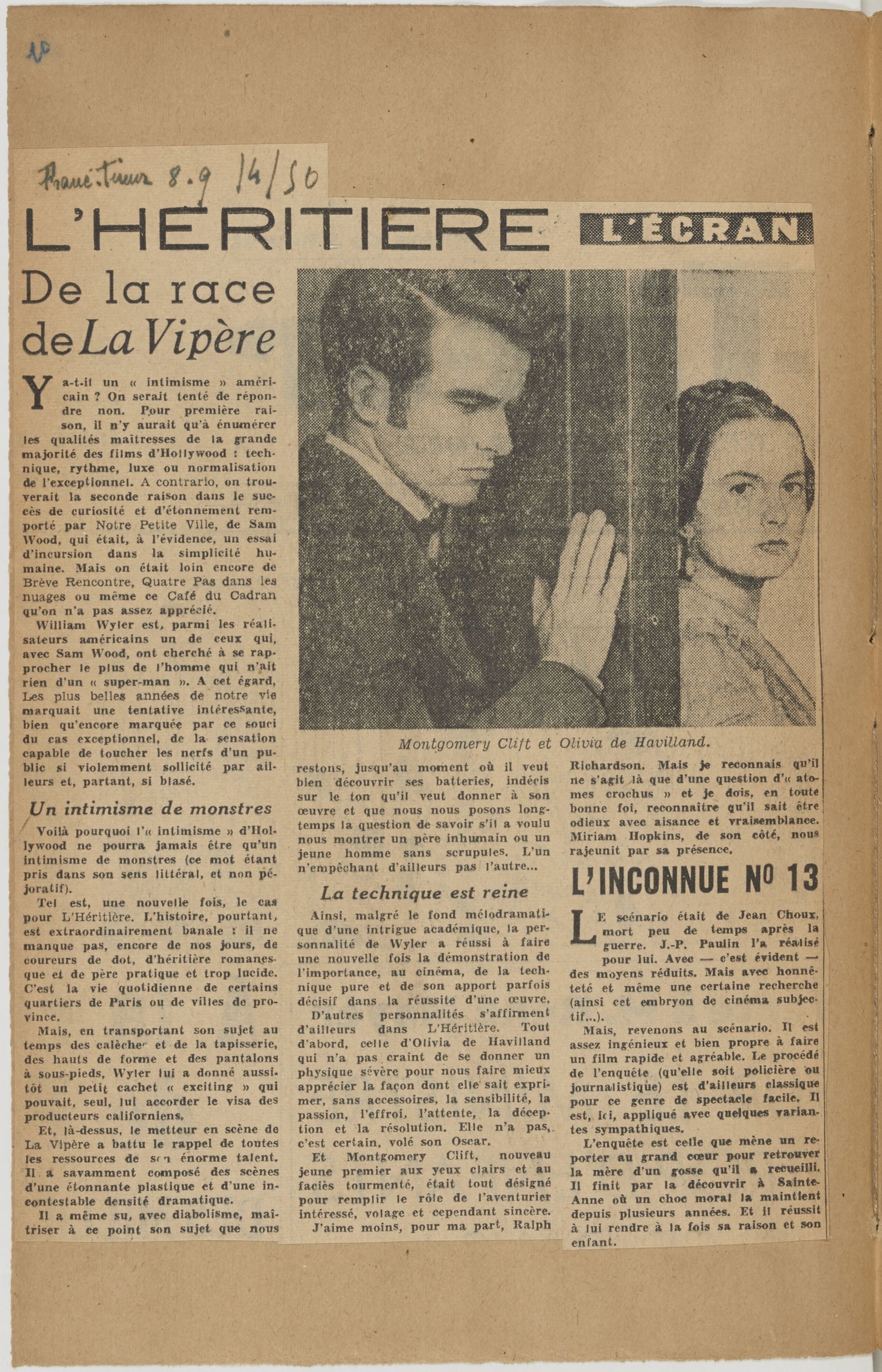 French archival press material for William Wyler’s The Heiress, the film that brought de Havilland her second Academy Award. Image credit: Creator not identified / Bibliothèque nationale de France / Public domain.
Marriage, motherhood and a life increasingly centred in France
De Havilland married the novelist and screenwriter Marcus Goodrich in 1946. Their son Benjamin was born in 1949, and the marriage ended in divorce in 1953. She later married the French journalist and editor Pierre Galante. Their daughter Gisele was born in 1956.
The second marriage brought Paris into the centre of her life. De Havilland settled there, and although she and Galante divorced, they remained close. She wrote Every Frenchman Has One, a lively account of adapting to French habits, language and family life. The book reveals humour that her most famous dramatic roles can make easy to overlook.
Her move did not amount to an immediate retirement. She appeared in My Cousin Rachel, Not as a Stranger, The Ambassador’s Daughter, The Proud Rebel and Libel. In Hush…Hush, Sweet Charlotte (1964), she replaced Joan Crawford opposite Bette Davis and brought controlled menace to a Southern Gothic story that depends on old loyalties becoming dangerous.
Some later films chased sensation. Lady in a Cage placed her character inside a home lift while intruders invaded the house, using an established image of refinement as the starting point for cruelty. De Havilland could still suggest thought behind fear, but the work was less consistent than the extraordinary run from 1946 to 1949.
Television offered strong late roles. She appeared in Roots: The Next Generations and won a Golden Globe for Anastasia: The Mystery of Anna. She also performed on stage and remained visible at tributes when she chose to attend. The pattern was selective rather than vanished. Having fought for the right to refuse work, she did not need to treat constant employment as proof that the fight had succeeded.
Joan Fontaine and the danger of turning family pain into entertainment
The relationship between Olivia and Joan remained a subject of public interest for almost their entire lives. Their different temperaments, their mother’s influence, professional competition and disagreements around family events all contributed. The sisters sometimes attended the same occasions and sometimes avoided one another. Each supplied later recollections that defended her own position.
It is tempting to treat their two Oscars as the score in a lifelong contest. Fontaine won first, for Suspicion, and de Havilland’s two later wins are then made to look like answers. That may produce a lively anecdote, but actors do not control who is nominated, what other films are released or how Academy members vote. Their work should not be reduced to trophies exchanged inside a family argument.
We can say that the estrangement was genuine and that reconciliation never became permanent. We cannot know every private motive. De Havilland’s grief when her son Benjamin died in 1991, and the sisters’ differing accounts of communication around their mother’s final illness, deserve particular care. A biography should explain why the relationship became part of the public story without using pain as a final act of celebrity theatre.
The later court action showed that control over identity still mattered
De Havilland lived in Paris for the remainder of her life and became one of the last surviving stars of 1930s Hollywood. She received the National Medal of Arts, France’s Legion of Honour and appointment as a Dame Commander of the Order of the British Empire. These honours recognised both a long career and the unusual historical span of her life.
In her final years she objected to her portrayal in the television series Feud: Bette and Joan. De Havilland sued FX Networks, arguing that the production had used her identity without permission and placed invented words in her mouth. The courts rejected the claim on First Amendment grounds.
The later case was not another version of the Warner Bros. victory. The legal issues and result were different. It does, however, reveal a consistent concern. De Havilland understood that public images are commercially useful to other people. In the 1940s she challenged a studio’s control over her labour. In her final years she challenged a production’s control over her representation. She did not win the second case, but the decision to bring it was entirely in character with the working life we have followed.
De Havilland died at her Paris home in July 2020, a few weeks after her 104th birthday. Her daughter announced that the cause was natural. By then, the adventure films, Gone with the Wind, the post-Warner dramas and the contract decision belonged to several different histories. Her achievement was to connect them.
 Olivia de Havilland photographed in 1985, decades after the contract case and performances that secured her place in film history. Image credit: Gotfryd, Bernard, photographer, public domain, via Wikimedia Commons.
The Dark Mirror made technique visible without reducing it to a trick
Robert Siodmak’s The Dark Mirror (1946) cast de Havilland as twin sisters involved in a murder investigation. One is warm and emotionally open, the other controlling and dangerous. Split-screen and double work allow both women to occupy the frame.
Dual roles invite visible contrast. De Havilland uses posture, tempo and attention before relying on obvious expression. The performance must help audiences distinguish the sisters while preserving enough uncertainty for the mystery.
The film’s psychology belongs to its period and should not be treated as a modern account of diagnosis. Its greater value lies in showing de Havilland turning the technical problem of acting opposite herself into character conflict.
Released after the legal victory and in the same year as To Each His Own, it demonstrates how quickly freedom produced variety. One film gave her maternal sacrifice across years; the other offered noir, deception and special-effects precision.
To Each His Own and The Heiress made time part of performance
In To Each His Own, de Havilland plays Jody Norris from youth into middle age, a woman who gives up her child and remains close to him without publicly claiming motherhood. The melodrama asks for major changes in age and social experience.
She won her first Academy Award for the role. The performance avoids treating ageing as only makeup and altered voice. Jody’s decisions accumulate. The older woman carries the physical memory of choices the younger one could not fully understand.
The Heiress uses a different passage of time. Catherine Sloper changes within a more concentrated story, and the transformation is measured through trust rather than years. Early eagerness gives way to judgement that has learned the cost of being watched for money.
Together, the films show what Warner Bros. had underestimated. De Havilland’s quietness could contain duration. She did not need constant incident to make an audience feel that a life had changed.
The two Oscars are much more than trophies following a contract dispute. They record the artistic consequence of allowing an actor access to material equal to her patience.
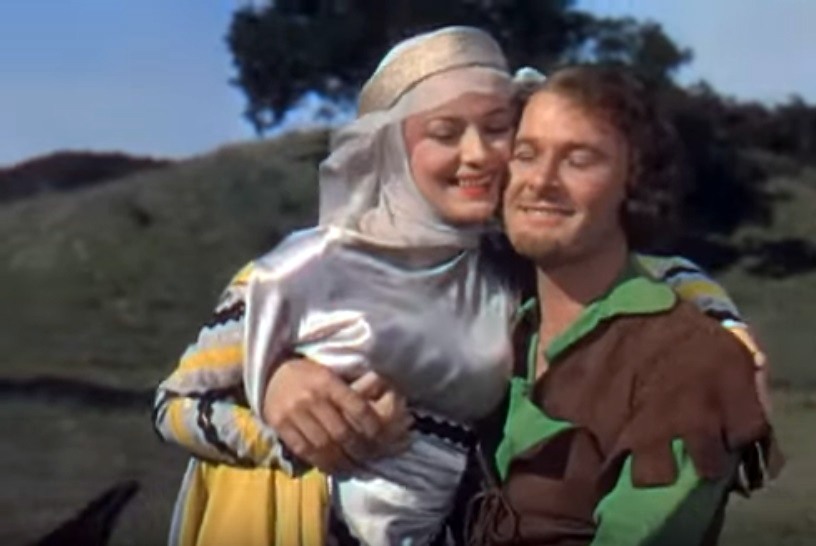 Olivia de Havilland and Errol Flynn from the original trailer for The Adventures of Robin Hood (1938). Image credit: Warner Bros, public domain.
Where should you begin with Olivia de Havilland’s films?
If you are new to de Havilland, begin with The Adventures of Robin Hood. It shows the intelligence and warmth she brought to a role designed around someone else’s heroism. Then watch Gone with the Wind, keeping both Melanie’s strength and the film’s racial mythology in view.
After that, move directly to The Heiress. The distance between Maid Marian and Catherine Sloper explains why the Warner dispute mattered. The Snake Pit shows another kind of risk, while To Each His Own gives you the performance that first proved her independence to Academy voters.
For a less familiar choice, try The Dark Mirror. It is a compact demonstration of technique and a useful reminder that her post-war career was not limited to prestigious literary drama. Hold Back the Dawn belongs earlier in the sequence because it shows the mature actor already present before she gained the power to choose more freely.
You can then return to one of the Flynn adventures with a different question. Instead of asking whether de Havilland has enough screen time, watch how she gives moral consequence to the hero’s freedom. The later dramas did not replace an empty early career. They released abilities that had already been working inside narrower assignments.
Olivia de Havilland changed Hollywood through a court case, but she did not go to court simply because she wanted a place in legal history. She wanted better work. The finest way to understand the victory is therefore to watch what came after it. Catherine Sloper walking upstairs in The Heiress may be the clearest answer she ever gave to a studio that had mistaken quietness for obedience.