Myrna Loy spent years playing exoticised women from countries she had never visited before Hollywood decided that she was the ideal American wife. Both images were studio inventions. Her achievement was to make the second one spacious enough for intelligence, desire, irritation and humour, then use the authority it created to move into public service and mature drama.
The Thin Man films with William Powell remain the heart of her reputation. Nick and Nora Charles made marriage look like a private joke two adults were generous enough to share with the audience. In this biography, we will look closely at that partnership while following Loy from Montana and silent film to wartime work, The Best Years of Our Lives and the honorary Oscar that finally recognised a career the competitive awards had overlooked.
Calling her the “perfect wife” sounds complimentary until we ask who benefits from perfection. Loy was funniest when the wife saw the situation first and allowed the husband time to catch up. The poise did not make her passive. It gave judgement a particularly elegant place from which to operate.
 Publicity still with Myrna Loy in the American film The Barbarian (1933). Image credit: Metro-Goldwyn-Mayer / Vieira, Mark A. (2019). Forbidden Hollywood: The Pre-Code Era (1930-1934): When Sin Ruled the Movies (eBook). New York: Running Press. Hachette Book Group. ISBN 978-076-246-675-7. / public domain.
Myrna Loy at a glance
- Birth name: Myrna Adele Williams
- Born: 2 August 1905 in Helena, Montana
- Died: 14 December 1993 in New York City
- Occupation: Actor and public-service campaigner
- Years active: 1925 to 1982
- Best-known films: The Thin Man, Manhattan Melodrama, The Great Ziegfeld, Libeled Lady, Test Pilot, The Best Years of Our Lives and Mr. Blandings Builds His Dream House
- Frequent co-star: William Powell, with whom she made fourteen films
- Major recognition: Honorary Academy Award presented in 1991
- Public work: Wartime fundraising, Red Cross activity, UNESCO involvement and campaigns against racial discrimination
Montana remained part of a star associated with Manhattan cocktails
Myrna was born in Helena to Della and David Williams. Her father worked in banking and real estate and served in the Montana legislature. The family also spent time on a ranch, giving her childhood a western landscape far removed from the urban sophistication she later represented.
David Williams died during the influenza pandemic when Myrna was a teenager. Della moved the family to California, where they settled in the Los Angeles area. The loss altered finances and family direction, while the city placed a young dancer close to the film industry.
Myrna attended Venice High School and appeared in local theatrical pageants. She performed in prologues at Grauman’s Egyptian Theatre, live stage presentations organised around feature films. The work trained her to create a clear visual impression before a large audience.
Photographs and dancing led to film opportunities. She adopted the surname Loy, reportedly inspired by a name in a poem. As with many studio-era identities, the change made the performer easier to market while separating the public woman from family history.
Loy’s later image can make this period look like preparation for inevitable elegance. She entered a business that saw dark hair and angular beauty and immediately assigned ethnicity. The first major challenge was not learning to play the perfect wife. It was surviving roles that treated her appearance as permission to represent anyone considered foreign.
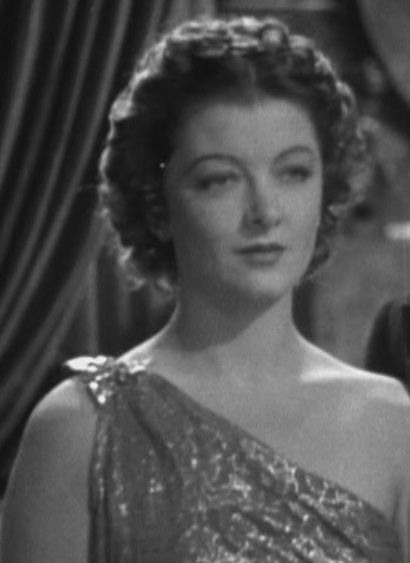 Myrna Loy in Libeled Lady (1936). Image credit: Jack Conway for Metro Goldwyn Mayer / Movie Libeled Lady (1936) / public domain.
Silent Hollywood cast her as almost every ethnicity except her own
Loy appeared in What Price Beauty? and then in productions including The Wanderer, The Caveman and The Thief of Bagdad. Makeup, costume and racial fantasy turned her into Asian, Middle Eastern, Indigenous and mixed-race characters.
These roles belonged to a Hollywood system in which white actors routinely played people of colour while performers from those communities received fewer opportunities. Loy did not create the system, but she participated in its images. A biography should not dismiss the work as harmless apprenticeship simply because the practice was common.
The casting also limited the acting. Many characters were temptresses, servants, spies or symbols of danger. The studio used Loy’s face as atmosphere rather than asking what kind of social or comic intelligence she could bring to an ordinary American woman.
Sound initially continued the pattern. She appeared as Fah Lo See in The Mask of Fu Manchu (1932), a film filled with racist fear of Asian power and sexuality. Loy later expressed regret about the stereotyped roles and became active against discrimination. Later commitment does not erase the images, but it belongs in the same complete history.
Working constantly gave her technical control. She learned how the camera registered a lifted eyebrow, a delayed response and stillness. Once MGM changed the type, those skills made Nora Charles appear to think faster than the detective plot around her.
The animal trainer who recognised comedy
Director W. S. Van Dyke is usually credited with helping move Loy away from exotic villainy. A Hollywood anecdote also gives a role to animal trainer and actor-director John Miljan, who recognised her humour in ordinary conversation. The precise chain of discovery varies, but the shift itself is clear.
In The Prizefighter and the Lady and Penthouse, Loy played contemporary women with wit and emotional credibility. Manhattan Melodrama (1934) placed her between Clark Gable and William Powell in a story about childhood friends who become gangster and district attorney.
Loy’s Eleanor is not simply a prize between men. She understands the attraction of Gable’s Blackie and the moral steadiness of Powell’s Jim. Her reactions give the men’s loyalty and conflict an adult emotional setting.
The film became notorious because bank robber John Dillinger watched it shortly before federal agents killed him outside Chicago’s Biograph Theater. That historical accident often overshadows the production itself. For Loy, the important consequence was professional. Her ease with Powell encouraged MGM to pair them again in a comedy rushed into production.
 Poster for the 1934 film Manhattan Melodrama. Image credit: MGM / source / public domain.
The Thin Man made marriage look like companionship
The Thin Man (1934), adapted from Dashiell Hammett, starred Powell as former detective Nick Charles and Loy as his wealthy wife Nora. A murder mystery provides the plot, but the marriage created the phenomenon.
Nick and Nora drink, tease, investigate and move through New York society without the usual comic assumption that marriage has ended romance. Nora is curious about Nick’s former work and amused by the disreputable people who know him. She does not wait at home for safety. She wants to join the case.
Loy’s technique is essential. Powell can expand a story, dodge a question or turn detection into social performance because Nora’s face measures the truth. She rarely needs to defeat him in an argument. The audience has already seen her recognise the evasion.
Their drinking belongs to the fantasy, and modern viewers may notice how cheerfully the films treat consumption that would be unhealthy in life. Asta the dog, fashionable clothes and hotel rooms complete a Depression-era vision of wealth without visible labour. Yet the emotional appeal is democratic. The couple enjoy one another’s company and treat intelligence as attractive.
The production was fast, and MGM did not initially regard it as a prestige gamble. Its success led to five sequels: After the Thin Man, Another Thin Man, Shadow of the Thin Man, The Thin Man Goes Home and Song of the Thin Man. The series changed through parenthood and wartime years, but the partnership remained the reason to return.
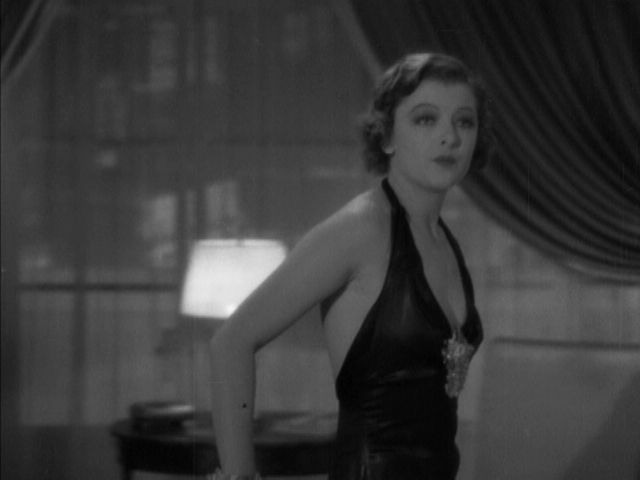 Myrna Loy during the shooting of The thin man (1934). Image credit: MGM / The Thin Man (1934) / CC BY-SA 4.0.
William Powell and Myrna Loy were not secretly married
Loy and Powell made fourteen films together, a total that encouraged audiences to treat them as a real couple. Publicity used the ease, and later nostalgia often repeats that they were Hollywood’s ideal marriage even while acknowledging that they never married one another.
The friendship and professional trust were genuine. Each understood the other’s timing, and neither needed to force attention. Powell’s polished voice could make a scene appear organised around him. Loy’s response quietly changed the organisation.
Their off-screen relationship did not need a hidden romance to explain the chemistry. Screen intimacy is work. Familiarity with pace, marks and the other actor’s habits allows spontaneity to appear safely inside repeated takes.
The belief that romantic chemistry must be personal can diminish both performers. Loy created Nora through choices, not through accidentally behaving like William Powell’s wife. Powell created Nick without privately becoming her husband.
Their last film together, The Senator Was Indiscreet (1947), gave Loy only a brief appearance, almost a wink at the history. By then the Thin Man marriage belonged to cultural memory even as both actors had moved into different phases of work.
The Thin Man sequels allowed a screen marriage to accumulate history
The five sequels are sometimes treated as agreeable repetition, but they show how unusual the original partnership remained. After the Thin Man brings Nick and Nora to San Francisco and places murder inside Nora’s extended family. James Stewart plays a role far removed from the open decency later associated with him, while Loy lets Nora move between affection for relatives and a clear view of their snobbery.
The series gradually adds domestic markers. A child arrives, the settings change and wartime America enters the background. None of this turns Nora into a conventional wife waiting outside the investigation. She remains curious about suspects and delighted by Nick’s untidy professional world.
Repetition also sharpens our understanding of Loy’s timing. A first film can make a gesture seem accidental. Across six, we see how carefully she varied the pause before a question, the look towards a drink or the decision to let Nick continue talking until he has trapped himself.
The later entries do not all match the speed of the first two. Studio series often become safer as familiarity replaces surprise. Even at their most routine, Powell and Loy preserve the sense that marriage is a conversation rather than an institution imposed by the final reel.
That continuing pleasure helps explain why audiences mistook the actors for a real couple. The performances supplied what publicity could only claim: memory. Nick and Nora appear to remember arguments and jokes from films we did not see.
Libeled Lady let four stars operate at the same speed
Jack Conway’s Libeled Lady (1936) joined Loy and Powell with Jean Harlow and Spencer Tracy. Loy plays Connie Allenbury, an heiress suing a newspaper for falsely claiming she broke up a marriage. Tracy’s editor hires Powell’s Bill Chandler to manufacture compromising evidence, while Harlow’s Gladys becomes part of the scheme.
Connie begins as the target of male manipulation, but Loy gives her enough intelligence to alter the plan. The fly-fishing sequence allows physical comedy to grow from Bill pretending expertise. Loy watches, waits and decides how much of the performance she will expose.
Harlow brings a more direct, working-class energy. The film does not require one woman to be dignified and the other foolish. Connie and Gladys are angry for different reasons, and both can see that the men have created a problem they expect women to absorb.
The ensemble demonstrates Loy’s generosity. She does not guard sophistication as a superior form of comedy. She lets Harlow’s volume, Tracy’s impatience and Powell’s control produce a scene in which reactions travel faster than plot explanation.
 Myrna Loy in Libeled Lady (1936). Image credit: Jack Conway / film Libeled Lady (1936) / public domain.
The Great Ziegfeld and Test Pilot expanded the perfect-wife image
In The Great Ziegfeld (1936), Powell played impresario Florenz Ziegfeld and Loy his second wife, Billie Burke. The lavish musical biography won the Academy Award for best picture. Loy enters relatively late, but her steadiness supplies a domestic conclusion to a life organised around spectacle.
The film simplifies real people and treats theatrical extravagance as national mythology. Loy’s Billie becomes the understanding wife who can contain the producer’s appetite without requiring the story to examine what that labour costs.
Test Pilot (1938) paired her with Clark Gable and Spencer Tracy. Gable plays reckless aviator Jim Lane, Loy his wife Ann and Tracy the mechanic whose loyalty keeps the work possible. Ann again represents home, but Loy refuses to make waiting passive.
She understands that the pilot’s glamour depends on other people living with risk. Her anger is not an obstacle to masculine adventure. It is the moral information the adventure prefers to exclude. The film was a major success and strengthened the label of ideal wife.
A national poll promoted Loy as the “Queen of the Movies” opposite Gable as king. The title recognised popularity while narrowing it. Queens are admired, displayed and expected to remain composed. Loy’s best work made composition active rather than ornamental.
 Poster for the 1938 film Test Pilot. Image credit: MGM / source / public domain.
Four marriages and the privacy missing from the perfect-wife campaign
Loy married producer Arthur Hornblow Jr. in 1936. The marriage lasted until 1942. She later married advertising executive John Hertz Jr., writer-producer Gene Markey and UNESCO official Howland Sargeant. Each marriage ended in divorce, and she had no children.
The contrast with the screen image was irresistible to journalists. The woman repeatedly cast as the ideal wife had marriages that did not last. That is not hypocrisy. Acting is not a promise that private life will reproduce a character’s success.
Loy wrote in her memoir about relationships, independence and the difficulty of balancing work with male expectations. Memoir provides her considered perspective, not a complete recording of each marriage.
The perfect-wife label could also limit roles. Studios imagined maturity mainly through marriage and motherhood, while male co-stars moved more freely between domestic comedy, politics, crime and adventure. Loy’s control made the roles rich, but richness does not mean the type offered everything she wanted.
Wartime service interrupted stardom by choice
After the United States entered the Second World War, Loy stepped away from regular film work and became active in war relief. She worked with the American Red Cross, helped raise funds and supported military and civilian programmes.
Her service was not limited to posing at bond events. She took administrative and public responsibilities seriously, using celebrity where attention helped while performing less visible organisational work. The decision cost screen momentum during years when an actor’s absence could change casting habits.
Loy also spoke against racial discrimination. She served on committees and used public standing to support fair employment and civil rights. Hollywood had once cast her in racist stereotypes. Her later activism belongs beside that history rather than being used to cancel it.
In 1945 she participated in the founding conference of the United Nations in San Francisco and later worked with UNESCO. International public service gave her an identity separate from the domestic perfection that films had sold.
When she returned to the screen, age and wartime experience altered the meaning of steadiness. The wife was no longer simply the reward waiting at home. She had lived through the same public history as the returning men.
Public service was not an ornamental second career
Loy’s work against discrimination pre-dated the period when such commitments were safe additions to a star biography. She participated in efforts connected with fair employment and challenged racial exclusion in an industry that had once profited from casting her in offensive ethnic roles.
The contradiction should stay visible. Activism did not remove The Mask of Fu Manchu from her filmography, and early participation in stereotype does not make later public work insincere. People can understand the harm of systems in which they have worked and decide to oppose them.
Her involvement with the United Nations and UNESCO required more than a publicity photograph. Loy treated international cooperation as practical work at a moment when post-war institutions were trying to turn the language of human rights into durable policy.
She also supported political candidates and civil-liberties causes, choices that could have affected employment during the most suspicious years of the Cold War. Her public identity therefore moved in a direction nearly opposite to the apolitical perfect wife promoted by MGM.
This part of the life is essential because it changes how we read steadiness on screen. Loy did not simply project judgement. Away from the camera, she accepted that judgement creates obligations.
 Photograph of Eleanor Roosevelt with celebrities taking part in President’s Birthday Ball fundraising activities to benefit the fight against infantile paralysis. Image credit: U.S. National Archives and Records Administration, Franklin D. Roosevelt Library (NLFDR), 4079 Albany Post Road, Hyde Park, NY, 12538-1999. / public domain.
The Best Years of Our Lives made listening part of post-war recovery
William Wyler’s The Best Years of Our Lives (1946) follows three servicemen returning to a Midwestern city. Fredric March plays banker Al Stephenson, whose wife Milly is played by Loy. Dana Andrews and Harold Russell carry different experiences of economic frustration, trauma and disability.
Milly could have been another perfect wife waiting patiently. Loy gives her knowledge accumulated during absence. She sees that Al is drinking, unsettled and unable to return to the man he was before war. Her support includes irritation, humour and the refusal to dramatise every concern in front of the children.
One of the film’s strengths is that homecoming does not end the war’s consequences. Families have changed while servicemen were away. Workplaces expect normality, and public celebration gives little instruction for private adjustment.
Loy and March make the marriage feel lived in. A look can contain years unavailable to the screenplay. Milly’s steadiness is no longer a studio fantasy of female perfection. It is skilled emotional work, and the film allows us to notice it.
The production won seven competitive Academy Awards, including best picture, but Loy was not nominated. The omission became part of a career in which popularity and respect did not translate into competitive Oscar recognition.
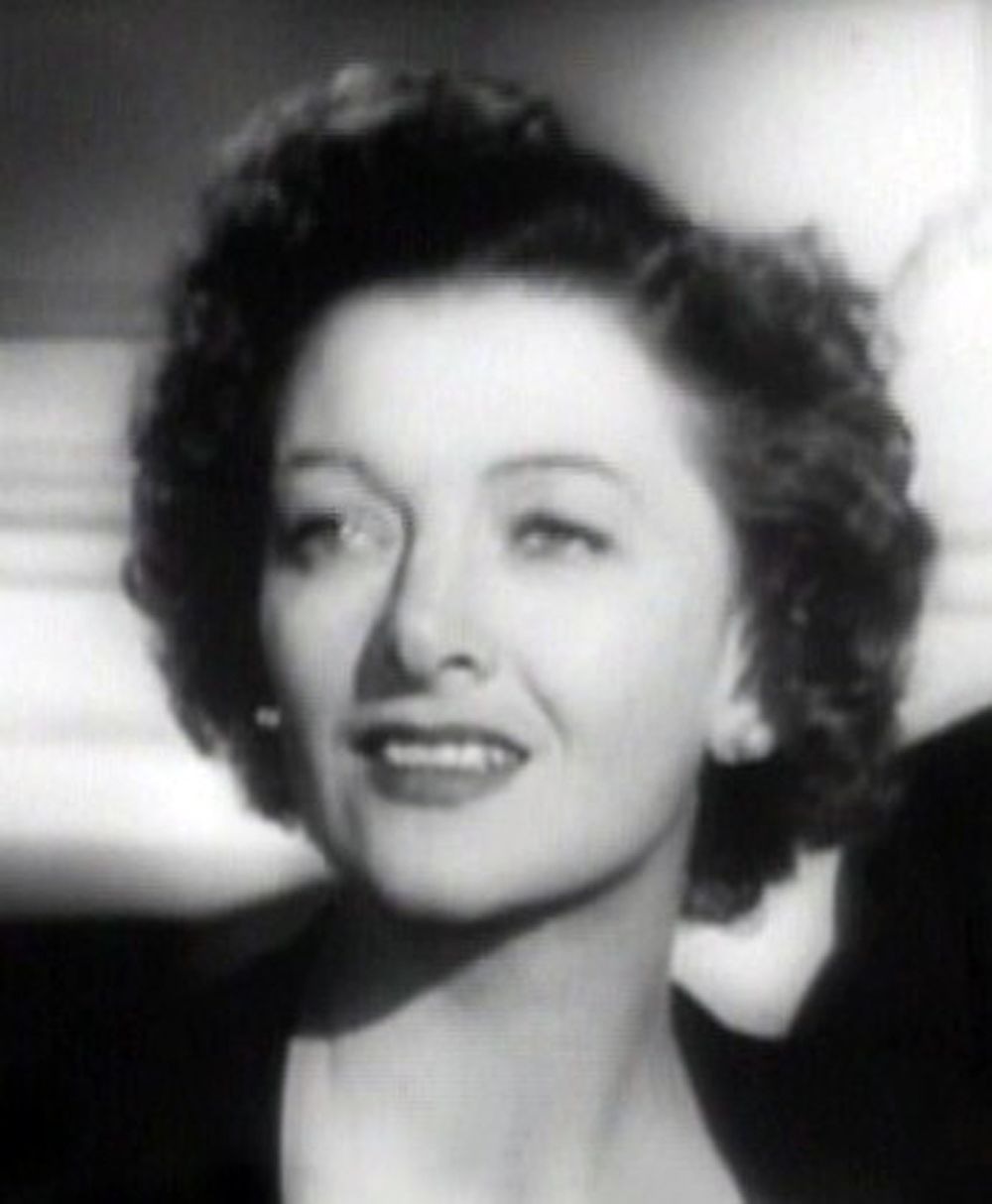 Cropped screenshot of Myrna Loy from the trailer for the film The Best Years of Our Lives. Image credit: Trailer screenshot / The Best Years of Our Lives trailer / public domain.
Mr. Blandings and later work found comedy in adult fatigue
In Mr. Blandings Builds His Dream House (1948), Loy and Cary Grant play a New York couple whose attempt to build in Connecticut produces escalating expense and confusion. The story turns middle-class aspiration into practical disaster.
Loy’s Muriel is far more than the sensible wife watching her husband fail. She participates in choices, has aesthetic ambitions and understands that the dream belongs to both of them. Her timing with Grant is less flirtatious than the Powell partnership and more domestic. They sound like adults who have conducted versions of the argument before.
She appeared in The Red Pony, Cheaper by the Dozen, Belles on Their Toes and television, while stage work became increasingly important. Later roles often used maternal authority, but Loy continued to search for women with judgement rather than decorative age.
Her performance in The Ambassador’s Daughter and appearances in anthology television kept the career active without recreating 1930s stardom. She moved to New York and worked on stage, including in The Women and other productions.
The later career was selective and sometimes interrupted by health. Its value lies less in one last great star vehicle than in refusing to make retirement the only respectable option for a woman the studios no longer photographed as a young wife.
Love Crazy and the Powell comedies kept finding new pressure points
Outside the Thin Man series, MGM repeatedly reunited Loy and Powell because their rhythm could support plots that would collapse under heavier handling. Double Wedding turns pursuit and resistance into a contest of social performance. I Love You Again gives Powell amnesia and competing identities, allowing Loy to react to a husband who has become interesting for reasons she cannot trust.
Love Crazy pushes the marriage towards divorce through misunderstanding, disguise and an escape from psychiatric confinement. Some of its treatment of mental health belongs to farce conventions that modern viewers may find careless. Loy keeps the emotional objective clear: the wife is angry because the marriage matters, not because the screenplay needs a scold.
These films reveal a difference between chemistry and repetition. Powell could make evasion graceful. Loy made sure grace did not become a free pass. Her characters measured the practical consequence of whatever delightful scheme he had invented.
The partnership also benefited from equality of pace. A slower actor might turn Powell’s fluency into dominance. Loy responds quickly enough to make the scene a rally, then occasionally delays a line so that Nora, Connie or another character appears to choose the exact degree of mercy.
Her comedy was rarely built around a distinctive catchphrase or visible trick. That may be why it is easy to call the work natural. Naturalness was the completed illusion. Underneath it sat precise decisions about when not to laugh, when to move and when to let the audience discover the joke in her face.
The honorary Oscar recognised the work and the life outside it
Loy received no competitive Academy Award nomination. In 1991 the Academy presented her with an honorary Oscar recognising her screen and public contribution. She accepted from her New York home by satellite after a film montage and introduction.
The award corrected a conspicuous absence without pretending that one ceremony could review every overlooked performance. Nora Charles had become culturally permanent. Milly Stephenson had become central to one of the best films about returning veterans. The institution was finally recognising what audiences and colleagues had long understood.
Loy published her memoir Being and Becoming and remained involved in public causes. She died in New York in December 1993 at eighty-eight.
Her legacy includes the Thin Man partnership, but it also includes a model of celebrity used beyond entertainment. The woman marketed as an ideal wife became a public citizen whose work involved war relief, international cooperation and opposition to discrimination.
 Myrna Loy appears with Eleanor Roosevelt and other film figures in an archival National Archives photograph. Image credit: U.S. National Archives and Records Administration / public domain.
Wife vs. Secretary showed that the ideal wife could recognise risk without becoming jealous
In Wife vs. Secretary (1936), Loy plays Linda Stanhope, married to Clark Gable’s successful publisher. Jean Harlow plays his highly capable secretary, and the title encourages audiences to expect a simple contest between domestic virtue and sexual danger.
The performances make the arrangement more intelligent. Linda initially trusts both her husband and the secretary. Her concern grows through social suggestion and ambiguous evidence rather than an automatic belief that another attractive woman must be an enemy.
Harlow’s character is not a predatory stereotype. Her professional competence is essential to Gable’s work, and the film understands that intimacy can develop through shared hours and responsibility even without a completed affair.
Loy gives Linda pain without making suspicion her complete identity. The character observes how work has created a part of her husband’s life she cannot fully enter. That recognition gives the familiar triangle adult weight.
The resolution belongs to 1930s expectations about marriage and women’s sacrifice, and modern viewers may reasonably wish it placed less burden on the secretary. Loy’s work remains valuable because she lets the wife think before the plot asks her to forgive.
Being and Becoming allowed her to revise the publicity version
Loy’s memoir, Being and Becoming, was written with James Kotsilibas-Davis and published in 1987. The title is well chosen. It refuses the idea that Myrna Loy arrived complete when MGM discovered comedy.
Memoir is not neutral evidence. It is memory organised for publication, shaped by later understanding and the desire to correct or preserve particular stories. It still gives Loy’s voice an authority fan magazines could not provide.
She discussed early typecasting, marriages, colleagues and political commitments as parts of one developing life. The public-service work does not appear as an appendix to stardom. It becomes part of what the star learned to do with visibility.
Reading the memoir alongside the films reveals how severely the perfect-wife label reduced her. Nora Charles remains delightful, but the woman looking back saw a career of change, error and citizenship rather than one endless cocktail party.
Where should you begin with Myrna Loy’s films?
Begin with The Thin Man. The mystery is enjoyable, but watch how often Nora understands a social exchange before anyone explains it. Follow with After the Thin Man, which adds James Stewart and deepens the balance between marriage and investigation.
Then watch Libeled Lady for the four-star comic ensemble. Move to Test Pilot to see how Loy made the studio’s perfect-wife role more demanding than the label suggests.
Finish with The Best Years of Our Lives. The distance between Nora’s cocktail and Milly’s homecoming shows the scale of Loy’s authority. Add Mr. Blandings Builds His Dream House when you want the mature comedy of shared frustration.
Myrna Loy made perfection interesting by allowing us to see the intelligence required to maintain it. Then she stepped away from the image and did work no studio role could contain. The films remain elegant. The life around them was considerably larger.