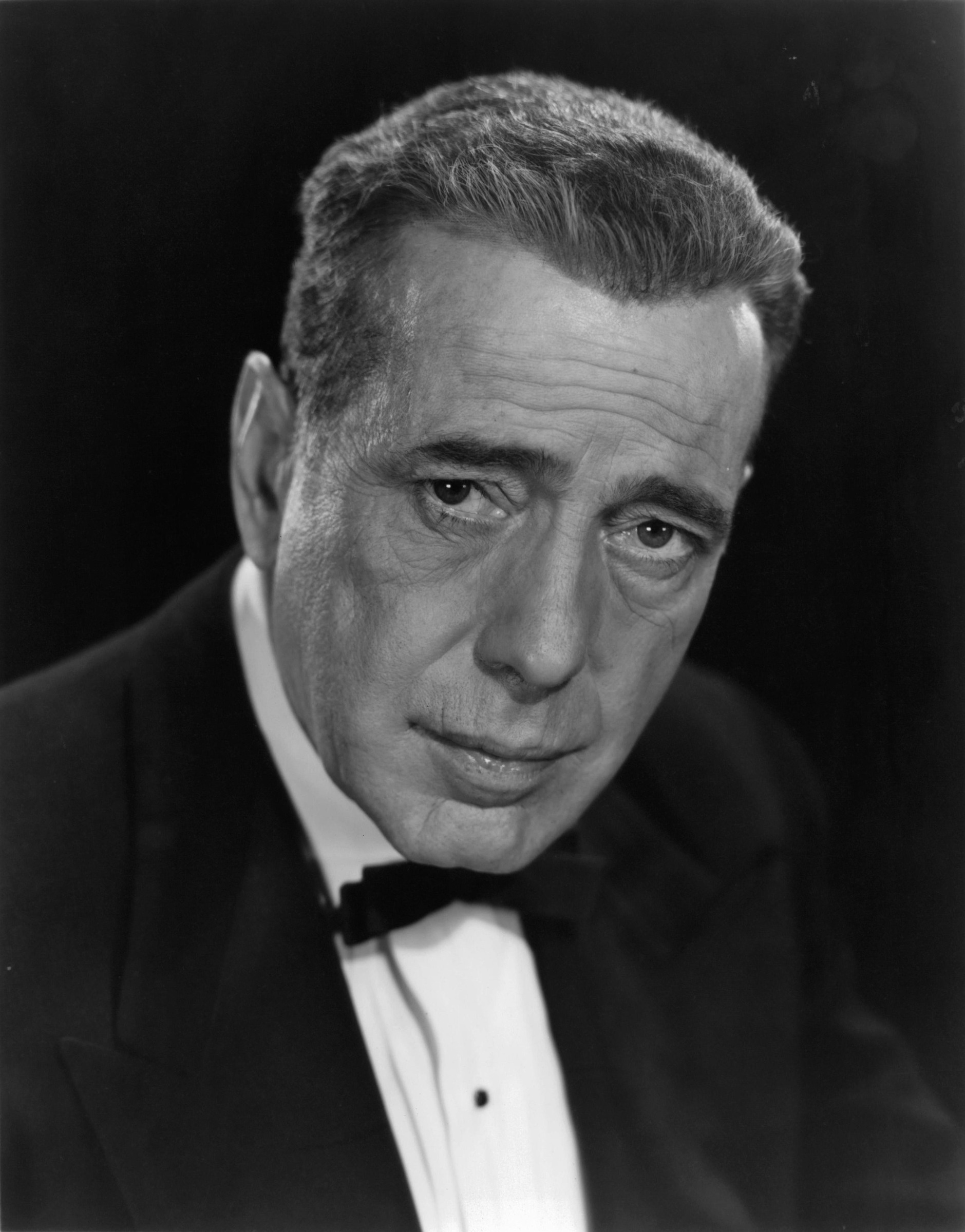
 Humphrey Bogart in a studio publicity portrait, already carrying the wary intelligence that became his signature.
Humphrey Bogart : Personal Info
Full name : Humphrey DeForest Bogart
Born : December 25, 1899, New York City
Died : January 14, 1957, Los Angeles, California
Nationality : American
Occupations : Actor, stage performer
Years active : 1920s-1956
Known for : The Maltese Falcon, Casablanca, To Have and Have Not, The Big Sleep, The Treasure of the Sierra Madre, The African Queen, The Caine Mutiny
Major honors : Academy Award for The African Queen; three Oscar nominations; AFI ranked him the greatest male screen legend
Humphrey Bogart : Introduction
Whether you know him as Rick Blaine in Casablanca, Sam Spade in The Maltese Falcon or Charlie Allnut in The African Queen, Humphrey Bogart remains the classic image of the hard-boiled American movie star. The trench coat, the cigarette, the dry voice and the wounded eyes became part of film history.
Bogart’s greatness was not obvious at first. He was not conventionally handsome in the usual studio way, and for years Hollywood used him as a gangster, crook or second-tier tough guy. But that roughness became his advantage. He looked like a man who had lost something and learned not to complain about it.
What makes Bogart endure is the moral tension inside his characters. He often played cynics, but the audience waited for the moment when the cynic chose decency. In that gap between toughness and conscience, Bogart built one of the most durable screen personas in American cinema.
Humphrey Bogart : Early Life and Stage Years
So where did it all begin? Humphrey DeForest Bogart was born in New York City on December 25, 1899. He grew up in a comfortable family: his father was a doctor and his mother was a successful commercial artist. The future symbol of urban grit did not come from the streets, but from privilege, education and private restlessness.
Bogart served in the Navy during the First World War era, and the story of the scar near his lip became part of his legend. After the war, he moved into theatre work, learning the craft slowly through stage jobs and supporting roles. He was not an overnight discovery. He built his career through persistence.
On Broadway, Bogart often played youthful, polished parts, but the role that changed everything was Duke Mantee in The Petrified Forest. As the escaped killer, Bogart revealed a threat and stillness that audiences could not ignore. Leslie Howard helped ensure Bogart kept the role in the film version, a gesture Bogart never forgot.
 Bogart with Sydney Greenstreet in Casablanca, the wartime romance that fixed Rick Blaine in film history.
Humphrey Bogart : From Gangster Roles to Leading Man
After The Petrified Forest, Warner Bros. used Bogart constantly, often as a gangster or criminal. He worked hard, but the parts could be repetitive. Still, the repetition helped sharpen his screen identity: watchful, bitter, compact and dangerous. He did not waste movement, and he rarely seemed to beg for sympathy.
The turning point came with The Maltese Falcon in 1941. As private detective Sam Spade, Bogart found the perfect vehicle for his intelligence and suspicion. The film helped define film noir style, and Bogart’s Spade became a new kind of leading man: romantic, ruthless, funny and ethically complicated.
Casablanca followed in 1942 and transformed Bogart’s career. Rick Blaine begins the film as a man who claims to stick his neck out for nobody, but the story gradually reveals the heartbreak and principles beneath his cynicism. Opposite Ingrid Bergman, Bogart gave romance a bruised, adult dignity.
Humphrey Bogart : Lauren Bacall and the Mature Classics
In 1944, Bogart starred opposite Lauren Bacall in To Have and Have Not. Their chemistry was immediate and famous, and their offscreen relationship soon became one of Hollywood’s defining romances. Bacall’s cool confidence met Bogart’s dry authority perfectly, and together they created a screen partnership that still feels electric.
The Big Sleep deepened that partnership and placed Bogart in another classic detective role, Philip Marlowe. The plot is famously tangled, but the film works because Bogart and Bacall make atmosphere, innuendo and attitude more important than tidy explanation. Bogart’s Marlowe is battered but alert, cynical but not dead inside.
Bogart’s late 1940s and early 1950s work showed impressive range. The Treasure of the Sierra Madre stripped away romantic cool and let him play greed, paranoia and moral collapse. In a Lonely Place turned suspicion inward, making his volatility frightening and sad. These roles proved that Bogart’s toughness could become tragedy.
Humphrey Bogart : Oscar, Final Years and Legacy
Bogart won his Academy Award for The African Queen, playing Charlie Allnut opposite Katharine Hepburn. The performance is looser and more comic than many of his famous roles, but it still carries his rough honesty. Charlie is dirty, stubborn, funny and unexpectedly noble, a man who becomes heroic almost against his own habits.
He received another Oscar nomination for The Caine Mutiny, playing Captain Queeg with nervous intensity. By then, Bogart was one of the most respected actors in Hollywood. His final years were cut short by esophageal cancer, and he died in 1957 at only fifty-seven.
Humphrey Bogart’s legacy is immense because he changed what a leading man could be. He did not need perfect beauty or polished optimism. He gave American movies a hero who had doubts, scars, bitterness and a private code. That is why the tough-guy image still matters: beneath it was a conscience, and Bogart knew exactly when to let it show.
 Bogart and Lauren Bacall in a publicity image for The Big Sleep, the defining partnership of his mature career.
Humphrey Bogart : The Art of the Antihero
Humphrey Bogart became the face of the American antihero because he understood restraint. He did not need to explain his characters’ pain. He let it sit in the voice, the posture and the pause before a decision. That reserve made his moments of sacrifice feel earned rather than sentimental.
In The Maltese Falcon, Sam Spade is not conventionally noble. He is sharp, self-protective and capable of emotional cruelty. Yet Bogart gives him a code, and the code matters. In Casablanca, Rick Blaine is more openly romantic, but the drama depends on the same question: what will a disappointed man do when principle finally calls?
This is why Bogart’s tough-guy persona has lasted longer than many cleaner heroic images. He looked compromised, and audiences believed him. When he chose the right thing, it did not feel easy. It felt like a victory over bitterness.
Humphrey Bogart : Noir, Romance and Moral Weather
Bogart’s best films are full of moral weather: smoke, shadows, rain, secrets, old wounds and bad bargains. He belonged naturally to film noir because he could suggest an entire history without spelling it out. A Bogart character often seems to have lived through the worst part of the story before the film even begins.
His partnership with Lauren Bacall added a new voltage. In To Have and Have Not and The Big Sleep, their dialogue has the rhythm of two people testing each other’s nerve. Bacall’s coolness made Bogart seem both older and more alive; his dryness gave her confidence something to push against.
At the same time, Bogart was not limited to noir. The African Queen works because it loosens him. Charlie Allnut is rough, comic and reluctant, and his heroism arrives through irritation, affection and stubborn decency. The Oscar win recognized a performance that broadened the public sense of what Bogart could do.
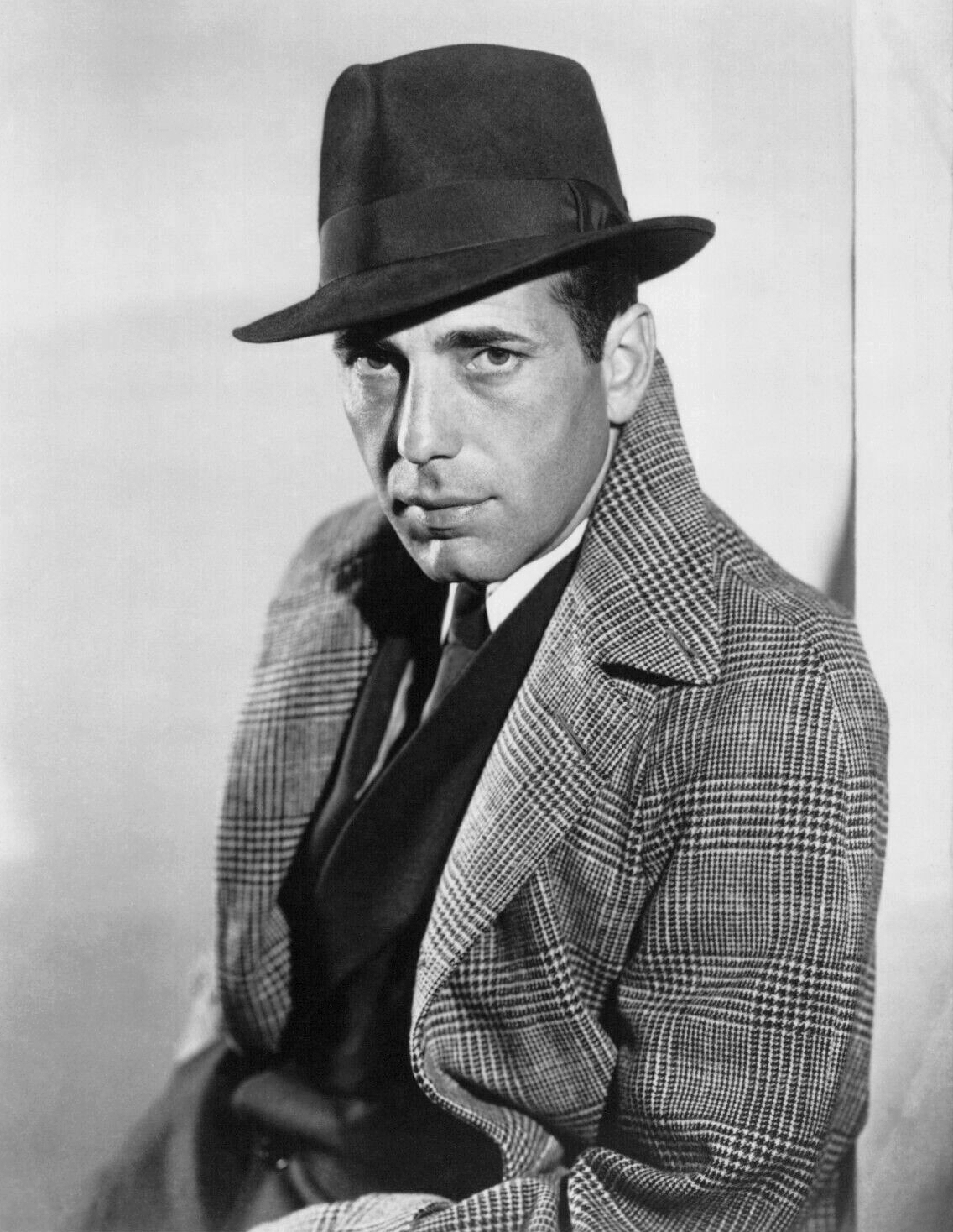 An Elmer Fryer portrait of Bogart, emphasizing the guarded expression and compact authority he brought to film noir.
Humphrey Bogart : Why He Remains a Cornerstone Subject
For Movie Star Biographies, Bogart is essential because he anchors so many evergreen topics: Casablanca, film noir, detective movies, Lauren Bacall, Oscar winners, Warner Bros. crime films and the evolution of the Hollywood leading man. His career is also a useful bridge between gangster pictures, wartime romance and postwar psychological drama.
A strong Bogart biography should emphasize transformation. He began as a stage actor and supporting heavy, then became the defining male star of his era. That rise was not based on conventional glamour. It was based on specificity: the voice, the timing, the wary intelligence and the sense of a private rulebook.
Bogart’s legacy endures because he made toughness feel moral rather than merely physical. His characters could be cynical, but they were rarely empty. Somewhere under the hard surface was a line they would not cross, and audiences are still watching for the moment when that line appears.
Humphrey Bogart : The Long Road Through Warner Bros.
Bogart spent years playing gangsters, killers and secondary threats before Hollywood accepted him as a leading man. The Bogart Estate biography traces the stage work and uneven early film period that preceded his Warner Bros. identity. The Petrified Forest was decisive because Duke Mantee gave his compact intensity a role large enough to be remembered.
Warner Bros. then used that intensity repeatedly, often placing Bogart behind stars such as James Cagney or Edward G. Robinson. The work could feel restrictive, but it trained him in economy. A supporting actor has little time to establish danger, and Bogart learned how to make a pause, a glance or the flattened edge of a sentence carry the weight of a longer speech.
High Sierra altered the balance. Roy Earle is a criminal, but the film gives him loneliness, loyalty and fatalism. The Maltese Falcon completed the transition by making Bogart’s guarded intelligence the center of the story. Sam Spade did not resemble the conventional romantic heroes of the period, yet audiences accepted him because the uncertainty was compelling.
Humphrey Bogart : Casablanca and Wartime Stardom
Casablanca arrived at the meeting point between Bogart’s hard-boiled image and a wartime audience’s need for moral commitment. Rick Blaine begins as a man who claims neutrality, but the film gradually reveals that withdrawal is a wound rather than a philosophy. Bogart makes the change believable because Rick never suddenly becomes cheerful or uncomplicated.
The romance with Ilsa depends on restraint. Bogart and Ingrid Bergman are surrounded by memorable dialogue and studio atmosphere, yet the performance works through what Rick refuses to say. His bitterness, tenderness and political awakening occupy the same frame. The final sacrifice is powerful because it costs him the private future he wants.
The Academy Awards database records Bogart’s Best Actor nomination for Casablanca, although the film’s reputation now extends far beyond awards history. It became the central Bogart text: a romance, a political drama, a star vehicle and a story about choosing responsibility without pretending that sacrifice is painless.
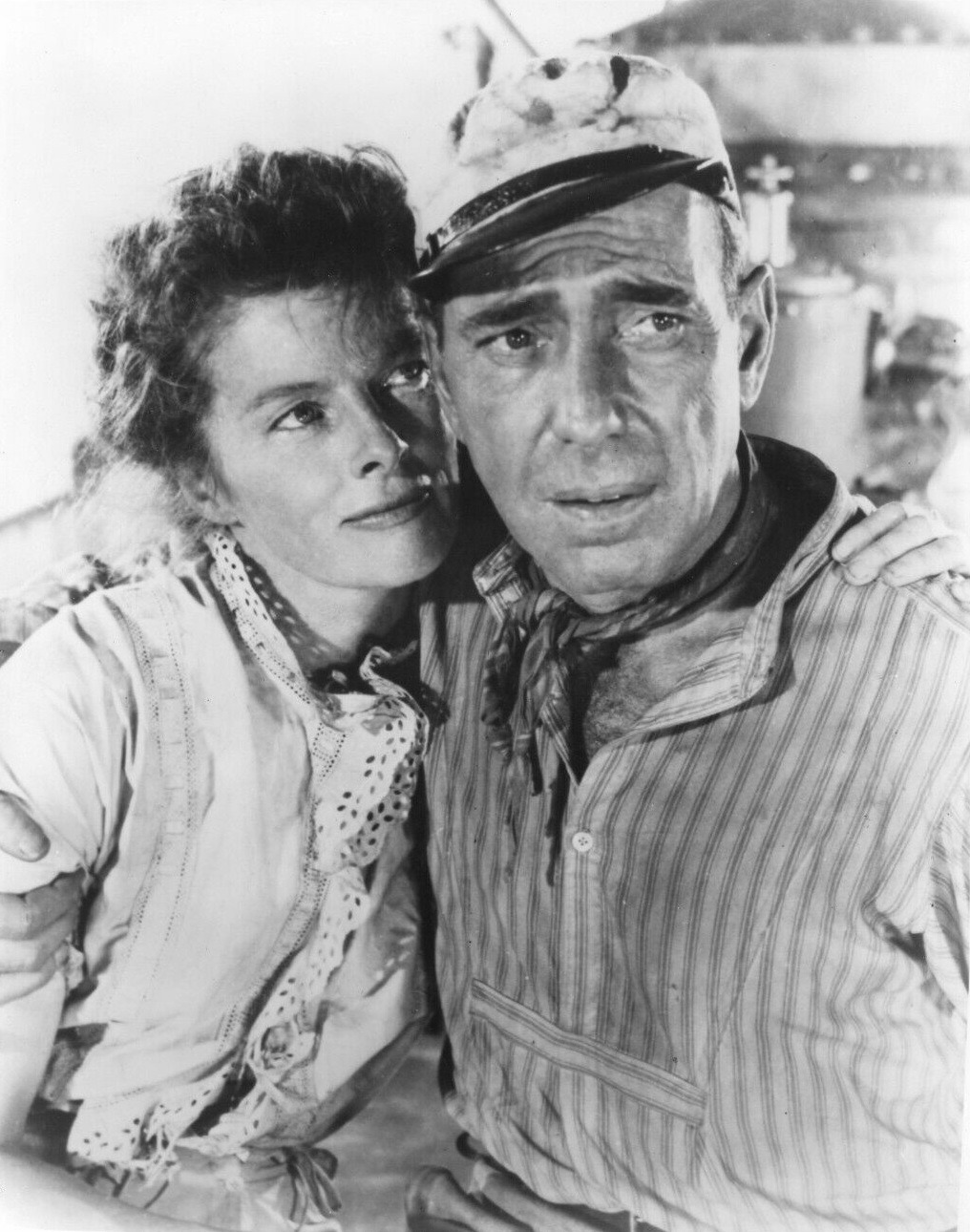 Bogart with Katharine Hepburn in The African Queen, the performance that earned him the Academy Award for Best Actor.
Humphrey Bogart : Lauren Bacall and a New Rhythm
Bogart met Lauren Bacall during To Have and Have Not. Their age difference and later marriage became part of Hollywood legend, but the screen partnership deserves attention on its own terms. Bacall’s low voice and controlled stillness gave Bogart a performer who could meet his scepticism without surrendering the scene.
The Big Sleep turns that chemistry into a language of challenge. The plot is famously complicated, but the emotional route is clear: two guarded people test whether trust is possible. Dark Passage experiments with subjective camerawork before allowing Bogart’s face to enter the film, while Key Largo places the couple inside a moral confrontation with Edward G. Robinson’s gangster.
Their four films offer variations rather than repetitions. The relationship changed Bogart’s public image by making room for humour, desire and domestic loyalty beside the solitary antihero. It also created one of the few classic-Hollywood partnerships in which the off-screen mythology and the screen evidence remain equally strong.
Humphrey Bogart : Independence, Oscar and Final Performances
Bogart eventually formed Santana Productions, seeking greater authority over projects after years inside the Warner Bros. system. The company’s films varied in success, but the move reflected a broader determination to control material and working conditions. It also allowed him to pursue roles that did not depend entirely on the familiar private-eye or gangster outline.
The African Queen provided the clearest expansion. Charlie Allnut is shabby, comic, frightened and unexpectedly tender. Opposite Katharine Hepburn, Bogart replaces urban armour with physical discomfort and reluctant affection. His Best Actor win, confirmed in the Academy Awards database, recognised not a rejection of the old persona but a looser and more exposed version of it.
The Caine Mutiny, Sabrina, The Barefoot Contessa and The Harder They Fall continued to test authority, insecurity and ageing. Bogart was seriously ill by the end of his career and died in 1957. The films leave a compact body of mature work in which toughness repeatedly gives way to questions of fear, loyalty and personal responsibility.
Humphrey Bogart : Reputation, Politics and Professional Loyalty
Bogart’s reputation among colleagues combined bluntness with professional seriousness. He disliked pretension, defended his understanding of good dialogue and expected performers to arrive prepared. The dryness that audiences recognised on screen also shaped his public manner, but friends described loyalty beneath the abrasive surface.
He participated in the Committee for the First Amendment during the early stages of Hollywood’s confrontation with anti-communist investigations. Bogart later distanced himself from some aspects of the trip to Washington, yet the episode belongs in the biography because it shows a star testing how public influence should be used during a period of political fear.
His films often make that question dramatic. Rick Blaine claims not to become involved before choosing resistance. Frank McCloud in Key Largo is accused of losing his nerve before confronting gangster power. Captain Queeg in The Caine Mutiny presents the darker possibility that authority, fear and isolation can destroy judgement rather than strengthen it.
The AFI screen legends survey placed Bogart first among male screen legends. That ranking reflects more than a collection of quotations and costumes. He gave American cinema a leading man whose authority was always under examination, making moral choice more important than physical invincibility.
Selected Humphrey Bogart Filmography
1936 – The Petrified Forest : Breakthrough screen role as Duke Mantee
1941 – High Sierra : Major gangster role during career transition
1941 – The Maltese Falcon : Sam Spade; film noir landmark
1942 – Casablanca : Rick Blaine; signature romantic-drama role
1944 – To Have and Have Not : First major Lauren Bacall pairing
1946 – The Big Sleep : Philip Marlowe detective classic
1948 – The Treasure of the Sierra Madre : Dark study of greed and paranoia
1950 – In a Lonely Place : One of his finest psychological roles
1951 – The African Queen : Academy Award-winning performance
1954 – The Caine Mutiny : Oscar-nominated role as Captain Queeg
Frequently Asked Questions
What was Humphrey Bogart’s breakthrough film?
The Petrified Forest established him as a memorable screen gangster, but High Sierra and The Maltese Falcon transformed him into a leading man.
Did Humphrey Bogart win an Oscar?
Yes. He won Best Actor for The African Queen and received additional nominations for Casablanca and The Caine Mutiny.
Which Bogart film should a beginner watch first?
Casablanca is the best all-purpose introduction. The Maltese Falcon is the clearer starting point for his film-noir work.
How many films did Bogart make with Lauren Bacall?
They appeared together in four films: To Have and Have Not, The Big Sleep, Dark Passage and Key Largo.
Related Articles
20 Classic Hollywood Actors Everyone Should Know
20 Best Film Noir Movies Starring Hollywood Legends
Top 20 Best Black-and-White Movies for New Classic Film Fans
Top 10 Humphrey Bogart Movies Ranked
Where to Start with Humphrey Bogart Movies