Edward G. Robinson became Hollywood’s definitive gangster without looking like a conventional leading man. He was short, compact and vocally precise, with a face that seemed to evaluate the room before the character entered it. In Little Caesar, those qualities made ambition frightening. Rico did not simply commit crimes. He thought about power faster than everyone around him.
The success created a problem Robinson spent the rest of his career solving. Studios wanted more gangsters, audiences imitated the voice and later cartoons turned the image into affectionate parody. In this biography, we will follow the Romanian-born stage actor through crime films, anti-fascist work, film noir, political suspicion and the late character roles that restored his place in major productions.
Robinson’s range was wider than the familiar snarl. He could play scientists, investigators, frightened clerks, comic businessmen and men whose authority came from intelligence rather than violence. The gangster made him famous. The struggle to escape the gangster made the career interesting.
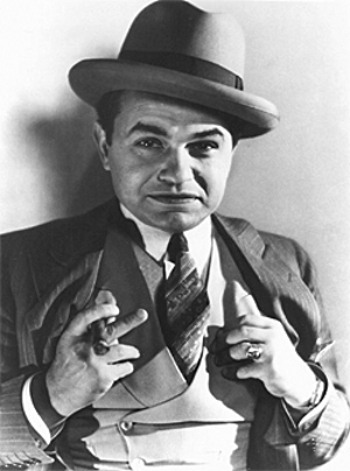 Publicity still of actor Edward G. Robinson. Image credit: public domain.
Edward G. Robinson at a glance
- Birth name: Emanuel Goldenberg
- Born: 12 December 1893 in Bucharest, Romania
- Died: 26 January 1973 in Los Angeles, California
- Occupation: Actor
- Years active: 1913 to 1973
- Best-known films: Little Caesar, Five Star Final, Dr. Ehrlich’s Magic Bullet, Double Indemnity, The Woman in the Window, Scarlet Street, Key Largo, The Ten Commandments and Soylent Green
- Major recognition: Honorary Academy Award voted shortly before his death and presented posthumously
- Other major interest: An important private collection of modern art
- Political history: Anti-fascist activism followed by damaging scrutiny during the Hollywood blacklist period
Emanuel Goldenberg learned English on New York’s Lower East Side
Robinson was born into a Jewish family in Bucharest. His parents, Sarah and Morris Goldenberg, brought the family to the United States when Emanuel was a child. Accounts connect the move to antisemitic violence and an attack on one of his brothers, part of a wider climate that made immigration a matter of safety as well as opportunity.
The family settled on New York’s Lower East Side. Emanuel learned English in public school and initially considered a career in law or public service. He attended Townsend Harris Hall and City College before theatre redirected him.
He won a scholarship to the American Academy of Dramatic Arts. The school trained voice, movement and classical technique, giving the future screen gangster a foundation far removed from Hollywood street mythology. He changed his name to Edward G. Robinson, with the middle initial not carrying the elaborate secret meaning publicity sometimes sought.
Stage work followed. Robinson appeared in stock companies, Broadway productions and a wide range of roles during the 1910s and 1920s. He was already a mature actor when sound cinema created demand for performers whose voices could carry character immediately.
The immigration story mattered to his later politics and screen authority. Robinson knew what American opportunity had offered his family and what European antisemitism threatened. His patriotism was not based on pretending prejudice did not exist. It was tied to the belief that democratic institutions had to act against it.
 Candid photo of Edward G. Robinson and director Michael Curtiz discussing film Kid Galahad. Image credit: public domain.
Sound film needed the voice theatre had trained
Robinson made early film appearances before establishing himself in talking pictures. Broadway remained his professional home, and his role as a gangster in The Kibitzer helped demonstrate how effectively stage energy could be concentrated for crime drama.
Sound changed Hollywood casting. A face no longer had to carry an entire personality in silence, and a trained New York actor could arrive with rhythm, diction and social specificity. Robinson’s voice was forceful without becoming vague noise. Consonants landed, thoughts moved quickly and anger sounded like a conclusion rather than a loss of control.
Warner Bros. cast him as Caesar Enrico Bandello in Little Caesar (1931), adapted from W. R. Burnett’s novel. Robinson was thirty-seven, not a young unknown being shaped from nothing. Two decades of theatre stood behind the apparent breakthrough.
That timing is important because the role can look like instinct. Rico’s physical habits, clipped speech and watchful ambition were constructed. Robinson understood how to make a character dominate taller men and how to let insecurity remain visible inside command.
Little Caesar created a screen criminal audiences could imitate
Rico begins as a small-time criminal determined to rise. He wants money, but status matters more. Robinson’s eyes keep searching for evidence that other men recognise his authority. Violence becomes a way of correcting any room that fails to arrange itself properly.
The early sound technology could make films visually static, yet Robinson supplies movement through voice and attention. He leans forward, holds a pause and then releases a sentence as though the decision has already been made. Rico’s famous final question, asking whether this is the end of him, turns self-belief into bewilderment.
The film joined The Public Enemy and Scarface in establishing the early 1930s gangster cycle. These productions allowed audiences to experience ambition and violence while censorship and narrative convention eventually required punishment. The criminal rose through the same energy that respectable business culture celebrated, then died so the similarity did not become too comfortable.
Robinson’s performance was imitated in comedy, animation and popular speech. The imitations often added “See?” or “Yeah” until the parody became more familiar than his actual dialogue. He had created a voice strong enough to survive after being separated from the film.
The cost was immediate typecasting. A studio that possessed the perfect gangster had little incentive to ask whether the actor wanted to play doctors, workers or quiet men whose fear moved inward.
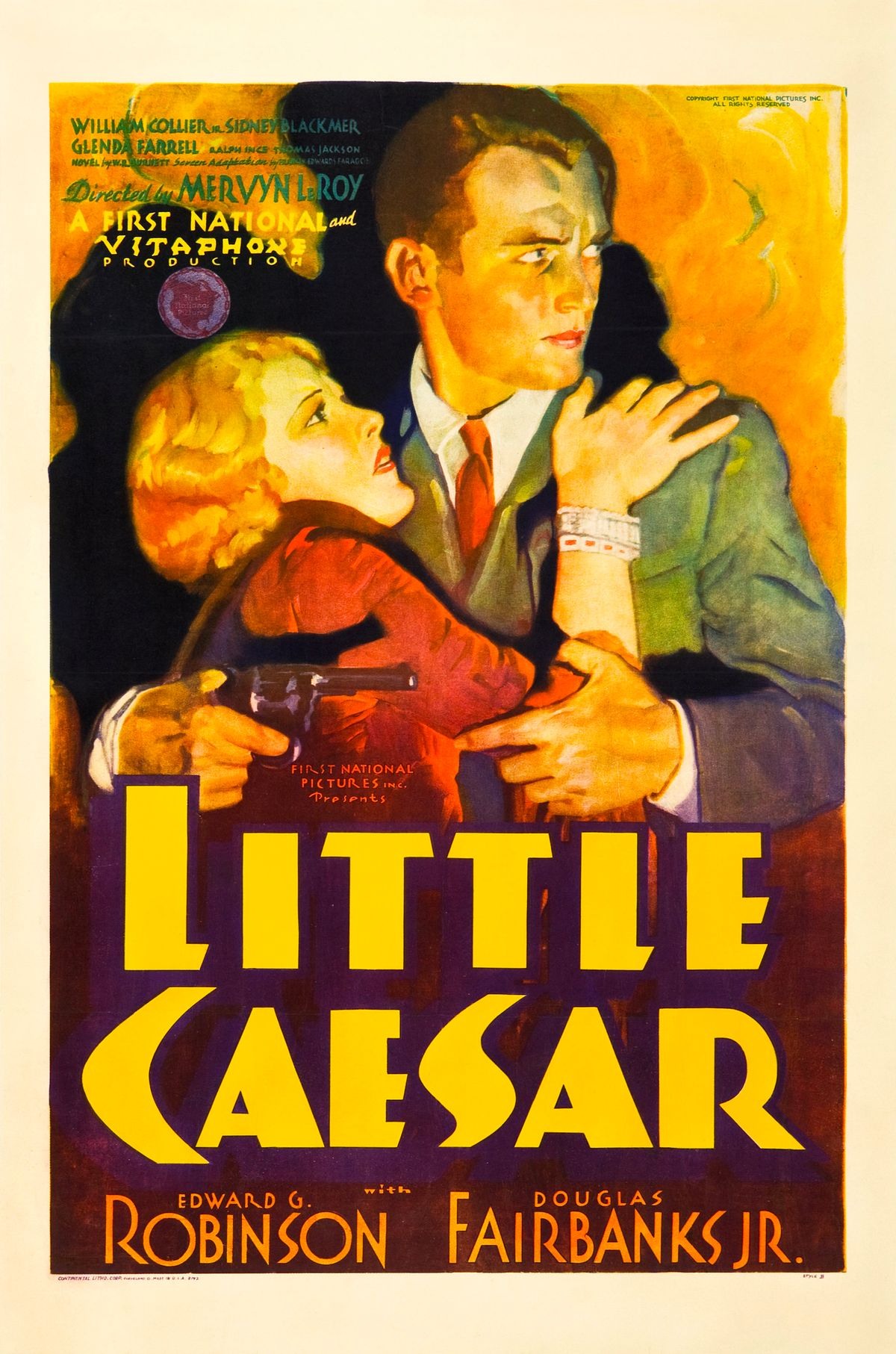 “Style B” theatrical release poster of the 1931 American film Little Caesar. Image credit: Illustrator unknown. Distributed by First National Pictures. / Scan via Heritage Auctions. Cropped from the original image. / public domain.
Smart Money and Five Star Final showed two uses of urban pressure
Robinson appeared with James Cagney in Smart Money (1931), the only feature that paired Warner Bros.’ two defining gangster stars of the period. Robinson receives top billing as a barber and gambler drawn towards larger criminal operations, while Cagney plays his associate.
The film allows audiences to compare rhythms. Cagney is quick, springing and physically unpredictable. Robinson appears heavier and more calculating. The partnership makes clear that “gangster acting” was never one style.
In Five Star Final (1931), Robinson played Randall, editor of a tabloid newspaper that revives an old murder story and destroys the family involved. The crime is committed through headlines, circulation and respectable office procedure rather than guns.
Robinson makes Randall complicit before allowing remorse to become dramatic. He knows what the paper does and has accepted the system because success rewards obedience. When the consequences become undeniable, disgust turns against the institution and himself.
The film belongs to a cycle of newspaper dramas suspicious of commercial media. Robinson’s authority makes the critique sharper. Rico and Randall both rise by understanding what an organisation values. One uses criminal violence. The other uses publicity. The distinction is less comforting than respectable society expects.
Comedy and double roles allowed him to argue with the image
Robinson repeatedly played variations on criminality, but comedy gave him ways to expose the type. In The Little Giant (1933), he is a former bootlegger trying to enter high society after Prohibition. The character possesses money and confidence but lacks the codes that wealthy people use to make self-interest look like breeding.
John Ford’s The Whole Town’s Talking (1935) cast Robinson in two roles: timid clerk Arthur Ferguson Jones and gangster Killer Mannion. The joke depends on identical appearance producing opposite social responses.
As Jones, Robinson reduces the voice, pulls the body inward and waits for permission. Mannion expands into the familiar criminal authority. The film demonstrates that the gangster was not Robinson’s natural state. It was one precise arrangement of voice, posture and expectation.
The double role also asks why society finds violence easier to recognise than ordinary decency. Jones becomes interesting only when people mistake him for the criminal. Robinson gives the clerk a life beyond imitation, allowing courage to develop without turning him into Mannion.
These comedies helped him survive the type while still profiting from it. He did not reject the audience’s pleasure. He used their recognition as material.
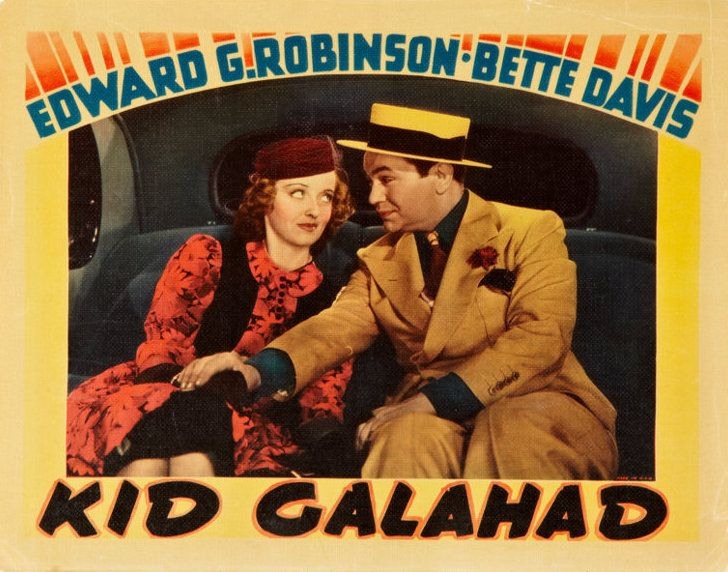 Lobby card for the American boxing film Kid Galahad (1937). Image credit: Warner Bros. / Source archive / public domain.
Dr. Ehrlich and anti-fascist films reflected public commitments
Robinson sought roles beyond crime and played the medical researcher Paul Ehrlich in Dr. Ehrlich’s Magic Bullet (1940). The film follows Ehrlich’s work on immunity and treatment, including research leading to a therapy for syphilis.
The Production Code made the subject difficult because even naming sexually transmitted disease challenged censorship. Robinson gives the scientist impatience, humour and the obsessive attention of a man who knows that bureaucracy can cost lives.
The film simplifies scientific collaboration and history, as biographical films usually do. It still gave mainstream audiences a heroic figure defined by laboratory work rather than physical conquest. For Robinson, it was proof that the intensity of Rico could become intellectual concentration.
He also appeared in Confessions of a Nazi Spy (1939), one of Hollywood’s earliest openly anti-Nazi studio films, and The Sea Wolf. Robinson raised money for war relief, supported Allied causes and spoke against fascism. His Jewish immigrant background made the threat personal, but the activism was also public and sustained.
During the Second World War he worked extensively for bond drives and morale efforts. The same political engagement that made anti-fascism urgent would later expose him to suspicion when post-war America treated many liberal organisations as possible Communist fronts.
Double Indemnity gave him authority without the central romance
Billy Wilder’s Double Indemnity (1944) cast Robinson as Barton Keyes, claims manager at an insurance company. Fred MacMurray’s Walter Neff conspires with Barbara Stanwyck’s Phyllis Dietrichson to murder her husband and collect on an accident policy. Keyes is the investigator whose instinct keeps moving towards the truth.
Robinson was initially reluctant to take a supporting role after years of top billing. The decision was crucial. Keyes does not need to be the romantic lead or villain to control the film’s moral attention.
His speeches about insurance fraud are fast, specific and strangely affectionate. Keyes believes patterns reveal human behaviour. He carries an imaginary “little man” inside who sounds an alarm when facts fail to fit. Robinson makes professional expertise exciting because thinking has physical rhythm.
The relationship with Neff gives the film its deepest feeling. Keyes trusts and values the younger man while unknowingly investigating his crime. Neff repeatedly lights Keyes’s cigars, and the small exchange becomes a language of care that the doomed romance cannot supply.
In the final scene, Keyes returns the gesture. Robinson does almost nothing, which is why it hurts. The definitive gangster had become the man standing beside a dying criminal, unable to prevent the truth he was best qualified to discover.
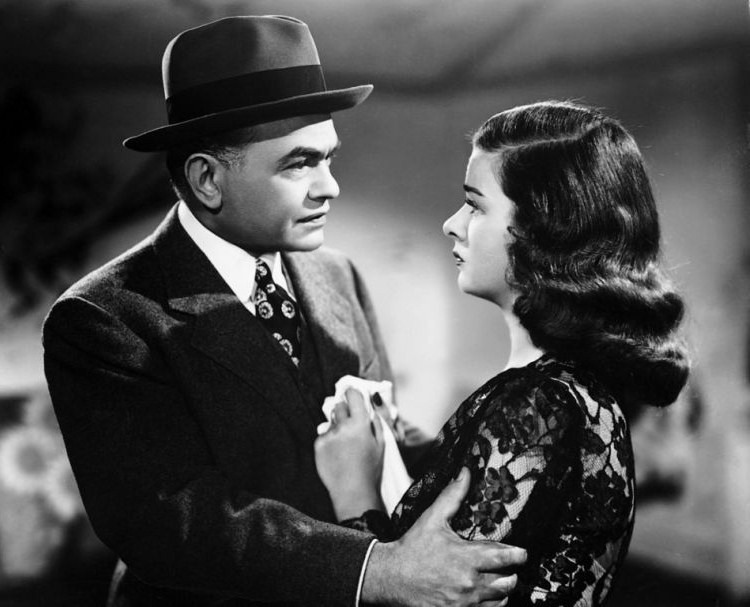 Edward G. Robinson & Joan Bennett in Scarlet Street – cropped screenshot. Image credit: film screenshot (Universal Pictures) public domain.
Fritz Lang found tragedy in an ordinary man
Robinson worked with Fritz Lang on The Woman in the Window (1944) and Scarlet Street (1945). Both films place him far from Rico’s authority. He plays middle-aged men whose desire and loneliness make them vulnerable to fantasy.
In The Woman in the Window, Professor Richard Wanley becomes involved with a woman whose portrait he has admired. A violent encounter leads to concealment and fear. Robinson makes panic practical. Wanley thinks through evidence, timing and escape with the intelligence of a respectable man discovering that intelligence cannot restore innocence.
Scarlet Street is darker. Robinson’s Christopher Cross is a cashier and amateur painter trapped in a humiliating marriage. He becomes obsessed with Kitty, played by Joan Bennett, while Dan Duryea’s Johnny exploits the relationship and sells Christopher’s paintings under Kitty’s name.
Robinson allows the character to be foolish without making his loneliness comic. Christopher wants someone to see value in him. That need becomes destructive because he confuses being desired with being understood.
The ending denies restoration. Punishment does not come through law alone but through a mind unable to escape the voices of the people involved. Lang uses the former gangster star to show a man crushed by weakness rather than defeated in a final gunfight.
 Edward G. Robinson and Joan Bennett in Scarlet Street, 1946. Image credit: Universal Studios / Modern Screen, February 1946 / public domain.
Key Largo made the old gangster deliberately repulsive
John Huston’s Key Largo (1948) brought Robinson back to gangster territory as Johnny Rocco. Humphrey Bogart plays war veteran Frank McCloud, trapped in a Florida hotel with Lauren Bacall, Lionel Barrymore and Claire Trevor while a hurricane approaches.
Rocco is a former power trying to return after deportation. Robinson does not revive Rico’s dangerous ambition with nostalgic pleasure. Rocco is sweaty, vain and dependent on terrified followers. He boasts about a past that no longer guarantees the future.
The casting places two generations of Warner crime stardom together. Bogart had once played supporting gangsters while Robinson led. By 1948 Bogart was the moral centre and Robinson the ageing threat. Huston uses that history without asking either actor to comment on it.
Claire Trevor’s Gaye Dawn provides the film’s most painful scene, forced by Rocco to sing before he will give her a drink. Robinson watches with bored cruelty. The gangster image is no longer exciting rebellion against authority. It is authority humiliating someone weaker.
Trevor won an Academy Award, while Robinson received no nomination. His failure ever to receive a competitive Oscar nomination is one of the striking facts of the career, not proof that awards failed to recognise every individual achievement.
HUAC scrutiny damaged the career without proving the accusations
Robinson’s pre-war and wartime activism involved donations to many organisations. Some were later identified as Communist fronts or included members connected with the Communist Party. During the blacklist period, such associations could become evidence of disloyalty regardless of a person’s actual beliefs or knowledge.
He appeared before the House Un-American Activities Committee more than once and denied being a Communist. Robinson explained that he had been generous and politically naive about some groups. He publicly repudiated organisations and positions in an effort to clear his name.
The precise history of testimony requires careful reading of hearing records rather than summary through later labels. Robinson was not one of the Hollywood Ten, and he was never convicted of espionage or subversion. He did experience a damaging reduction in major studio offers, often described as greylisting.
His article “How the Reds Made a Sucker Out of Me” became part of the rehabilitation campaign. The title shows the pressure to narrate liberal activism as manipulation. Clearing oneself in that environment often required supplying a politically acceptable story, whether or not it captured every earlier motive.
The episode should not be simplified into heroism or cowardice. Robinson had fought fascism publicly and supported causes he considered democratic. He then faced a system in which employment depended on proving ideological innocence to political investigators and studio executives.
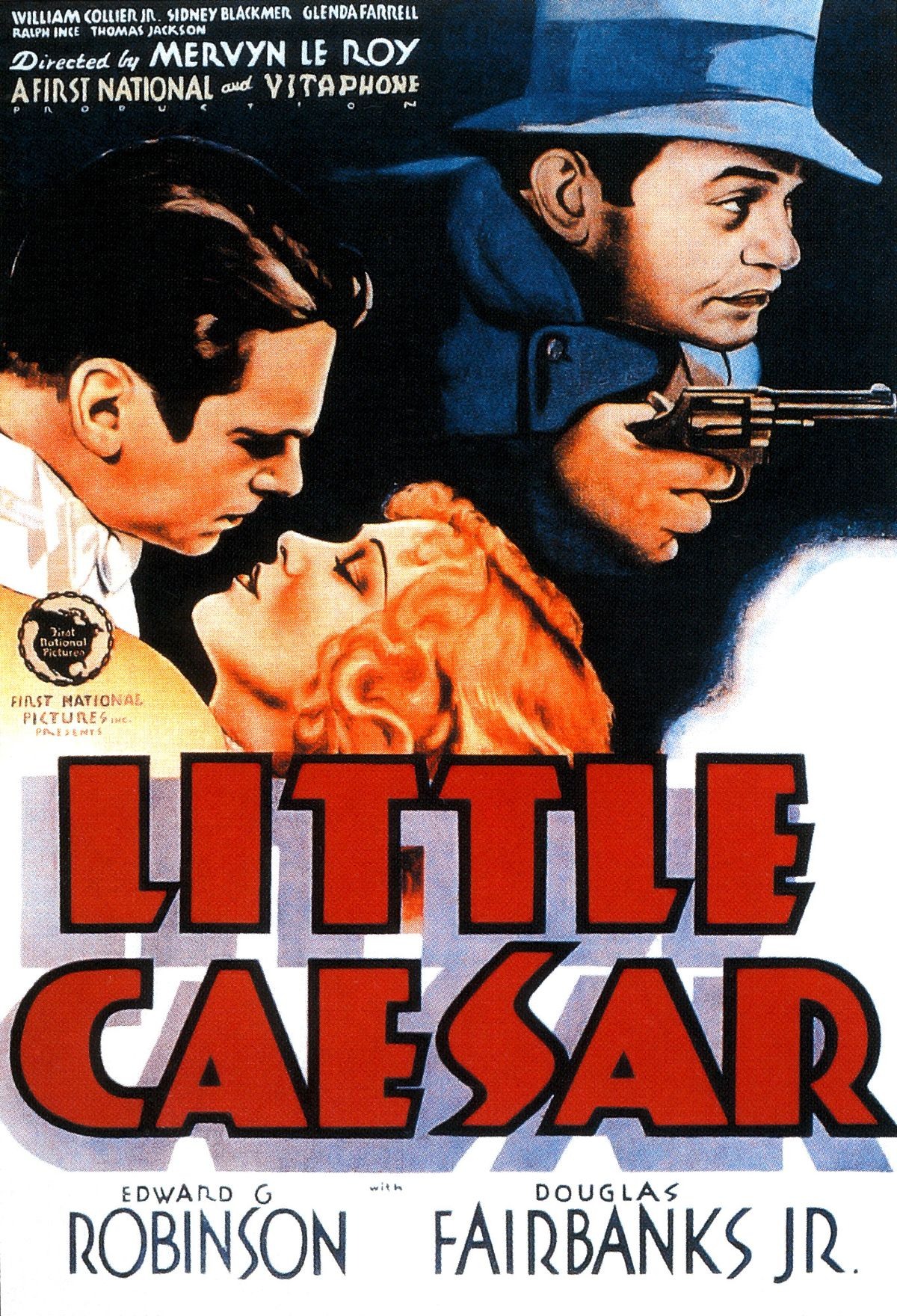 “Style A” theatrical release poster of the 1931 American film Little Caesar. Image credit: Illustrator unknown. Distributed by First National Pictures, public domain.
The art collection revealed another way of looking
Robinson began collecting art when major modern works were less fashionable among Hollywood stars. His collection included paintings by artists such as Degas, Renoir, Gauguin, Van Gogh and Picasso. He studied, purchased and lived with the works rather than treating them only as financial assets.
The collection complicates the image of the blunt gangster. Robinson’s screen skill depended on visual attention, and collecting gave that attention a private direction. He understood composition, surface and the value of seeing something before consensus declared it important.
His divorce from actor Gladys Lloyd required the collection to be sold in order to divide assets. Robinson later rebuilt a smaller collection. The sale was emotionally painful, another example of a private life becoming visible through objects of public value.
He and Lloyd had a son, Edward G. Robinson Jr., whose life included acting and personal difficulties. Later biographies sometimes use the son’s problems as a judgement on the father. Family relationships deserve more restraint than symbolic explanation.
Robinson married Jane Bodenheimer in 1958. The later marriage coincided with professional recovery and a period in which he increasingly played elder authority figures.
The Ten Commandments and later roles restored scale
Cecil B. DeMille cast Robinson as Dathan in The Ten Commandments (1956). The role returned him to a major production after the politically difficult years. Dathan is an informer and opportunist who collaborates with Egyptian power, then challenges Moses among the Israelites.
The performance uses the familiar Robinson voice and cunning, but the biblical spectacle makes the type nearly mythic. Dathan survives by attaching himself to whichever authority appears strongest. The casting carries an uncomfortable echo of recent political pressure, whether or not the film intends it.
Robinson continued in A Hole in the Head, The Cincinnati Kid, Cheyenne Autumn and European productions. In The Cincinnati Kid he played Lancey Howard, the established poker master facing Steve McQueen’s younger challenger. The tension comes from concentration rather than generational speechmaking. Robinson’s hands and eyes make card play a test of authority.
His final film was Soylent Green (1973), a dystopian story starring Charlton Heston. Robinson played Sol Roth, an elderly researcher who remembers the natural world before pollution and scarcity transformed society.
Robinson was seriously ill during production. The assisted-death scene carries knowledge shared by the actor and some colleagues, but it remains a performed scene rather than documentary death. Sol watches images of landscapes while music plays, and Robinson gives memory the weight of physical evidence.
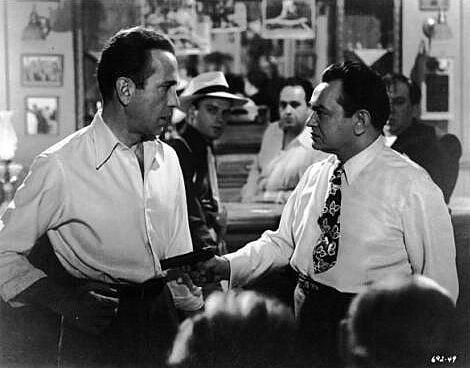 Humphrey Bogart and Edward G. Robinson in American crime noir film Key Largo (1948). Image credit: Warner Bros. / eBay archive / public domain.
The honorary Oscar arrived too late for him to hold it
The Academy voted Robinson an honorary award recognising his career. He died from cancer in January 1973 before the ceremony. His widow Jane accepted the Oscar.
He had never received a competitive nomination, despite Little Caesar, Double Indemnity, Scarlet Street and other performances central to American film history. The honorary award corrected the record symbolically but also revealed how long the omission had lasted.
Robinson’s influence is easy to hear in imitation and harder to measure in acting. The gangster voice entered popular culture. More important is the authority he gave to thought. Keyes investigating a claim, Christopher Cross imagining love and Janning recognising guilt all depend on an actor who can make a mind active before the plot confirms it.
Kid Galahad and Brother Orchid found comedy inside the gangster shape
Warner Bros. understood that Robinson’s body, voice and reputation could establish criminal authority before a script explained it. The more inventive films then used that expectation against itself.
In Kid Galahad (1937), he plays boxing promoter Nick Donati, with Bette Davis and Humphrey Bogart inside a story about loyalty, money and a young fighter. Robinson can be hard without becoming mechanically brutal. Nick’s investment in the boxer exposes pride and affection that the profession teaches him to disguise.
Brother Orchid (1940) turns the gangster’s crisis into comedy. Robinson’s Little John Sarto returns from Europe with ambitions towards elegance, loses control of his organisation and takes refuge in a monastery. The setting allows his aggressive rhythm to collide with patience.
The joke is not simply that a gangster cannot behave among monks. Robinson lets Sarto discover that discipline exists outside fear. His attempts at reform remain mixed with vanity, which keeps the film from asking us to accept instant sainthood.
These performances complicate the idea that comedy was an escape from his type. Robinson used the type as material. Audiences brought Rico into the room, and he showed how tenderness, embarrassment or self-deception could occupy the same outline.
Our Vines Have Tender Grapes made paternal warmth the centre of the film
 Lobby card for the American pre-Code crime film Little Caesar (1931). Image credit: Warner Bros. / source archive / public domain.
In Our Vines Have Tender Grapes (1945), Robinson played a Norwegian American farmer in Wisconsin, far from the urban criminals associated with him. The story follows family and community life largely through a child’s experience.
The casting works because warmth had always been present beneath his harder roles. Here it becomes the leading value. Robinson gives the father authority without menace and allows emotion to arrive through physical closeness and practical work.
The film belongs to a wartime and immediate post-war interest in ordinary American community. Its rural ideal is shaped by Hollywood, but Robinson prevents the farmer from becoming a symbol with no temper or fatigue.
Watching it beside Scarlet Street reveals extraordinary range. One man is destroyed by loneliness and illusion; the other builds security through family responsibility. The face and voice are recognisable, but the way each character occupies space is entirely different.
This kind of film also explains Robinson’s durability. A screen persona can open doors, yet a career lasting decades requires directors to believe the actor can carry stories that do not resemble the original success.
The Woman in the Window and Scarlet Street turned ordinariness into danger
Fritz Lang cast Robinson opposite Joan Bennett and Dan Duryea in The Woman in the Window and Scarlet Street. Both films use a respectable, middle-aged man whose encounter with desire leads towards crime, shame and psychological collapse.
In The Woman in the Window, Robinson’s professor sees Bennett’s portrait before meeting the woman herself. The distinction between image and person becomes the trap. His performance makes fantasy appear cautious at first, as though good manners could keep risk under control.
Scarlet Street is harsher. Robinson’s Christopher Cross is a cashier and amateur painter whose need for affection makes him easy to exploit. The film does not present weakness as innocence. Chris lies, steals and eventually kills, but Robinson lets us see each compromise form before it becomes irreversible.
Lang understood that the Little Caesar image could intensify vulnerability. Viewers know Robinson can threaten, so Chris’s inability to command respect feels more painful. When violence comes, it is not a return to heroic toughness. It is the final corruption of a lonely man.
The films are central to noir even though Robinson does not play the usual detective or romantic drifter. They show how domestic dissatisfaction, money and self-invention can produce darkness inside an ordinary life.
Soylent Green provided a final scene with unusual personal resonance
Robinson’s last film was Soylent Green (1973), a dystopian story set in an overcrowded and environmentally damaged future. Charlton Heston plays a detective, while Robinson plays Sol Roth, an elderly researcher who remembers a healthier world.
Robinson was seriously ill during production, though colleagues did not all understand the full extent. Sol’s assisted death scene therefore carries knowledge that belongs partly to the actor’s condition and partly to viewers looking back.
The sequence surrounds Sol with images and music of natural beauty no longer available in the film’s world. Robinson responds with grief, wonder and relief. Heston’s visible emotion is not only character performance; later accounts describe the actors’ awareness that Robinson was dying.
We should be careful not to reduce the scene to documentary farewell. It remains designed, acted and edited within a speculative film. Personal circumstance deepens it without replacing craft.
Robinson completed the work and died shortly afterwards. The role provides a final demonstration of what his career had always contained beneath force: attention. Sol looks at the lost world with the same intensity Rico once directed towards power.
His voice became imitation because the original was so exact
Comic impersonations reduced Robinson to clipped threat, but the durability of the imitation records how immediately audiences recognised his rhythm. The real performances vary the speed, warmth and education behind that sound.
Where should you begin with Edward G. Robinson’s films?
Begin with Little Caesar. It remains the source of the image and one of the clearest early sound performances. Follow it with The Whole Town’s Talking to see Robinson separate the gangster from the actor through two roles in one film.
Then watch Double Indemnity. Keyes may be a supporting character, but the relationship with Neff gives the film its emotional centre. Move to Scarlet Street for the opposite of Rico, a man whose weakness makes him dangerous mainly to himself and the people nearest him.
Add Key Largo to see the gangster image aged and stripped of glamour. Finish with The Cincinnati Kid or Soylent Green, where Robinson’s presence turns an older supporting character into the keeper of an entire world.
Edward G. Robinson spent a career escaping a role that popular culture never stopped repeating. He did not defeat the gangster by refusing to play criminals. He showed how many different forms power, fear and self-deception could take when the gun was removed from the hand.