Danny Kaye : Personal Info
Birth name : David Daniel Kaminsky
Born : 18 January 1911, Brooklyn, New York
Died : 3 March 1987, Los Angeles, California
Nationality : American
Occupations : Actor, comedian, singer, dancer, television host, conductor, humanitarian
Years active : 1933–1986
Known for : The Secret Life of Walter Mitty, The Inspector General, Hans Christian Andersen, White Christmas, The Court Jester, The Danny Kaye Show
Major honours : Honorary Academy Award; Jean Hersholt Humanitarian Award; Emmy Award; Kennedy Center Honor; Presidential Medal of Freedom
Danny Kaye : Introduction
Danny Kaye could make language behave like percussion. He accelerated through tongue-twisters, changed voices within a phrase and used panic as choreography. The technique looked spontaneous because he hid the preparation.
His career was also a partnership. Sylvia Fine wrote and shaped much of the specialised material that displayed his gifts, while Kaye supplied the physical and vocal instrument. Beyond film, he became a television star, an unlikely conductor and UNICEF’s first celebrity Goodwill Ambassador.
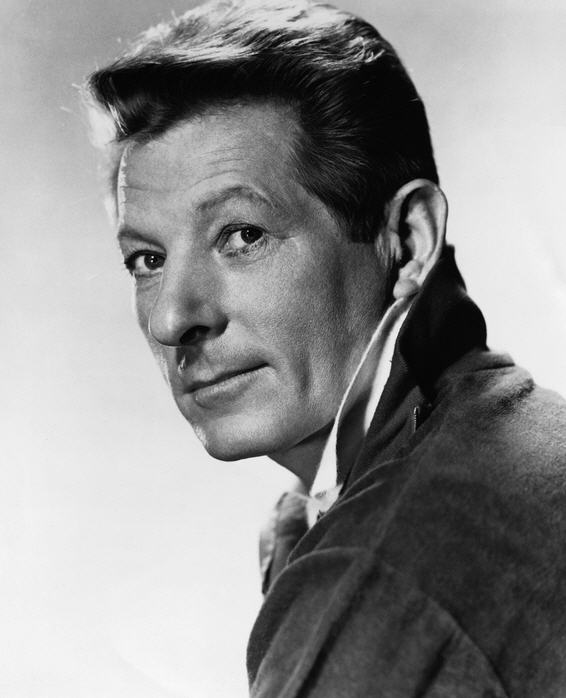 Danny Kaye in a studio publicity portrait.
Danny Kaye : Brooklyn and the Resort Circuit
David Daniel Kaminsky was born in Brooklyn to Jewish immigrants from what was then the Russian Empire. School interested him less than performance, and he left formal education early.
Work in the Catskill resorts gave him an apprenticeship in audiences. Entertainers had to sing, dance, improvise, tell jokes and recover instantly when material failed. Tours in Asia with a dance act broadened his experience, even when language barriers made physical comedy more useful than words.
The name Danny Kaye emerged during these years. Film shorts and nightclub appearances followed, but the style that made him famous needed a writer able to organise its apparent chaos.
Danny Kaye and Sylvia Fine
Kaye met Sylvia Fine while working on a small revue. They married in 1940 and had one daughter, Dena. Fine wrote songs, special material and screen numbers calibrated to his breath control, diction and gift for character switches.
The Library of Congress collection preserves scripts, scores, recordings, correspondence and business records from both careers. Its scale makes the creative partnership visible rather than leaving Fine in the role of supportive spouse.
Their marriage had strains and periods of separation, but the professional collaboration helped define Kaye’s public work for decades.
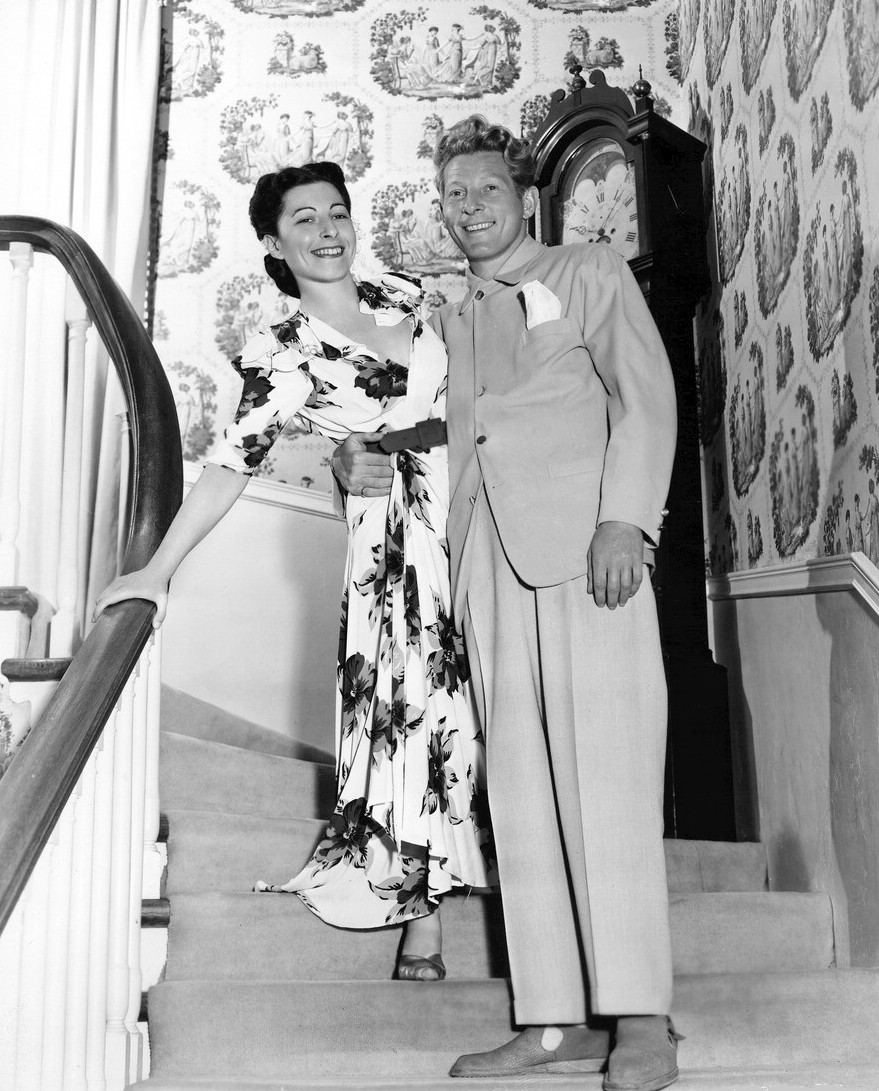 Danny Kaye with his wife and creative partner Sylvia Fine in 1945.
Danny Kaye : Lady in the Dark and Hollywood
The 1941 Broadway musical Lady in the Dark made Kaye a sensation. “Tschaikowsky”, in which he rattled through the names of Russian composers, became a demonstration of precision disguised as comic excess.
Samuel Goldwyn brought him to Hollywood for Up in Arms. Wonder Man, The Kid from Brooklyn and The Secret Life of Walter Mitty developed variations on a timid man discovering unexpected capability.
Kaye’s Walter Mitty differs from James Thurber’s original character and from later adaptations. The film uses fantasy for costume, musical performance and transformation, giving Kaye multiple comic identities inside one anxious protagonist.
Danny Kaye : Hans Christian Andersen and White Christmas
Hans Christian Andersen is not a factual biography. It turns the writer into a fictional travelling storyteller and builds around Frank Loesser songs. Kaye’s warmth makes the invented life emotionally persuasive, but viewers should not mistake it for Danish literary history.
White Christmas paired him with Bing Crosby after other casting plans changed. Kaye’s dancing with Vera-Ellen and relaxed exchanges with Crosby show how effectively he could function inside an ensemble rather than carrying every number.
The film became a seasonal fixture, while its show-business plot gave Kaye opportunities for loyalty and underplayed affection alongside performance.
Danny Kaye : The Court Jester
The Court Jester (1955) is the finest record of Kaye’s complete comic machinery. He plays Hubert Hawkins, a carnival performer caught in a royal conspiracy and repeatedly transformed by hypnosis from coward to master swordsman.
The “vessel with the pestle” routine turns a simple instruction into escalating verbal danger. Kaye’s achievement is not merely saying the lines quickly. He makes each new error reflect Hawkins’s shifting confidence.
Basil Rathbone gives the swordplay real authority, while Glynis Johns, Angela Lansbury and Mildred Natwick prevent the film becoming a solo showcase. Its reputation grew after a disappointing original release.
Danny Kaye : Television and Conducting
The Danny Kaye Show ran from 1963 to 1967 and won an Emmy. Television suited his mixture of guest interaction, sketches, music and direct address.
He also conducted major orchestras in benefit performances despite lacking conventional conductor training. The events combined musical knowledge, clowning and fundraising. The Library of Congress chronology credits decades of concerts with raising millions for musicians’ pension funds.
Kaye was a serious cook and aviation enthusiast as well. These interests are sometimes presented as eccentric trivia, but they reflect the same appetite for specialised skill that shaped his performances.
 Danny Kaye working as a UNICEF ambassador at the White House.
Danny Kaye and UNICEF
In 1954 Kaye became UNICEF’s first Goodwill Ambassador, beginning a relationship that lasted for the rest of his life. He travelled widely, appeared in films and broadcasts, and used comedy to communicate with children without a shared language.
The Library of Congress exhibition describes this as a 33-year commitment rather than a ceremonial title. His humanitarian work brought an Honorary Academy Award and later the Jean Hersholt Humanitarian Award.
The role helped establish a model now common among international organisations: a famous performer using public attention to make distant humanitarian work emotionally immediate.
Danny Kaye : Final Years and Legacy
Kaye returned to dramatic acting in the television film Skokie, playing a Holocaust survivor opposing a neo-Nazi march. The restrained performance reminded audiences that verbal display had always rested on character control.
He received a Kennedy Center Honor in 1984. Kaye died in 1987 after complications associated with hepatitis and heart problems.
His legacy joins technical comedy to generosity. The tongue-twisters remain astonishing, but speed alone was never the point. Kaye used rhythm to reveal a mind trying to keep control while identities, duties and words multiplied around it.
Selected Danny Kaye Filmography
1944 – Up in Arms : First major Hollywood starring vehicle
1945 – Wonder Man : Comic dual role
1947 – The Secret Life of Walter Mitty : Fantasy showcase
1949 – The Inspector General : Musical mistaken-identity comedy
1952 – Hans Christian Andersen : Fictional musical portrait
1954 – White Christmas : Ensemble musical with Bing Crosby
1955 – The Court Jester : Peak verbal and physical comedy
1981 – Skokie : Serious television drama
Danny Kaye : Frequently Asked Questions
Was Danny Kaye his real name?
No. He was born David Daniel Kaminsky in Brooklyn.
Did Danny Kaye really conduct orchestras?
Yes. He conducted benefit concerts with major orchestras, combining legitimate musical preparation with comedy and raising substantial funds.
What Danny Kaye film should a beginner watch first?
The Court Jester is the best display of his verbal, musical and physical range. White Christmas offers a gentler ensemble introduction.
Related Articles
15 Essential Hollywood Musicals for Beginners
20 Classic Hollywood Comedies That Are Still Funny