 Cary Grant in 1932, when the former Archie Leach was beginning to establish his Hollywood identity.
Cary Grant : Personal Info
Full name : Archibald Alec Leach; professionally Cary Grant
Born : January 18, 1904, Bristol, England
Died : November 29, 1986, Davenport, Iowa
Nationality : British-born; later naturalized American
Occupations : Actor, stage performer, producer, business executive
Years active : 1920s-1966 as performer; later public appearances and business roles
Known for : The Awful Truth, Bringing Up Baby, His Girl Friday, The Philadelphia Story, Notorious, To Catch a Thief, North by Northwest, Charade
Major honors : Two competitive Oscar nominations; Honorary Academy Award; Kennedy Center Honor; AFI ranked him among the greatest male screen legends
Cary Grant : Introduction
Whether you know him as the innocent man racing across America in North by Northwest, the debonair jewel thief of To Catch a Thief or the quick-witted romantic lead of The Philadelphia Story, Cary Grant remains one of the great screen personalities of classic Hollywood. His name has become shorthand for elegance, but the elegance was an achievement, not an accident.
Cary Grant was born Archie Leach, and that fact matters. The polished star was built from a difficult childhood, music-hall training, acrobatics, timing, discipline and years of self-invention. He became the man audiences wanted him to be, then spent much of his life negotiating the distance between the public Cary Grant and the private Archie underneath.
It is easy to admire Grant for his suits, voice and charm. It is more interesting to admire the work. Few actors moved so gracefully between screwball comedy, romantic drama and suspense. He could be silly without losing dignity, suave without becoming stiff, and frightened without surrendering his comic control.
Cary Grant : Early Life as Archie Leach
So where did it all begin? Cary Grant was born Archibald Alec Leach in Bristol, England, on January 18, 1904. His early home life was marked by emotional confusion and loss. As a boy he was told that his mother had died, when in fact she had been placed in an institution. He did not learn the truth until adulthood.
That wound helps explain part of Grant’s later self-creation. Archie Leach grew up with instability and longing, but he also found a way out through performance. As a teenager he joined Bob Pender’s troupe of entertainers, learning acrobatics, juggling, comedy, pantomime and physical discipline. Those skills never disappeared. They became the hidden machinery behind his screen grace.
The troupe brought him to the United States, and America became the stage on which Archie Leach remade himself. He worked in vaudeville, appeared on Broadway and gradually moved toward film. Hollywood did not simply discover Cary Grant. It helped rename him, but the persona had already been forming through years of practice.
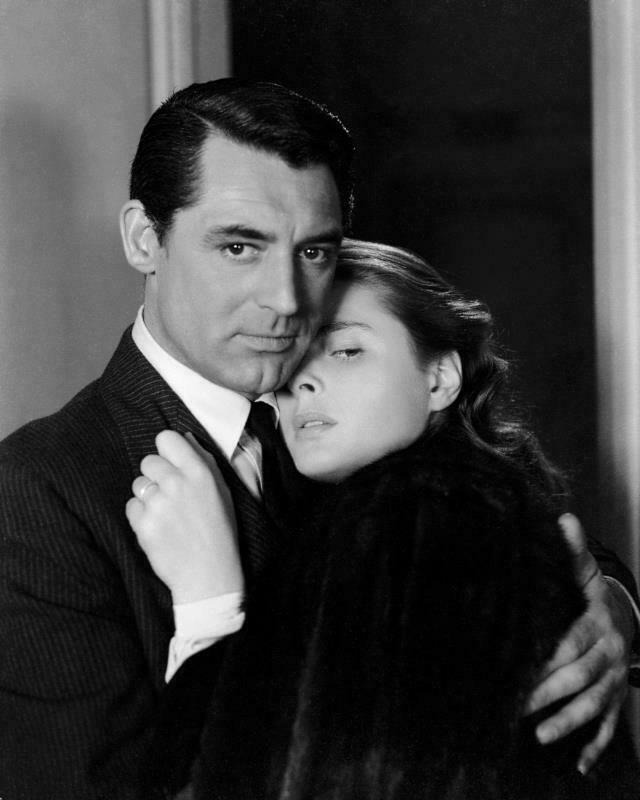 Grant with Ingrid Bergman in Notorious, where charm is complicated by mistrust, duty and emotional repression.
Cary Grant : Becoming a Hollywood Star
Grant signed with Paramount in the early 1930s, and the name Cary Grant replaced Archie Leach. At first he was handsome and useful rather than fully defined, appearing opposite stars such as Mae West and Marlene Dietrich. The image was there, but the comic rhythm and emotional shading still needed the right films.
By the late 1930s, everything clicked. The Awful Truth, Bringing Up Baby and Holiday showed that Grant was not merely a good-looking leading man. He was one of the finest comic actors in movies. His secret was precision disguised as ease. A raised eyebrow, a delayed reaction, a stumble, a half-swallowed line: Grant made difficulty look natural.
The Philadelphia Story in 1940 placed him alongside Katharine Hepburn and James Stewart in one of the definitive high-society comedies. Grant’s C.K. Dexter Haven could have been smug, but he gives the character intelligence, hurt pride and romantic patience. It is a perfect example of how he could let charm carry feeling without announcing it.
Cary Grant : Hitchcock, Suspense and Mature Stardom
Cary Grant’s work with Alfred Hitchcock expanded his screen identity. Suspicion allowed audiences to wonder whether his charm might hide danger. Notorious, opposite Ingrid Bergman, gave him one of his most emotionally complicated romantic roles. His character is controlled, cold and wounded, and Grant lets the audience feel the cost of that control.
To Catch a Thief turned him into a glamorous suspect on the French Riviera, paired with Grace Kelly in one of Hitchcock’s most stylish entertainments. Then North by Northwest gave him perhaps his most famous late-career role: Roger Thornhill, an advertising executive mistaken for a spy and thrown into a nightmare of murder, trains, crop dusters and Mount Rushmore.
What makes North by Northwest such a perfect Cary Grant vehicle is that it uses everything he could do. He is witty, elegant, panicked, romantic and physically agile. The film lets the Cary Grant persona be attacked from all sides, and Grant responds with the smoothest kind of comic survival.
Cary Grant : Later Career and Legacy
Grant remained a major star into the 1960s with films such as Charade, Father Goose and Walk, Don’t Run. Charade, opposite Audrey Hepburn, gently played with his established image while keeping the romance lively. By the time he retired from acting in 1966, he had done something rare: he left while the image still worked.
The Academy never gave Cary Grant a competitive Oscar, although he was nominated for Penny Serenade and None but the Lonely Heart. In 1970, the Academy presented him with an Honorary Award, recognizing the mastery that popular audiences had understood for decades. The Kennedy Center later honored him for his career in the performing arts.
Cary Grant’s legacy is not just that he was elegant. It is that he made elegance active. He built a screen persona out of rhythm, restraint, movement and wit. Many actors have tried to be Cary Grant, but the original remains difficult to copy because the polish came from pressure, intelligence and craft.
 Grant in 1958, at the height of the mature leading-man period that produced North by Northwest.
Cary Grant : The Craft Behind the Charm
Cary Grant’s charm can make his craft look invisible, which is exactly the point. He understood how to move through a frame, how to dress a line with hesitation, and how to make embarrassment look elegant. His comedy often works because he is willing to let dignity collapse for a second, then rebuild it before anyone else in the scene can react.
In Bringing Up Baby, Grant plays panic with balletic precision. In His Girl Friday, he turns speed into flirtation and manipulation. In The Awful Truth, he lets jealousy and wounded pride flicker under the surface of sophisticated banter. These are not the same performance repeated. They are variations on timing, vanity and control.
His physical background mattered. The acrobatics and stage training from his youth gave him balance and alertness. Even when he appears still, he seems ready to move. That is part of why directors could place him in screwball chaos or Hitchcock danger and trust that he would keep the audience oriented.
Cary Grant : Romance, Mystery and the Double Self
Grant’s best romantic roles often depend on uncertainty. Is he sincere, evasive, dangerous, wounded or merely too polished to read? Hitchcock used that ambiguity brilliantly in Suspicion and Notorious, but romantic comedies used it too. A Cary Grant character often had to prove that charm was not the same thing as honesty.
That tension echoed the actor’s own public mythology. Archie Leach created Cary Grant, but Cary Grant never fully erased Archie Leach. The gap between the two gave his performances a private charge. Behind the tuxedo and the smile, there is often a man trying not to reveal too much.
This is why Grant aged so well on screen. He did not depend only on youth. His later performances in To Catch a Thief, North by Northwest and Charade use maturity as part of the appeal. The joke is not that he is untouched by time; the joke is that he remains quick enough to stay ahead of it.
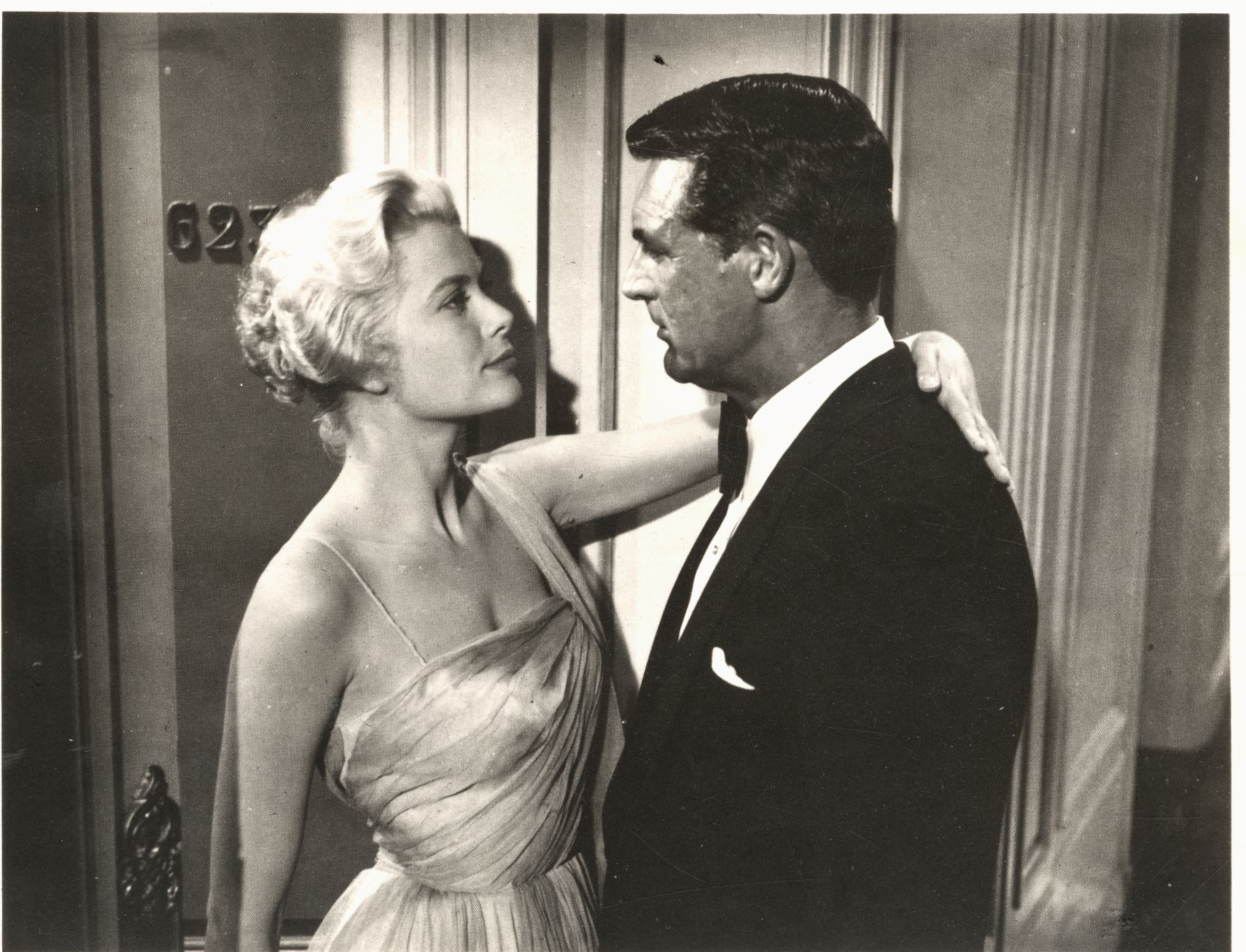 Grant and Grace Kelly in To Catch a Thief, a film built around glamour, suspicion and playful self-invention.
Cary Grant : Why He Remains a Cornerstone Subject
For Movie Star Biographies, Cary Grant is a cornerstone because he represents the art of the movie-star persona. He is useful for articles about classic comedy, Hitchcock thrillers, leading men, Hollywood reinvention, British actors in America and the difference between celebrity image and private life.
His biography also helps readers understand that elegance can be constructed. Grant was not born as the finished figure audiences remember. He built that figure through discipline, observation and revision. That makes his story more compelling than a simple list of famous films.
Cary Grant’s legacy rests on pleasure, but not shallow pleasure. His films remain watchable because they are engineered with intelligence and grace. He made sophistication feel light, and lightness is one of the hardest effects in cinema to achieve.
Cary Grant : The Slow Construction of a Star
The finished Cary Grant image can make his rise look inevitable, but it was gradual. The BFI profile notes that he had already made more than two dozen features before Topper and The Awful Truth established the version of Grant audiences now recognise. The early years were an apprenticeship in public: romantic leads, supporting parts, costume pictures and occasional miscasting.
That period matters because Grant learned what the camera accepted from him. Mae West gave him valuable exposure in She Done Him Wrong and I’m No Angel, while Sylvia Scarlett let him use traces of the English stage performer beneath the new Hollywood name. None of those films alone created the legend, but together they allowed him to test posture, voice, speed and a flexible approach to masculinity.
The breakthrough of 1937 did not replace Archie Leach with Cary Grant overnight. It revealed that the transformation had become usable screen art. Topper made sophistication playful, and The Awful Truth showed that Grant could build comedy from vanity, hurt and panic. Once directors understood that his elegance became funnier when threatened, his career opened.
Cary Grant : Independence and Control
Grant became one of the first major stars to work without a long-term studio contract, moving among producers and choosing projects with unusual freedom. Independence did not guarantee that every film would succeed, but it gave him leverage over scripts, directors and the development of his public image. The choice also anticipated a later Hollywood in which leading performers exercised more control over individual projects.
That judgement can be seen in the range of filmmakers he worked with: Howard Hawks for velocity and comic disorder, George Cukor for social comedy, Leo McCarey for emotional balance, Alfred Hitchcock for danger beneath polish, and Stanley Donen for mature romance. Grant did not simply bring the same character to each director. He adjusted the proportions while protecting the recognisable center.
His commercial instinct was equally important. He knew that familiarity could become exhaustion, so he alternated suspense with comedy and often played variations on the innocent man, the evasive romantic or the polished figure losing control. The result was consistency without complete repetition.
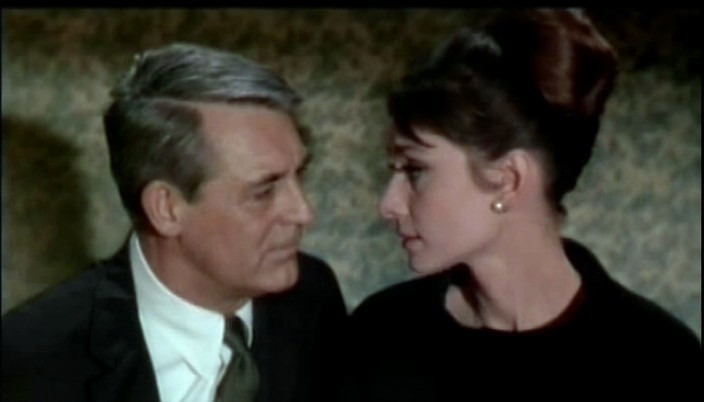 Grant with Audrey Hepburn in Charade, one of his final films and a graceful summary of his romantic-comic persona.
Cary Grant : Screen Partnerships
Grant’s persona became clearest in partnership. Katharine Hepburn could match his physical daring and social speed in Bringing Up Baby and The Philadelphia Story. Rosalind Russell met him line for line in His Girl Friday. Irene Dunne brought warmth and grown-up emotional consequence to The Awful Truth, My Favorite Wife and Penny Serenade.
Hitchcock used different partners to expose different weaknesses. Ingrid Bergman’s Alicia in Notorious forces Grant’s Devlin to confront the cruelty inside emotional self-protection. Grace Kelly in To Catch a Thief treats his evasions as a game she intends to win. Eva Marie Saint in North by Northwest unsettles him by appearing to control the seduction. Audrey Hepburn in Charade makes his age, mystery and protectiveness part of the story rather than something to conceal.
These films explain why Grant was more than an isolated icon. He listened, reacted and changed tempo according to the performer opposite him. His leading-man status depended on making the partnership vivid, not merely arranging every scene around himself.
Cary Grant : Retirement, Recognition and Final Years
Grant’s final film was Walk, Don’t Run in 1966. He had already sustained a screen career of more than three decades, and retirement allowed him to concentrate on raising his daughter Jennifer and on business interests away from acting. He resisted the kind of comeback that might have weakened the unusually coherent shape of the film career.
The honours continued. The Academy Awards database records his competitive nominations and the Honorary Award presented in 1970. He later received a Kennedy Center Honor, while the AFI screen legends survey placed him second among male screen legends, behind Humphrey Bogart.
In later years Grant toured with a conversation programme, appearing before audiences who wanted to encounter the person behind the screen identity. He died in 1986 while preparing for one of those appearances. The circumstances felt fitting: even after leaving movies, he remained engaged in the exchange between Cary Grant, Archie Leach and the audience that had watched the two become inseparable.
Cary Grant : Public Persona, Private Life and Fatherhood
Grant’s private life attracted attention partly because the screen persona appeared so controlled. He married five times, and the contrast between romantic certainty on screen and difficulty in lasting relationships off screen encouraged endless attempts to explain the man through the image. A responsible biography should acknowledge those relationships without treating speculation as settled fact or making private life the sole key to the performances.
The childhood loss surrounding his mother remained one of the defining facts of his early life. Discovering as an adult that she was alive, after he had been told she was dead, gave the Archie Leach story a depth that the Cary Grant image could conceal but never fully erase. Themes of abandonment, mistrust and emotional self-protection recur in his best films because he knew how those states looked from inside.
His marriage to Dyan Cannon brought the birth of his only child, Jennifer, in 1966. Retirement allowed him to be more present as a father than a continuing film schedule would have permitted. Jennifer later wrote about a parent who could be disciplined, playful, protective and conscious of the mythology surrounding him.
The distinction between public and private should not be flattened into a claim that one identity was false and the other real. Cary Grant was a created persona, but creation does not mean fraud. It was a durable work of performance assembled from Archie Leach’s experience, physical training, observation and wish for another kind of life.
Selected Cary Grant Filmography
1937 – The Awful Truth : Breakthrough screwball comedy role
1938 – Bringing Up Baby : Classic comedy opposite Katharine Hepburn
1940 – His Girl Friday : Rapid-fire newspaper comedy
1940 – The Philadelphia Story : High-society romantic comedy classic
1941 – Suspicion : First major Hitchcock collaboration
1941 – Penny Serenade : Oscar-nominated dramatic performance
1946 – Notorious : Hitchcock romance-thriller opposite Ingrid Bergman
1955 – To Catch a Thief : Riviera thriller opposite Grace Kelly
1959 – North by Northwest : Signature mistaken-identity thriller
1963 – Charade : Romantic thriller opposite Audrey Hepburn
Frequently Asked Questions
What was Cary Grant’s real name?
He was born Archibald Alec Leach in Bristol, England. The Cary Grant identity emerged from years of stage work, Hollywood studio employment and deliberate self-invention.
Did Cary Grant ever win an Oscar?
Grant never won a competitive Academy Award. He received two acting nominations and was presented with an Honorary Award in 1970.
Which Cary Grant film is best for a beginner?
North by Northwest is the most complete introduction because it combines comedy, suspense, romance, physical movement and the mature Grant persona.
Why did Cary Grant retire?
He stepped away from film after Walk, Don’t Run in 1966. Fatherhood, changing priorities and a wish to leave the screen on his own terms all shaped the decision.
Related Articles
20 Classic Hollywood Actors Everyone Should Know
20 Movie Stars Who Defined Old Hollywood Glamour
Top 10 Cary Grant Movies Ranked
Where to Start with Cary Grant Movies
Cary Grant vs Humphrey Bogart